DJD in Dogs: A Plain-English Guide to Joint Disease
DJD in dogs (degenerative joint disease) explained: stages, signs your dog is hiding, what science says about supplementation, and the daily routine that helps.

Itchy skin
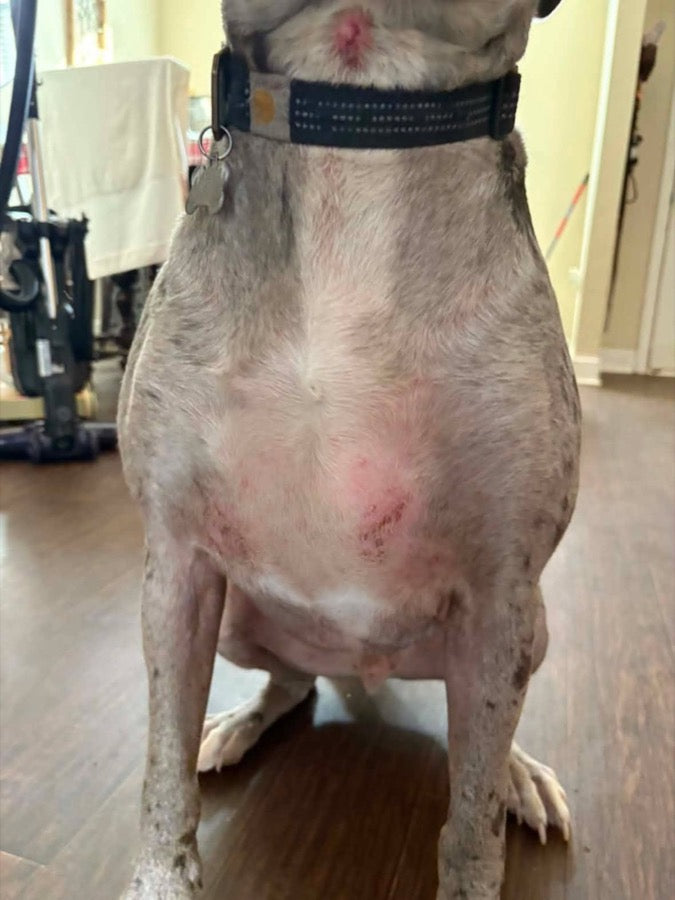
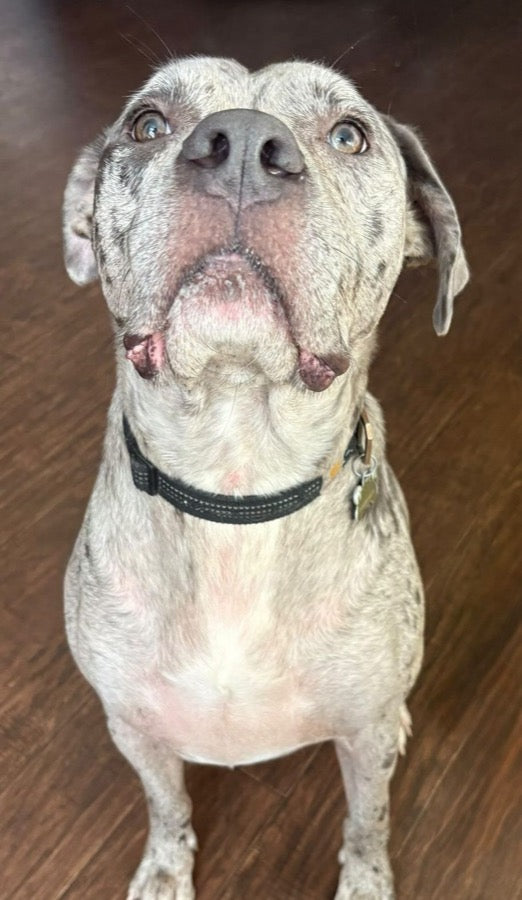
“I was doubtful it would work.”
After more than a year of trying to calm Ranger’s itchy skin, MacKenzie almost didn’t try one more thing. Two bags of VitaDog Daily later, his coat was growing back and he was finally comfortable.
MacKenzie · Ranger’s owner
Try VitaDogIndividual results. VitaDog supports normal skin and coat health and is not a substitute for veterinary care.
DJD in Dogs (Degenerative Joint Disease): A Plain-English Guide
If your vet mentioned "DJD" on the report and you're Googling it: DJD stands for Degenerative Joint Disease. It's the medical abbreviation for what most owners call arthritis.
The clinical world uses "DJD" and "osteoarthritis" (OA) somewhat interchangeably, though there's a technical difference. OA refers specifically to cartilage breakdown and the characteristic joint changes. DJD is broader, any progressive joint degeneration, including OA, plus related changes to surrounding bone and soft tissue.
In practice, if your vet writes DJD, they mean your dog has arthritis that's progressing. This guide covers what that actually means, what you can do, and what the realistic outlook is.
What DJD Means for Your Dog
DJD is the slow wear-and-tear destruction of one or more joints. The sequence generally goes:
DJD is progressive. It doesn't spontaneously reverse. The goal of treatment is to slow progression, reduce pain, and maintain function.
Developmental
Most common in medium-to-large breeds: Labradors, Golden Retrievers, German Shepherds, Bernese Mountain Dogs, Rottweilers, Saint Bernards. Small dogs get luxating patellas more commonly.
Trauma
Cruciate ligament tears (very common)
Fractures that heal with imperfect joint alignment
Chronic repetitive stress (agility, working dogs)
Age-related
Cumulative wear regardless of other factors
More dramatic in dogs with poor body condition (obese or underweight)
Other
Immune-mediated joint disease (uncommon)
Infection (rare but can trigger DJD)
Early Signs You'd Miss Without Watching For
DJD progresses slowly. Most owners notice it only when symptoms are already moderate. Early signs:
Classic late signs everyone notices: obvious limping, visible difficulty standing up, trembling in legs, refusing to walk or climb stairs, behavioral changes from chronic pain (irritability, reduced appetite, social withdrawal).
If your dog is getting up less, moving less, or slower on walks, don't write it off as "getting older." Early intervention meaningfully changes the trajectory.
Diagnosis: What to Expect at the Vet
Your vet will likely:
A confirmed DJD diagnosis usually needs the orthopedic exam plus X-rays.
The Treatment Stack
DJD management is multi-modal. Single interventions rarely work well alone. The full stack:
1. Weight management
The single highest-impact intervention. Every pound of excess body weight amplifies joint forces dramatically. Overweight dogs with DJD improve more from weight loss than from any supplement.
Target: ideal body condition score (ribs palpable with slight padding, visible waist from above, tuck from the side).
2. Controlled exercise
Movement is critical. Too little is as bad as too much.
Good: short, regular walks on forgiving surfaces (grass, dirt, carpet); swimming (zero-impact, builds muscle); hydrotherapy (underwater treadmill); gentle indoor play.
Bad: intense running or jumping; agility-style pivots and sudden stops; hard surfaces for extended periods; completely sedentary life (muscle atrophy accelerates joint decline).
3. Joint and Anti-Inflammatory Supplementation
Modern joint protocols layer multiple evidence-backed ingredients across different mechanisms. The categories that matter:
Cartilage building blocks:
Glucosamine HCl: foundational. The form (HCl vs sulfate) matters: HCl delivers more active glucosamine per milligram. See glucosamine for dogs and Cosequin review.
Anti-inflammatory layer (multiple pathways):
MSM (methylsulfonylmethane): sulfur-donating compound, anti-inflammatory plus connective tissue support. See MSM for dogs.
Turmeric paired with black pepper extract (piperine): this pairing is critical. Curcumin (the active in turmeric) has 1 to 2% bioavailability on its own. Black pepper piperine increases that by up to 2,000%. Turmeric without piperine is largely wasted, which is why most over-the-counter dog turmeric products underperform.
quercetin for dogs: flavonoid with anti-inflammatory and mild antihistamine activity. Useful in dogs whose joint inflammation overlaps with allergic load.
Omega-3 EPA + DHA at therapeutic dose (50 to 75 mg/lb/day for joint support). Anchovy-source best fish oil is cleaner than salmon. See fish oil dosage for dogs.
Connective tissue and adaptogenic support:
Joint products with the broadest evidence base:
Green-lipped mussel: natural anti-inflammatory with good evidence, found in some dedicated joint formulas
Expect 6 to 8 weeks of consistent daily use to judge any joint supplement effect.
4. Prescription NSAIDs
Modern canine NSAIDs are well-tolerated and effective for pain control:
Liver and kidney monitoring every 6 to 12 months. Don't combine with human NSAIDs (ibuprofen, aspirin, naproxen, all toxic to dogs at common human doses).
5. Adjunct medications
Beyond NSAIDs, your vet may add: gabapentin for neuropathic pain component; amantadine for pain sensitization; tramadol (use is more limited than historically thought); Librela (bedinvetmab), a monthly anti-NGF injection, relatively new and effective for many dogs.
6. Physical rehabilitation
Certified canine rehabilitation therapists offer therapeutic exercises, underwater treadmill work, laser therapy, manual therapy, and acupuncture (for those that pursue it). Meaningfully extends functional life in moderate-to-severe DJD. Expensive but worth discussion.
7. Home environment adjustments
8. Surgery (selected cases)
For specific joint problems, surgery can dramatically improve outcomes: FHO (femoral head ostectomy) for severe hip DJD in smaller dogs; total hip replacement for eligible candidates; TPLO or TTA for cruciate ligament disease; arthroscopic cleanup for OCD lesions.
Not every DJD dog needs or benefits from surgery. It's a case-by-case decision with an orthopedic specialist.
DJD in Dogs: Life Expectancy
DJD doesn't directly shorten life in most cases. What it does is affect quality of life and mobility, which indirectly influence life decisions.
Prognosis depends on: joint(s) affected (single vs multiple), severity at diagnosis, age at diagnosis, dog's overall health, commitment to management.
A 10-year-old Labrador with bilateral hip DJD on a good management plan (weight control, supplements, NSAIDs, rehab) can often live 3 to 5 more years with reasonable quality of life. Neglected DJD in the same dog might accelerate decline much faster.
The point at which DJD becomes a quality-of-life issue is usually: dog can't rise without significant help; pain breaks through multi-drug protocol; incontinence or inability to posture to eliminate; social withdrawal and loss of joy.
That's a quality-of-life conversation with your vet, not a treatment question.
Prevention: Before Your Dog Has DJD
Puppies and young adults prone to DJD (large breeds, hip dysplasia-prone lines):
The Practical Stack (What Most DJD Dogs Need)
A typical comprehensive protocol for a moderate DJD case:
| Category | Example |
| Weight | Body condition score 4 to 5 out of 9 |
| Exercise | 2 to 3 short walks daily, swimming 1 to 2x/week |
| Daily foundation | Glucosamine + MSM + turmeric with black pepper extract for absorption + quercetin + adaptogens + multi-strain probiotics + omega-3 blend |
| Targeted top-up (severe cases) | Standalone anchovy-source fish oil for therapeutic-dose EPA+DHA; chondroitin or green-lipped mussel if not in daily formula |
| NSAID | Daily or as-needed based on severity |
| Environment | Orthopedic bed, ramps, non-slip surfaces |
| Rehab | Monthly visits or home exercise program |
| Vet monitoring | Every 6 months with bloodwork |
VitaDog's daily formula provides the foundational layer of this stack: glucosamine HCl + MSM (in a 600mg blend), turmeric paired with black pepper extract for piperine absorption, quercetin and astragalus root for adaptogenic and anti-inflammatory support, an 8-strain probiotic with inulin (relevant because chronic NSAID use can disrupt gut function), and a four-oil blend (anchovy oil + flaxseed + evening primrose oil + MCT) for omega and GLA coverage. The formula contains no brewers yeast, which is worth flagging because brewers yeast appears in many chew-format competitors and can drive itching and yeast overgrowth in sensitive dogs.
For dogs with severe DJD whose EPA+DHA needs exceed what a daily multi-active can deliver, stack a standalone anchovy-source fish oil on top (Nordic Naturals is a strong pick). For dogs whose vet specifically recommends ASU or green-lipped mussel based on imaging, those can be added without conflict.
See the VitaDog formulation, or for related reading see best joint supplement for dogs and Dasuquin vs Cosequin.
What does DJD stand for?
DJD is Degenerative Joint Disease, a medical abbreviation used by veterinarians and physicians for progressive joint degeneration, which in dogs is essentially synonymous with arthritis or osteoarthritis.
Is DJD the same as arthritis in dogs?
Effectively yes. DJD is a broader term that includes osteoarthritis plus related joint degeneration. In practical discussion with owners, most vets use DJD, OA, and arthritis interchangeably.
Can DJD in dogs be cured?
No. DJD is progressive and cumulative. It can be slowed, managed, and in many cases the dog can live comfortably for years. It cannot be reversed.
What's the best treatment for DJD in dogs?
The best "treatment" is a multi-modal stack: weight management, controlled exercise, daily joint and anti-inflammatory supplementation (glucosamine + MSM + turmeric with piperine + omega-3 + quercetin), prescription NSAIDs as needed, and physical rehabilitation. No single intervention works alone.
How long do dogs live with DJD?
DJD doesn't typically shorten life span directly. Quality of life declines as mobility declines. A well-managed moderate DJD dog often lives their expected life span. Poor management can cut years off effective quality of life.
What are the stages of DJD in dogs?
Simplified: Stage 1 (mild), occasional stiffness, no persistent lameness. Stage 2 (moderate), daily stiffness, noticeable reduced activity, responds to supplements. Stage 3 (moderate-severe), consistent lameness, needs NSAIDs or other pain management. Stage 4 (severe), significant functional limitation, multi-drug protocol, quality-of-life considerations.
Does turmeric actually help with DJD?
Yes, but only when paired with a bioavailability enhancer. Curcumin (the active in turmeric) is one of the better-evidenced natural anti-inflammatories for canine arthritis. The catch: orally consumed curcumin is broken down in the gut and liver before reaching the bloodstream. Black pepper extract (piperine) blocks that breakdown and increases curcumin absorption by up to 2,000%. A turmeric supplement without piperine delivers 1 to 2% of its theoretical dose. Always look for the pairing.
Educational content only. This article is not veterinary advice. Always consult your veterinarian before starting, changing, or stopping any supplement, especially if your dog has a medical condition, is pregnant, or is on medication.