
Fish Oil Dosage for Dogs: Exact EPA / DHA by Weight
Fish oil dosage for dogs by weight: exact EPA + DHA mg/lb, when to use 50/75/100 mg/lb, and source quality. Plus VitaDog's 1,200+ mg per serving alternative.

best fish oil for Dogs: What Most Dogs Actually Need (And Why More Volume Isn't Better)
Fish oil gets recommended by almost every vet for almost every dog. The evidence supports it: skin and coat health, joint support, cognitive function, anti-inflammatory effect, cardiovascular support. The category is genuinely useful.
But the marketing has gone in a particular direction that's worth pushing back on. The shelves are full of giant 32-ounce bottles of "wild Alaskan salmon oil" with dosing charts encouraging owners to pump a teaspoon, then two, then three onto the food bowl. More volume gets framed as more benefit. It's not.
The truth: most healthy dogs need a moderate, well-formulated daily omega-3 input, not a maximum-volume fish oil dose. And the source of that omega - and what's around it in the formula - matters far more than how many milliliters end up in the bowl.
This guide covers what most dogs actually need, why anchovy beats salmon at a fraction of the volume, and why a multi-oil blend in a daily formula does more for the average dog than chasing a high-volume single-source fish oil.
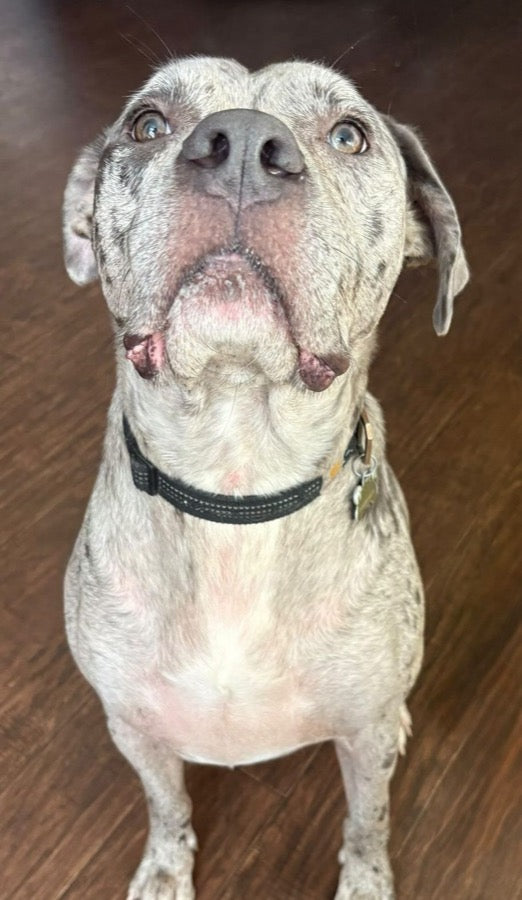
 A VitaDog customer story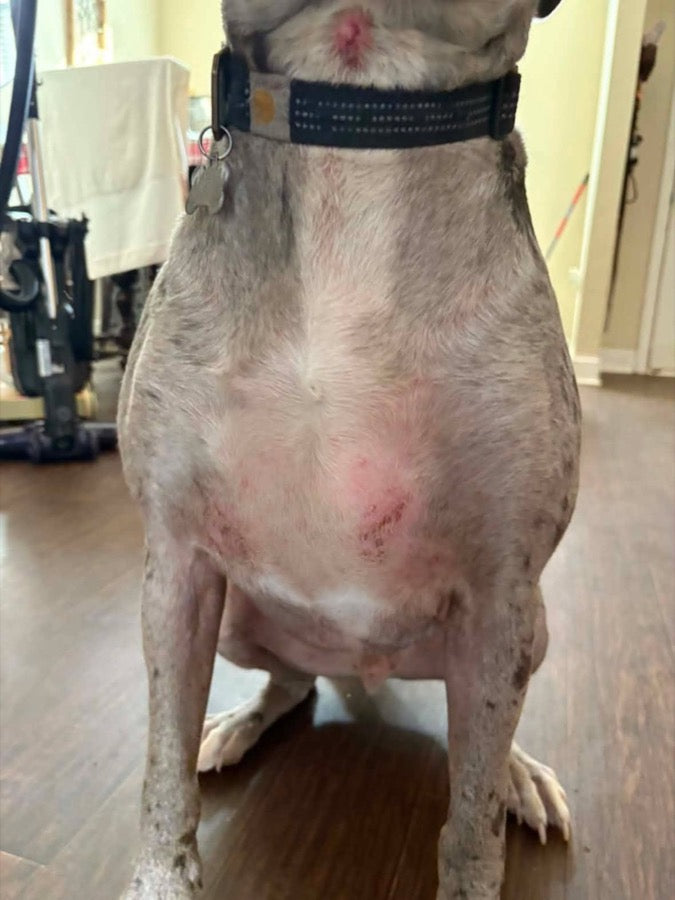
Itchy skin
“I was doubtful it would work.”
After more than a year of trying to calm Ranger’s itchy skin, MacKenzie almost didn’t try one more thing. Two bags of VitaDog Daily later, his coat was growing back and he was finally comfortable.
MacKenzie · Ranger’s owner
Try VitaDogIndividual results. VitaDog supports normal skin and coat health and is not a substitute for veterinary care.
What Most Dogs Actually Need
Let's start with the dog in front of you, not the marketing.
Most dogs are healthy adults with no diagnosed inflammatory condition. They need omega-3 for:
Daily skin and coat maintenance
General anti-inflammatory baseline support
Joint maintenance (preventive, not treatment)
Cognitive and cardiovascular health support
For this - by far the largest group of dogs - the published canine evidence supports a moderate daily EPA + DHA dose alongside complementary fatty acids and anti-inflammatory ingredients. Not a megadose. Not a teaspoon, two, or three of single-source salmon oil.
The dogs who genuinely need higher EPA + DHA doses are a smaller subset:
Diagnosed osteoarthritis with active inflammation
Moderate to severe atopic dermatitis
Inflammatory bowel disease
Active cardiac disease (under vet supervision)
Kidney disease with proteinuria (per vet protocol)
These dogs benefit from a higher omega-3 dose, often delivered as a separate concentrated fish oil layered on top of their daily nutritional support. That's a medical use case, not the everyday baseline. We'll cover the dose math for those situations below, but the headline is: most dogs aren't in this group, and dosing them as if they are misses the point.
How long does fish oil take to work for dogs?
Coat shine and softer texture appear at 3 to 4 weeks of daily EPA + DHA dosing. Itch reduction and joint comfort typically show measurable improvement at 6 to 8 weeks. Skin barrier integration is the slowest mechanism, so allergy and dermatitis response takes longer than coat appearance.
Typical timeline by indication
- Coat shine + soft texture: 3-4 weeks
- Reduced shedding: 4-6 weeks
- Less paw licking + itch frequency: 6-8 weeks
- Joint mobility (paired with glucosamine): 8-12 weeks
- Atopic dermatitis flare reduction: 8-12 weeks
- Cognitive support in seniors: 12+ weeks
The mechanism is incorporation into cell membranes (phospholipids), which takes a turnover cycle. Fish oil gives no acute spike; it works on a tissue-saturation curve.
The Volume vs Quality Tradeoff
Here's the comparison that matters most for daily-use products.
A typical wild Alaskan salmon oil for dogs (Zesty Paws is the category leader) delivers about 870 mg of combined EPA + DHA per teaspoon (5 ml), from a pollock and salmon blend. The dosing chart suggests escalating volume by body weight: a 50-lb dog gets recommended 1 teaspoon daily, an 80-lb dog gets 2 teaspoons. The volume is the dose.
VitaDog's daily oil delivers a smaller volume - but the volume number isn't what matters. What matters is the fatty acid profile, source quality, and what's in the rest of the formula. Three concrete differences:
1. Source: anchovy vs salmon.
Anchovy is the cleaner source. Salmon sits high enough on the food chain and lives long enough to accumulate meaningful mercury, PCBs, and dioxins from the smaller fish they eat. Anchovies live 1 to 2 years at the bottom of the food chain and accumulate far less marine pollutant per gram of oil. This is why pharmaceutical-grade fish oil for human use (Nordic Naturals, Carlson, Pure Encapsulations) sources from anchovy and sardine, not salmon. MSC-certified Peruvian anchoveta is the gold standard. Anchovy oil is also naturally higher in EPA per gram of oil than salmon, so the EPA density is better even before factoring in purity.
A smaller volume of clean anchovy oil delivers cleaner omega-3 than a larger volume of salmon oil. The marketing that frames "more bottle, more dose" as better quietly hides the contamination ceiling that comes with the larger volume of a higher-trophic-level fish.
2. Profile: multi-oil blend vs fish-oil-only.
This is the bigger point. Fish oil alone delivers two fatty acids: EPA and DHA. That's it. The strongest skin, coat, and inflammation outcomes in the canine literature come from formulations that pair EPA and DHA with GLA (gamma-linolenic acid), which fish oil cannot deliver. GLA comes from evening primrose oil, borage, or black currant.
Multiple canine studies show GLA from evening primrose oil specifically reduces atopic dermatitis severity. Salmon oil products don't contain GLA. Most pet fish oils don't. VitaDog's daily oil is a four-component blend: anchovy oil (EPA + DHA), flaxseed oil (plant ALA), evening primrose oil (GLA), and MCT oil (energy fats). For skin issues, allergic itch, and overall coat quality, this broader fatty acid profile does more than EPA + DHA alone at higher dose.
3. Surrounding pathways: multi-pathway anti-inflammatory vs oil only.
The omega-3 in a daily multi-active doesn't work alone. It works alongside turmeric paired with black pepper extract (for the NF-kB pathway, with piperine making the curcumin actually absorb), quercetin for dogs (for histamine and inflammatory response), and adaptogens like astragalus root, liquorice root, and rosemary extract. Five anti-inflammatory pathways covered simultaneously, vs the single-pathway effect of fish oil on its own.
The compound effect across pathways at moderate doses tends to be larger than a single ingredient at maximum dose. This is consistent with how human anti-inflammatory protocols are structured (multiple modest interventions across pathways) and increasingly with how veterinary inflammation management is approached.
What Most Dogs Need: The Daily Foundation
For the majority of dogs - healthy adults, prophylactic joint support, skin and coat maintenance, general wellness - the right daily approach is:
This is a foundation, not a treatment dose. It's what most dogs benefit from daily, indefinitely. VitaDog's formula is built around exactly this profile: the daily oil delivers a clean anchovy-based four-oil blend; the daily powder delivers everything else.
For the average dog this is enough. Coat quality improves over 4 to 8 weeks. Skin issues calm over 8 to 12 weeks if mild-to-moderate. Joint stiffness in early-stage dogs reduces over 6 to 8 weeks. Energy and stool quality improve faster.
When a Dog Needs More
A subset of dogs has a specific medical condition where higher-dose EPA + DHA delivers a real, measurable benefit beyond foundation support. The cases:
Active osteoarthritis (diagnosed). Dogs with imaging-confirmed cartilage degeneration or established OA can benefit from 50 to 75 mg combined EPA + DHA per pound body weight per day, often used alongside prescription NSAIDs for multi-modal pain management.
Moderate to severe atopic dermatitis. Dogs failing to respond to baseline omega-3 + GLA support sometimes benefit from higher EPA + DHA at 75 to 100 mg/lb/day, again typically combined with veterinary anti-itch medications.
Inflammatory bowel disease. Vet-supervised omega-3 dosing is part of standard IBD protocols, often at higher doses than baseline.
Cardiac disease. Specific cardiac protocols exist for omega-3 dosing in dogs with valvular disease or DCM, always under vet supervision.
Renal disease with proteinuria. Higher omega-3 doses are part of CKD management, prescribed to specific protein:creatinine ratio thresholds.
For these cases, the practical approach is to maintain the daily foundation supplement (which provides baseline omega-3, GLA, and multi-pathway anti-inflammatory coverage) and add a separate high-dose anchovy fish oil to reach the therapeutic EPA + DHA target on top. This is more efficient than trying to use a single product to deliver both baseline daily wellness coverage and condition-specific therapeutic doses.
Therapeutic Dose Math (For Diagnosed Conditions Only)
If your dog has been diagnosed with one of the conditions above and you're working with your vet on a therapeutic omega-3 protocol, here's the math.
The only number that matters is EPA + DHA combined, not "fish oil" total volume. Cheaper products often list "1000 mg fish oil per softgel" but contain only 200 to 300 mg of actual EPA + DHA. Always read the EPA and DHA lines and add them.
| Dog weight | Therapeutic (50 to 75 mg/lb/day) | Active disease (75 to 100 mg/lb/day) |
| 20 lbs | 1,000 to 1,500 mg | 1,500 to 2,000 mg |
| 30 lbs | 1,500 to 2,250 mg | 2,250 to 3,000 mg |
| 50 lbs | 2,500 to 3,750 mg | 3,750 to 5,000 mg |
| 75 lbs | 3,750 to 5,625 mg | 5,625 to 7,500 mg |
| 100 lbs | 5,000 to 7,500 mg | 7,500 to 10,000 mg |
For a 50-lb dog with diagnosed osteoarthritis on a therapeutic protocol, the target is roughly 2,500 to 3,750 mg combined EPA + DHA daily.
A typical pet-grade salmon oil at 870 mg EPA + DHA per teaspoon would require about 3 to 4 teaspoons daily to reach this dose. That's 15 to 20 ml of oil - meaningful caloric and dietary contribution, plus the higher contamination ceiling that comes with salmon-source oil at high volume.
A pharmaceutical-grade anchovy fish oil concentrate (human-grade, Nordic Naturals or equivalent) at 1,000+ mg EPA + DHA per teaspoon delivers the same therapeutic dose at less than half the volume, with cleaner source material. For diagnosed conditions where high doses are warranted, the concentrated anchovy oil is the better tool.
The point: high-volume salmon oil at therapeutic dose isn't the cleanest or most efficient path even for the dogs who genuinely need a high dose. And for the much larger population of dogs who don't need a therapeutic dose, the high-volume salmon oil approach is solving a problem most dogs don't have.
How to Read a Fish Oil Label
Three numbers to find on any pet fish oil:
1. Source. Anchovy, sardine, or pollock are cleaner than salmon. "Wild Alaskan salmon oil" sounds premium but is the higher-trophic-level option.
2. EPA + DHA per serving. Add the two if listed separately. Ignore "Omega-3 Fatty Acids" totals - those include other less-active forms.
3. Mixed tocopherols or vitamin E. Required for any fish oil to prevent rancidity. If absent or at very low levels, the oil oxidizes faster and loses potency.
What to skip: "1000 mg fish oil" claims without EPA and DHA breakdown, "natural flavors" or "added flavors" (often masking lower-quality oil), products without batch testing for heavy metals.
Side Effects and Safety
Fish oil is generally well-tolerated. Reported issues:
The Practical Recommendation
For most dogs (the daily wellness use case): a comprehensive multi-pathway formula like VitaDog handles omega-3 needs as part of a broader foundation, with anchovy-source fish oil + GLA from evening primrose oil + flax + MCT, plus multi-pathway anti-inflammatory coverage and a multi-strain probiotics. One product. No teaspoon-counting. No worrying about whether the volume is enough.
For dogs with diagnosed inflammatory conditions (the therapeutic use case): keep the daily foundation, and add a concentrated anchovy-source fish oil from a pharmaceutical-grade brand to reach the higher EPA + DHA target. This is genuinely cleaner and more efficient than using a high-volume pet salmon oil to deliver the therapeutic dose.
The split is: foundation for everyone, therapeutic addition for the dogs who actually need it.
Inside the all-in-one dog supplement, or for the brand comparison see Nordic Naturals vs Zesty Paws and the all-in-one supplement comparison.
Is salmon oil or anchovy oil better for dogs?
Anchovy oil is the cleaner source. Salmon sits higher on the food chain and lives longer than anchovies, accumulating more mercury, PCBs, and dioxins. Pharmaceutical-grade fish oil for human use (Nordic Naturals, Carlson, Pure Encapsulations) sources from anchovy or sardine for purity reasons. Anchovy is also naturally higher in EPA per gram of oil. Salmon oil works but isn't the cleanest option.
Does my dog actually need a high dose of fish oil?
Most dogs don't. Healthy dogs without diagnosed inflammatory conditions benefit from a moderate daily omega-3 input as part of a broader nutritional foundation - not a maximum-volume single-source fish oil. The dogs who genuinely need higher doses are those with diagnosed osteoarthritis, moderate to severe atopic dermatitis, IBD, cardiac disease, or kidney disease with proteinuria, all under vet supervision.
Why does volume of fish oil not equal benefit?
Three reasons. First, source quality matters: a smaller volume of clean anchovy oil delivers cleaner omega-3 than a larger volume of salmon oil with higher contamination ceiling. Second, fatty acid profile matters: fish oil only provides EPA and DHA, but skin and inflammation outcomes are stronger when GLA (from evening primrose oil) is also included. Third, surrounding ingredients matter: multi-pathway anti-inflammatory coverage (turmeric with piperine, quercetin, adaptogens) compounds the effect of moderate omega-3 beyond what high-dose fish oil alone can deliver.
How much EPA and DHA should I give my dog?
For most dogs (daily wellness): the moderate dose provided by a quality multi-active formula is sufficient. For dogs with diagnosed inflammatory conditions: 50 to 75 mg combined EPA + DHA per pound body weight per day for therapeutic effect; 75 to 100 mg/lb/day for active disease management, under vet supervision.
Can I give my dog human fish oil?
Yes, particularly for therapeutic dosing where pet-grade products often aren't concentrated enough. Use pharmaceutical-grade brands (Nordic Naturals, Carlson, Pure Encapsulations). Avoid human fish oils with added flavoring, vitamin D (different dosing for dogs), or sweeteners.
How long does fish oil take to work?
Skin and coat changes typically visible at 4 to 8 weeks. Joint mobility improvements at 6 to 8 weeks (similar to glucosamine timeline). Inflammatory and allergic skin improvements at 8 to 12 weeks for mild to moderate cases. Cardiac and cognitive effects accumulate over months.
Can I give too much fish oil?
Yes. Above 100 mg/lb/day, you start risking GI upset, mild bleeding tendency from antiplatelet effect, weight gain from caloric contribution, and vitamin E depletion at chronic high doses. For most dogs, the moderate dose in a daily formula is appropriate; therapeutic doses should be vet-supervised.
Should I refrigerate my dog's fish oil?
Yes after opening. Fish oil oxidizes (goes rancid) at room temperature, especially in liquid form. Rancid oil is pro-inflammatory rather than anti-inflammatory, defeating the purpose. Refrigerate, use within the labeled period, and discard if it smells overly fishy or off.
Broader Context
Nordic Naturals vs Zesty Paws Salmon Oil, brand-specific comparison
DJD in Dogs, context for therapeutic-dose use cases
Educational content only. This article is not veterinary advice. Always consult your veterinarian before starting, changing, or stopping any supplement, especially if your dog has a medical condition, is pregnant, or is on medication.
Fish oil dosage for dogs by body weight
The clinically supported range is 50 to 75 mg of combined EPA + DHA per kg of body weight per day for general health support, scaling to 100 mg/kg/day for confirmed inflammatory conditions (atopic dermatitis, osteoarthritis under vet supervision). The table below converts that into practical mg-per-day targets across common dog weight bands.
Important : these are EPA + DHA mg targets, not total fish oil capsule content. A typical 1,000 mg fish oil capsule contains only 300 to 500 mg of combined EPA + DHA, so a 50 lb dog at therapeutic dose may need 4 to 7 capsules of standard fish oil per day. This is why concentrated daily-dose products (where EPA + DHA is the headline number, not fish oil volume) are operationally easier.


