
Turmeric for Dogs: Benefits, Dosage, Golden Paste Recipe
Turmeric for dogs: the anti-inflammatory mechanism, absorption-boosted curcumin, dose by weight. Plus turmeric in VitaDog's daily powder mix.

 A VitaDog customer story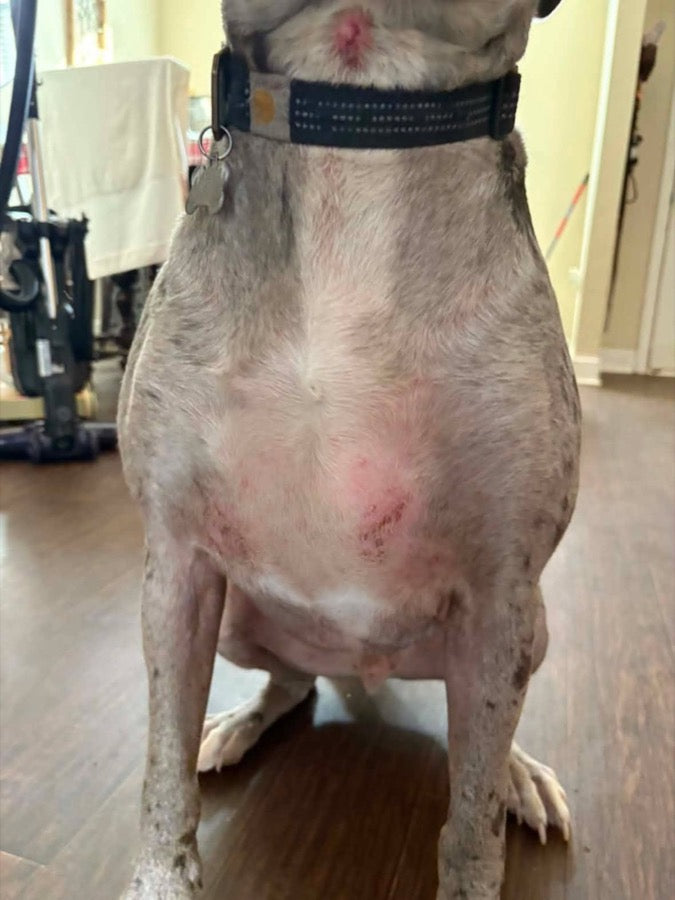
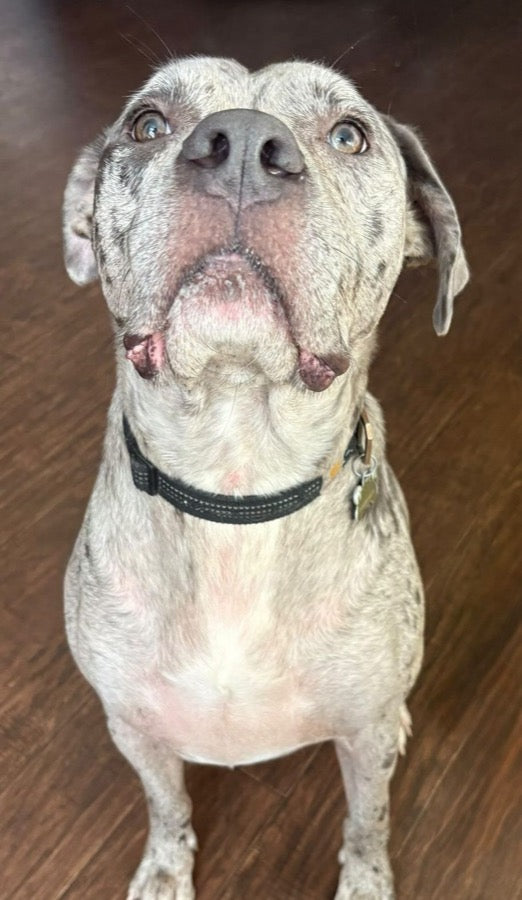
Itchy skin
“I was doubtful it would work.”
After more than a year of trying to calm Ranger’s itchy skin, MacKenzie almost didn’t try one more thing. Two bags of VitaDog Daily later, his coat was growing back and he was finally comfortable.
MacKenzie · Ranger’s owner
Try VitaDogIndividual results. VitaDog supports normal skin and coat health and is not a substitute for veterinary care.
Turmeric for Dogs: Benefits, Exact Dosage & How to Use It
Turmeric is one of the most effective natural anti-inflammatory ingredients for dogs, when you give it in a form your dog can actually absorb. That caveat is doing a lot of work.
Most turmeric given to dogs is largely wasted. The active compound (curcumin) has terrible bioavailability without specific preparation techniques. This guide covers exactly how turmeric works, the right dose for your dog, how to make golden paste properly, and when you should skip the DIY approach and use a piperine-paired curcumin supplement instead.
(If you're asking whether turmeric is safe in the first place, start with our Can Dogs Have Turmeric safety guide.)
How long does turmeric take to work in dogs?
Inflammatory response and joint comfort changes typically appear at 4 to 6 weeks of daily curcumin (the active in turmeric) at 15 to 25 mg/kg/day, with peak effect around 8 to 10 weeks. Bioavailability is the bottleneck · raw turmeric is poorly absorbed without piperine (black pepper extract) or a phospholipid carrier.
Typical timeline
- Weeks 1-3: subclinical anti-inflammatory accumulation. No visible change.
- Weeks 4-6: joint stiffness reduces in dogs with mild osteoarthritis. Skin inflammation markers improve.
- Weeks 7-10: peak effect. NSAID dose reductions sometimes possible (coordinate with vet).
- Beyond 10 weeks: maintenance. Effects sustain as long as supplementation continues.
For absorption, look for products that pair curcumin with piperine (black pepper extract) or a phospholipid carrier. Raw kitchen turmeric without these has poor bioavailability and effect timeline doubles or triples.
What's in Turmeric (And Why Curcumin Is What Matters)
Turmeric is a root spice from the ginger family. The bright yellow color comes from curcuminoids: a family of active compounds.
Curcumin is the most-studied curcuminoid, making up about 3 to 5% of turmeric powder by weight. Curcumin is what delivers nearly all the medicinal benefits attributed to "turmeric."
This distinction matters:
A teaspoon of turmeric powder contains about 100 to 150 mg of curcumin
A standardized curcumin extract supplement contains 95% curcumin by weight
To get the same active dose via raw turmeric, you'd need large volumes, which most dogs won't tolerate, and which also runs straight into a bioavailability problem (more on that below).
Clinical reference: PMC: turmeric and curcumin properties in humans vs dogs.
Benefits of Turmeric for Dogs
The evidence base breaks into three tiers:
Clinical reference: PubMed: curcumin antioxidant effects in dog food.
Strong evidence
Anti-inflammatory action. Curcumin inhibits COX-2 (the same target as NSAIDs) and blocks NF-kB, the master inflammation regulator. Clinical effect: reduced joint inflammation, gut inflammation, and systemic inflammatory markers.
Antioxidant protection. Curcumin directly neutralizes free radicals and upregulates the body's own antioxidant systems (glutathione peroxidase, superoxide dismutase, catalase).
Joint support. Multiple studies document improved mobility and reduced pain in arthritic dogs on bioavailability-enhanced curcumin. Works best combined with glucosamine, MSM, and omega-3.
The Absorption Problem (This Is Where Most Turmeric Fails)
This is where most turmeric use fails. Curcumin has extremely poor oral bioavailability, often cited at 1 to 2% absorption without enhancement. That means a 500 mg curcumin dose might deliver 5 to 10 mg of usable curcumin to your dog's tissues.
At that level, you won't see meaningful anti-inflammatory effects regardless of how long you supplement. Most pet shelf turmeric products fail at exactly this point.
Clinical reference: PMC: curcumin pharmacokinetics in beagle dogs.
Three solutions
1. Piperine (black pepper extract). The most-studied bioavailability enhancer. Piperine inhibits the liver enzyme responsible for curcumin breakdown, increasing bioavailability by up to 2,000% in human studies. This is the single most important addition to any turmeric supplementation protocol. If your turmeric product or recipe doesn't include piperine, the curcumin is being broken down before it can reach the bloodstream.
2. Fat-based delivery. Curcumin is fat-soluble. Combining it with dietary fat (coconut oil, best fish oil, ghee, MCT oil) meaningfully improves absorption.
3. Phytosome or liposomal formulations. Specialized delivery systems that wrap curcumin in phospholipid complexes. Expensive but improve absorption without piperine. Common in premium human supplements, growing in canine products.
If your turmeric product doesn't include at least one of these enhancements, it's largely ineffective. This is true of nearly every "all-in-one" pet supplement that lists turmeric on the label without piperine - the turmeric is mostly being wasted. Notable example: Dasuquin Advanced contains turmeric but no piperine, so the curcumin component is delivering 1 to 2% of its labeled dose.
Turmeric Dosage for Dogs
Dose depends on which form you're using:
Curcumin extract (95% standardized, with piperine)
| Dog weight | Daily dose |
| Under 10 lbs | 50 to 100 mg |
| 10 to 25 lbs | 100 to 200 mg |
| 25 to 50 lbs | 200 to 300 mg |
| 50 to 100 lbs | 300 to 500 mg |
| Over 100 lbs | 500 to 750 mg |
Raw turmeric powder (with fat + black pepper)
| Dog weight | Daily dose |
| Under 10 lbs | 1/16 to 1/8 teaspoon |
| 10 to 25 lbs | 1/8 to 1/4 teaspoon |
| 25 to 50 lbs | 1/4 to 1/2 teaspoon |
| 50 to 100 lbs | 1/2 to 3/4 teaspoon |
| Over 100 lbs | 3/4 to 1 teaspoon |
Start at half the target dose for the first week. Increase if tolerated.
Give once or twice daily with food.
Golden Paste Recipe
Golden paste is the classic DIY turmeric preparation for dogs. The heat activation + oil + pepper combination meaningfully improves absorption over dry-sprinkled turmeric.
Basic recipe
Ingredients:
1/2 cup turmeric powder
1 cup water
1/4 cup coconut oil (or virgin olive oil)
2 teaspoons freshly ground black pepper
Method:
Combine turmeric and water in a small saucepan over low heat
Stir constantly; the mixture will form a thick paste within 7 to 10 minutes
If it becomes too thick or dry, add small amounts of extra water
Remove from heat when it reaches thick paste consistency
Stir in the ground black pepper and coconut oil until smooth
Cool completely before serving
Storage: in an airtight jar in the refrigerator for up to 2 weeks.
How to give
Start small. Introduce 1/8 to 1/4 teaspoon mixed into food for the first few days, then work up to the target dose from the raw turmeric powder table above.
Give once or twice daily with meals.
Who Should NOT Have Turmeric
Turmeric is safe for most dogs but has real contraindications:
If your dog is healthy and not in any of these groups, turmeric is a reasonable supplement to try.
Turmeric Side Effects
At appropriate doses, turmeric is well-tolerated. Side effects reported:
When to Skip the DIY Approach
Golden paste is fine for owners who enjoy the kitchen routine, but it has real limitations:
Stacking other ingredients. Turmeric works best alongside glucosamine, MSM, omega-3, and quercetin for dogs - running them as separate products gets unwieldy.
For most owners, a daily multi-active formula that includes turmeric paired with black pepper extract handles the bioavailability problem and the multi-pathway anti-inflammatory benefit in one product. VitaDog's daily formula includes turmeric paired with black pepper extract at therapeutic dose alongside glucosamine HCl + MSM, quercetin (for histamine and inflammatory response), astragalus root and liquorice root and rosemary extract (adaptogenic and antioxidant support), an anchovy + flaxseed + evening primrose + MCT four-oil blend, and an 8-strain probiotics at 1 billion CFU. The piperine pairing is what makes the curcumin actually absorb; without it, you'd be dosing in vain regardless of how much turmeric was on the label.
See the daily dog multivitamin.
Can dogs have turmeric every day?
Yes, at appropriate doses. Daily turmeric supplementation is the standard approach in canine anti-inflammatory protocols. Most clinical effects take 4 to 6 weeks of consistent daily use to manifest, assuming the turmeric is paired with piperine for absorption.
How much turmeric can I give my dog?
For curcumin extract with piperine: 50 to 750 mg/day depending on weight (see dosage chart above). For raw turmeric powder with golden paste preparation: 1/16 to 1 teaspoon/day depending on weight. Start at half dose and increase over the first week.
Is turmeric or curcumin better for dogs?
Curcumin (the standardized extract) is more potent per milligram than raw turmeric powder. For specific anti-inflammatory effects at therapeutic doses, curcumin extract with piperine is the more efficient route. Raw turmeric in golden paste form is fine for general wellness or if you prefer the DIY approach.
Why does turmeric need black pepper to work?
Curcumin (the active in turmeric) has 1 to 2% oral bioavailability on its own because liver enzymes break it down before it reaches the bloodstream. Piperine (in black pepper extract) inhibits those enzymes and increases curcumin absorption by up to 2,000%. A turmeric supplement without piperine is delivering a fraction of its labeled dose. This is the single most important factor in whether turmeric supplementation actually works.
Can I give my dog human curcumin supplements?
Yes if you dose by weight and check for inappropriate additives (no xylitol, no high-dose iron, no aspirin combinations). Human curcumin is chemically identical to canine-grade curcumin. Pharmaceutical-grade brands like Thorne, Pure Encapsulations, and Life Extension are reasonable choices.
How long does turmeric take to work in dogs?
Anti-inflammatory effects typically visible at 4 to 6 weeks of consistent daily dosing (assuming piperine pairing for absorption). Joint mobility improvements at 6 to 8 weeks. Skin and coat changes at 4 to 8 weeks.
Can puppies have turmeric?
Generally wait until puppies are fully grown (8 to 18 months depending on breed) before adding turmeric. Puppies rarely need anti-inflammatory supplementation, and their developing liver handles supplements less predictably than an adult's.
Can I just sprinkle turmeric powder on my dog's food?
Technically yes, but you'd be largely wasting the turmeric. Without piperine and fat-based delivery, only 1 to 2% of the curcumin reaches the bloodstream. Either pair it with a pinch of black pepper and a teaspoon of fish oil or coconut oil, or use a piperine-included supplement instead.
Broader Context
For the joint side, see glucosamine guide and glucosamine + MSM pillar. For inflammation broadly, the turmeric ingredient page covers dosing in our blend. Our daily supplement includes turmeric with black pepper (piperine) for absorption.
Can Dogs Have Turmeric - Safety Guide, prerequisite safety read
DJD in Dogs, anti-inflammatory protocols for arthritis
Educational content only. This article is not veterinary advice. Always consult your veterinarian before starting, changing, or stopping any supplement, especially if your dog has a medical condition, is pregnant, or is on medication.
References
- Comblain F, Serisier S, Barthelemy N, Balligand M, Henrotin Y. Review of dietary supplements for the management of osteoarthritis in dogs in studies from 2004 to 2014. Journal of Veterinary Pharmacology and Therapeutics. 2016. View source
- Comblain F, Barthelemy N, Lefebvre M, Schwartz C, Lesponne I, Serisier S, Feugier A, Balligand M, Henrotin Y. A randomized, double-blind, prospective, placebo-controlled study of the efficacy of a diet supplemented with curcuminoids extract, hydrolyzed collagen and green tea extract in owner's dogs with osteoarthritis. BMC Veterinary Research. 2017. View source
- Jurenka JS. Anti-inflammatory properties of curcumin, a major constituent of Curcuma longa: a review of preclinical and clinical research. Alternative Medicine Review. 2009. View source
- Aggarwal BB, Yuan W, Li S, Gupta SC. Curcumin-free turmeric exhibits anti-inflammatory and anticancer activities: identification of novel components of turmeric. Molecular Nutrition & Food Research. 2013. View source
- Innes JF, Clayton J, Lascelles BD. Review of the safety and efficacy of long-term NSAID use in the treatment of canine osteoarthritis. Veterinary Record. 2010. View source


