
Dasuquin vs Cosequin vs Dasuquin Advanced: Full Comparison
Dasuquin, Cosequin, and Dasuquin Advanced compared: ingredients, dosage, cost, and which tier your dog actually needs.

Updated August 7, 2026: current Cosequin pricing re-checked against Nutramax's own store, and a direct answer added up top.
The short answer: both are made by Nutramax, and the difference is one ingredient. Cosequin is glucosamine and chondroitin (with MSM in the Maximum Strength version). Dasuquin is that same base plus ASU, avocado-soybean unsaponifiables, which is the ingredient with evidence behind it for slowing cartilage breakdown. Dasuquin Advanced then adds botanicals and eggshell membrane on top.
Which means the practical decision is simpler than the shelf makes it look. If your dog is doing prevention or has mild stiffness, Cosequin covers the base. If there is diagnosed arthritis or real mobility loss, the ASU in Dasuquin is what you are paying the difference for. And whichever you pick, the loading schedule on the label is not optional: Nutramax's own chart puts a dog over 60 lbs on three tablets a day for the first four to six weeks, then one to two after that. Skipping that phase is the most common reason owners conclude it did nothing.
One structural difference worth knowing before you shop: Nutramax sells Cosequin directly to consumers, while Dasuquin is distributed through veterinary clinics and vet portals. That is why you will rarely find Dasuquin at the same retail counter, and why price comparisons between the two are rarely apples to apples.

Both Cosequin and Dasuquin are made by Nutramax. Cosequin (Glucosamine HCl 600mg + Chondroitin 300mg) is the entry tier. Dasuquin keeps the same base and adds ASU (avocado-soybean unsaponifiables, 45mg). Dasuquin Advanced layers in boswellia, green tea EGCG, curcumin and eggshell membrane. Most healthy adult dogs do fine on Cosequin; step up to Dasuquin once arthritis is confirmed on imaging or after 8+ weeks of plateau on Cosequin.
Short answer. Cosequin is the entry-tier joint supplement for dogs with mild or early-stage joint concerns. Dasuquin is the same base formula plus avocado-soybean unsaponifiables (ASU), recommended once cartilage degeneration is already in motion. Dasuquin Advanced adds a botanical anti-inflammatory layer (boswellia, green tea, curcumin, eggshell membrane) for senior or diagnosed-arthritis dogs. Most vets recommend stepping up to Dasuquin when osteoarthritis is confirmed.
Nutramax sells three levels of joint supplement for dogs. Cosequin at the bottom, Dasuquin in the middle, Dasuquin Advanced at the top. Each tier adds active ingredients, raises the price, and narrows the distribution channel.
Most owners do not get a clear explanation of the difference before they buy. The labels look similar. The dosing charts look similar. The pricing roughly doubles at each step but the reason is not always obvious at a glance.
This article is the side-by-side your vet does not always have time for. What each tier contains, how the actives stack up, what the clinical rationale is for stepping up, what real owners are saying, and when the Nutramax ladder stops being the right ladder.
 A VitaDog customer story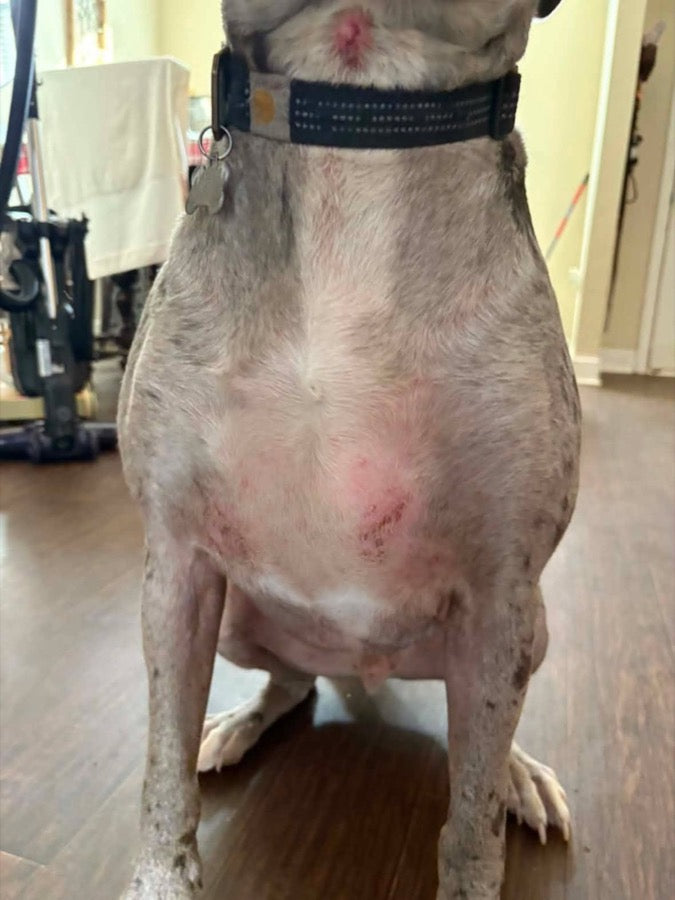
Itchy skin
“I was doubtful it would work.”
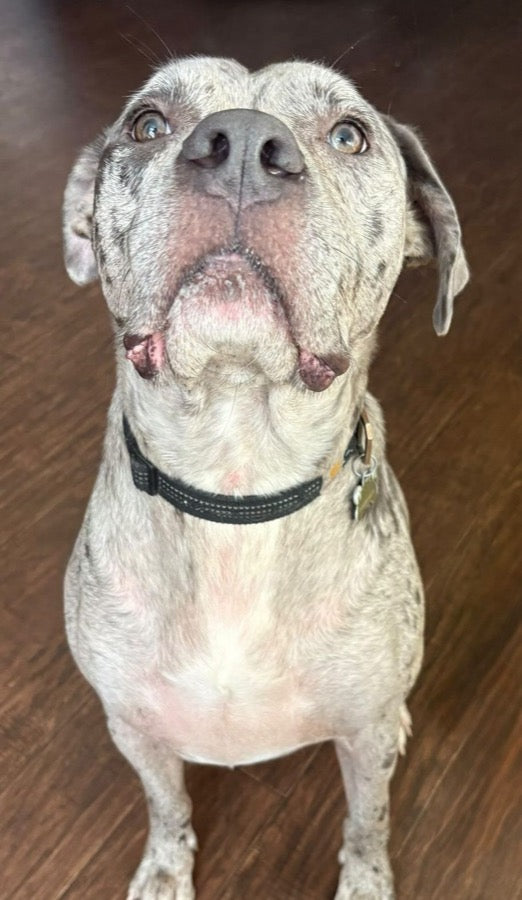
After more than a year of trying to calm Ranger’s itchy skin, MacKenzie almost didn’t try one more thing. Two bags of VitaDog Daily later, his coat was growing back and he was finally comfortable.
MacKenzie · Ranger’s owner
Try VitaDogIndividual results. VitaDog supports normal skin and coat health and is not a substitute for veterinary care.
At a glance: the three tiers
| Cosequin DS | Dasuquin | Dasuquin Advanced | |
|---|---|---|---|
| Glucosamine HCl | 600 mg | 600 mg | 900 mg |
| Chondroitin sulfate | 300 mg | 250 mg | 350 mg |
| MSM | Max Strength tier only (250 mg) | Optional with-MSM SKU | 500 mg standard |
| ASU (avocado-soybean unsaponifiables) | not in formula | 45 mg | 90 mg |
| Boswellia serrata | not in formula | not in formula | ✓ |
| Green tea extract (EGCG) | not in formula | not in formula | ✓ |
| Curcumin (turmeric) | not in formula | not in formula | ✓ |
| Eggshell membrane | not in formula | not in formula | ✓ (in the egg-shell-membrane SKU) |
| Where you buy it | Retail + online | Vet channel (some online) | Vet channel only |
| Cost per day (large dog) | ~$0.80 to $1.10 | ~$1.50 to $2.00 | ~$2.50 to $3.20 |
| One-year cost (large dog) | ~$290 to $400 | ~$540 to $730 | ~$910 to $1,170 |
| Best for | Prophylactic support, young to mid-adult dogs | Confirmed OA, hip/elbow dysplasia, plateaued response to Cosequin | Senior dogs, multi-modal joint protocols, owners consolidating a botanical stack |
Doses vary slightly by chew size. The numbers above reflect the standard large-dog formulations as of 2026.
Cosequin to Dasuquin: the ASU jump
The single biggest formulation difference between Cosequin and Dasuquin is avocado-soybean unsaponifiables (ASU). ASU is a plant-derived extract that has accumulated meaningful clinical evidence for reducing cartilage breakdown and slowing osteoarthritis progression.
What the research suggests:
- ASU appears to reduce matrix metalloproteinase activity (enzymes that degrade cartilage)
- Multi-year human trials show slower radiographic progression of osteoarthritis
- In dogs, ASU has been studied specifically in hip OA with positive outcomes on lameness scores
ASU is the reason Dasuquin commands a meaningful premium over Cosequin. For dogs with active cartilage degeneration, hip dysplasia, elbow dysplasia, or established OA, that premium is more likely to be justified.
For a younger dog on early-stage joint support, the ASU benefit is less clinically pronounced and Cosequin is often adequate.
Dasuquin to Dasuquin Advanced: the botanical and eggshell layer
Dasuquin Advanced takes the Dasuquin base and adds a botanical anti-inflammatory layer plus eggshell membrane:
The step from Dasuquin to Dasuquin Advanced is smaller than the step from Cosequin to Dasuquin, in terms of marginal ingredient impact. It is real, but it is incremental rather than transformative. Where it earns its place is for the owner who would otherwise be giving a separate boswellia or curcumin supplement on top of Dasuquin: Advanced consolidates that stack.

Loading and maintenance: the universal pattern
All three tiers follow the same loading-then-maintenance pattern:
| Dog weight | Loading (4 to 6 weeks) | Maintenance |
|---|---|---|
| Under 30 lbs | 1 soft chew/day | ½ chew/day |
| 30 to 60 lbs | 2 chews/day | 1 chew/day |
| 60 to 120 lbs | 3 chews/day | 2 chews/day |
| Over 120 lbs | 4 chews/day | 3 chews/day |
Expect 4 to 6 weeks to see mobility changes. This is the universal pattern for glucosamine-based joint supplements, not a Dasuquin- or Cosequin-specific delay. Glucosamine accumulates slowly in connective tissue and synovial fluid. The loading dose front-loads that accumulation; the maintenance dose holds the tissue concentration.
Dasuquin is typically given with food. GI tolerance is excellent in most dogs; soft stool in the first week is the most common transient issue and usually resolves without intervention.
Dasuquin with MSM vs without
Dasuquin comes in two SKUs: with MSM and without. The with-MSM version adds methylsulfonylmethane, a sulfur-donating compound with mild anti-inflammatory and analgesic properties.
Who should pick the MSM version:
- Dogs with visible inflammation (hot, swollen, or painful joints)
- Senior dogs in active arthritis rather than prophylactic care
- Owners who are not supplementing MSM separately elsewhere
Who can skip it:
- Dogs on a separate MSM source
- Dogs already on prescription NSAIDs (additional MSM is low-yield when pharmaceutical anti-inflammatories are already on board)
- Dogs with documented sulfur sensitivity (rare)
The MSM version costs slightly more. The ingredient is inexpensive enough that the markup is modest, and in most cases the with-MSM version is the default recommendation when the dog has active joint discomfort.
What it actually costs over a year
Owners often compare per-bottle prices. The decision that matters is the per-year cost at maintenance dose, because joint support is a multi-year commitment.
For a 70-lb dog at full maintenance:
For comparison, an all-in-one daily supplement that covers joints plus gut, skin and immune system in one powder typically lands around $480 to $600 a year for the same dog, which puts it between the Cosequin and Dasuquin tiers on price while broadening what the supplement actually does.
What real owners say
Three patterns repeat across Reddit threads, our honest Chewy marketplace review product Q&A, and vet-clinic Facebook posts:
The recurring theme: Cosequin and Dasuquin work, but they are joint-only supplements, and many owners end up adding best fish oil, green-lipped mussel or a separate omega-3 capsule on top. That stacking decision is where owners start asking whether a single multi-system formula would be simpler.
Stay on Cosequin if
- Your dog is under 6 and joint symptoms are mild or prophylactic
- You are seeing measurable improvement after 8 weeks
- Budget is a meaningful constraint and you need to stretch joint support across a long horizon
Step up to Dasuquin if
- Your dog has diagnosed OA, hip dysplasia, or visible arthritic changes on imaging
- Cosequin has been at full dose for 8+ weeks with partial or plateau response
- Your dog is a senior large or giant breed (Labrador, Golden Retriever, German Shepherd, Mastiff, Great Dane, Saint Bernard)
Step up to Dasuquin Advanced if
- You are already on Dasuquin and want to consolidate your turmeric, boswellia or green-tea stack into one chew
- Your vet is recommending multi-modal joint support and convenience matters
- The eggshell-membrane SKU is appealing to you and you understand it adds collagen and hyaluronic acid precursors that the plain Dasuquin does not have
Consider a different supplement entirely if
- You are supplementing Cosequin or Dasuquin alongside a separate omega-3 product plus gut, skin, or immune supplements, you have effectively rebuilt a full daily stack out of multiple bottles when a single-formula alternative exists
- You want a real delivered omega-3 dose alongside your joint support (none of the Nutramax tiers include one, they are joint-first by design)
- You want curcumin paired with piperine for absorption (Dasuquin Advanced contains curcumin but does not pair it with a bioavailability enhancer)
What Nutramax does well
Give credit where it is due:

What Nutramax leaves out
The Cosequin and Dasuquin line is purpose-built as a joint supplement, and the trade-off is that anything outside of joint care is out of scope :
That is the honest scope gap. Nutramax is excellent at what it does. Once you want to cover anything beyond joints, you are buying more bottles.
Side effects, safety, and when to stop
Dasuquin and Cosequin have excellent safety profiles, but no supplement is risk-free. Two things to flag before getting into the per-product side-effect list :
Here is the honest list of what else to watch for :
For most dogs, the side-effect profile is “soft stool for a few days, then nothing.” That is exactly what you should expect.
The alternative: one supplement, broader coverage
If you are running Dasuquin plus a fish oil plus a separate gut or multivitamin product, you have already decided that complete daily support for your dog takes a stack. The question is whether multiple bottles and multiple dose schedules is the most efficient way to deliver it.
VitaDog is built around a different trade-off than Dasuquin. Dasuquin Advanced is a dedicated joint supplement that bundles chondroitin, ASU, boswellia, green tea extract and eggshell membrane into a single chew focused on joints. VitaDog is built for breadth in one daily routine : a 400 mg glucosamine HCl + 200 mg MSM joint base per scoop, plus :
- An 8-strain probiotics at 1 billion CFU with inulin and pumpkin prebiotics
- A separate fresh liquid omega-3 dropper combining anchovy fish oil, flaxseed oil, evening primrose oil and MCT oil from coconut (the omega-3 dose Dasuquin does not deliver at all)
- Turmeric paired with black pepper extract for piperine-driven absorption
- quercetin for dogs, astragalus root, liquorice root, rosemary extract for the antioxidant and anti-inflammatory layer
- A complete vitamin and mineral profile including methylcobalamin B12 and chelated trace minerals (zinc proteinate, manganese proteinate, copper bisglycinate)
- Sodium hexametaphosphate for dental support
All delivered as powder mixed into food once a day, plus the oil dropper.
Both products handle joints, in different ways. Dasuquin Advanced runs the longest list of joint-specific actives in a single chew: chondroitin, ASU, boswellia, green tea and eggshell membrane on top of glucosamine. VitaDog handles joints with glucosamine HCl and MSM at the active core, then adds the inputs that joint inflammation responds to but Dasuquin leaves out: a delivered omega-3 dose in the liquid dropper (the format the canine absorption research favours), turmeric paired with piperine for absorption, and an antioxidant layer with quercetin, astragalus, liquorice and rosemary. That same daily scoop also covers gut, skin, immune and longevity. The honest read: Dasuquin has the deeper list of joint-isolated ingredients; VitaDog has a joint stack with the omega-3 and antioxidant cover Dasuquin lacks, inside a complete daily protocol.
See how the VitaDog formula breaks down ingredient-by-ingredient.
This is not a pitch to switch impulsively. If Cosequin or Dasuquin is working for your dog, keep going. It is information for owners who are already stacking supplements and wondering whether a simpler protocol exists.
For the foundational review of the retail tier, see our full Cosequin for Dogs review.
Is Dasuquin better than Cosequin?
Dasuquin adds avocado-soybean unsaponifiables (ASU), which has clinical evidence for slowing cartilage breakdown in osteoarthritis. For dogs with established joint disease, Dasuquin is generally the stronger pick. For prophylactic joint support in younger dogs, Cosequin is often adequate and considerably cheaper.
Is Dasuquin Advanced worth the extra cost over regular Dasuquin?
Dasuquin Advanced adds boswellia, green tea extract, curcumin and (in the egg-shell-membrane SKU) eggshell membrane to the base Dasuquin formula. If you are already buying those ingredients separately, consolidating them into Advanced can simplify your routine. If you are not, the incremental benefit over Dasuquin plain is modest.
What is Dasuquin Advanced with eggshell membrane?
It is a Dasuquin Advanced SKU that adds eggshell membrane to the formula. Eggshell membrane is rich in glycosaminoglycans, collagen and hyaluronic acid precursors. Clinical studies in humans and dogs show improved joint comfort and mobility within 7 to 30 days, which is faster than the 4 to 6 weeks typical of glucosamine-only protocols.
Can I give my dog Dasuquin and Cosequin together?
There is no safety reason not to, but there is no therapeutic reason to either. Dasuquin contains the same glucosamine and chondroitin as Cosequin (at similar doses) plus extras. Doubling up just stacks the same actives. Pick one.
How long does Dasuquin take to work?
Plan for 4 to 6 weeks at loading dose before judging effectiveness. The ASU component may take slightly longer than glucosamine alone to reach steady-state tissue concentrations. Don’t abandon the protocol before 8 weeks.
Is Dasuquin safe for long-term daily use?
Yes. Dasuquin’s safety profile is comparable to Cosequin’s: mild transient GI upset in a minority of dogs, rare allergic reactions tied to shellfish-sourced glucosamine, and no significant drug interactions with common canine NSAIDs. Long-term use over multiple years is well-tolerated in clinical observation.
What are the side effects of Dasuquin?
The most common side effect is mild, transient GI upset in the first week: loose stool, mild gas, or a temporary appetite dip. It usually resolves within 5 to 10 days. Rare side effects include shellfish-allergy reactions and skin sensitivities. Persistent diarrhea, vomiting beyond the first week, or any new skin reaction should prompt you to stop the supplement and call your vet.
Does Dasuquin contain fish oil or omega-3?
No. Neither Dasuquin nor Dasuquin Advanced delivers a therapeutic dose of EPA or DHA. If your dog needs omega-3 support for joints or skin, you will need to add a separate fish oil.
Is Dasuquin good for German Shepherds or Labs prone to hip dysplasia?
Yes, large breeds genetically predisposed to hip and elbow dysplasia are a primary use case for Dasuquin and Dasuquin Advanced. Many vets start a Dasuquin protocol around 5 to 7 years old in those breeds, before clinical OA appears on imaging. Combining Dasuquin with weight management, regular low-impact exercise, and a separate omega-3 source covers most of what current evidence supports.
Why is Dasuquin only sold through vets?
Nutramax maintains a veterinary-exclusive channel for Dasuquin and Dasuquin Advanced as a positioning choice. It keeps vets engaged with the brand and differentiates the tiers from retail Cosequin. Online vet-portal sales have loosened this somewhat, but your primary source is still your vet’s pharmacy.

Frequently asked questions
Short answers to the side-by-side questions owners most often ask about Cosequin and Dasuquin.
What's the difference between Dasuquin and Cosequin?
Cosequin contains Glucosamine HCl 600mg + Chondroitin sulfate 300mg. Dasuquin keeps the same Glucosamine + Chondroitin base and adds avocado-soybean unsaponifiables (ASU, 45mg), a clinically-studied compound that slows cartilage breakdown. Dasuquin Advanced layers in boswellia, green tea EGCG, curcumin and eggshell membrane on top.
What's the difference between Cosequin and Dasuquin for dogs?
The practical difference for owners: Cosequin works for daily maintenance and mild or early joint concerns. Dasuquin is the upgrade once arthritis is confirmed on imaging or when 8+ weeks of full-dose Cosequin has plateaued. Same Nutramax quality control, the only active difference is the ASU addition.
Should I give my dog Cosequin or Dasuquin?
Start with Cosequin if your dog is under 6, joint symptoms are mild, or you are supplementing prophylactically. Step up to Dasuquin if your vet has confirmed osteoarthritis, hip dysplasia or visible arthritic changes on imaging, or if Cosequin at full dose has plateaued. Dasuquin Advanced is for senior dogs already on Dasuquin who want a multi-modal anti-inflammatory layer.
Is Cosequin or Dasuquin better for senior dogs?
For senior dogs without diagnosed arthritis, Cosequin remains a reasonable maintenance choice. For senior large or giant breeds (Labrador, Golden Retriever, German Shepherd, Mastiff, Great Dane, Saint Bernard) or any senior with confirmed joint disease, Dasuquin is the typical step up because the ASU evidence for slowing cartilage breakdown is most relevant at that stage.
How does Nutramax's Dasuquin compare to Cosequin?
Nutramax sells both. Dasuquin is positioned one tier above Cosequin in the same lineup, with the same Glucosamine + Chondroitin base plus ASU at 45mg. Dasuquin is distributed primarily through veterinary channels while Cosequin is widely available retail. Pricing roughly doubles between the two tiers.
Can I switch my dog from Cosequin to Dasuquin?
Yes. Both share the same Glucosamine + Chondroitin base, so there is no washout period or transition risk. Most vets recommend running the Dasuquin loading dose for 4-6 weeks (typically double the maintenance dose), then dropping to maintenance. Watch for the rare GI upset that any joint supplement transition can trigger.
Related reading
Educational content only. This article is not veterinary advice. Always consult your veterinarian before starting, changing, or stopping any supplement, especially if your dog has a medical condition, is pregnant, or is on medication.


