MSM for Dogs: Benefits, Exact Dosage & Safety (2026 Guide)
MSM for dogs (methylsulfonylmethane): joint + connective tissue support, dose by weight, evidence beyond glucosamine. Plus MSM in VitaDog's daily powder.

MSM (methylsulfonylmethane) is one of the most underrated joint supplement ingredients for dogs. It's in almost every premium canine joint formula, but few owners understand exactly what it does or why it's there.
The short version: MSM is an organic sulfur compound that reduces joint inflammation, supports connective tissue, and meaningfully amplifies the effectiveness of glucosamine + MSM. It's safe, well-tolerated, and has decades of use in veterinary joint care.
This guide covers what MSM actually is, how it works, the exact dose your dog needs, what to pair it with for real effect, and when to skip it.
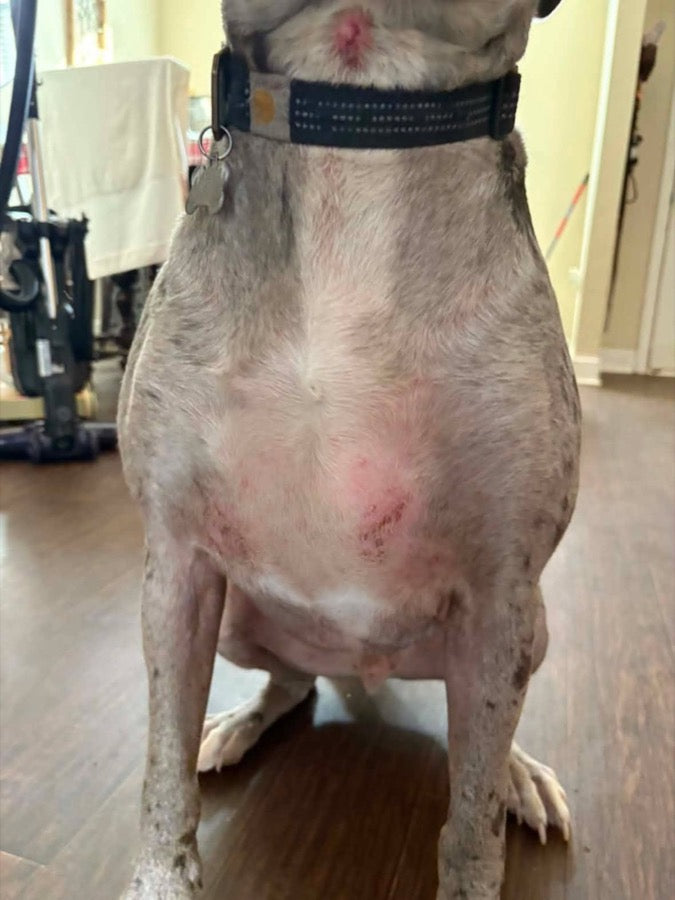
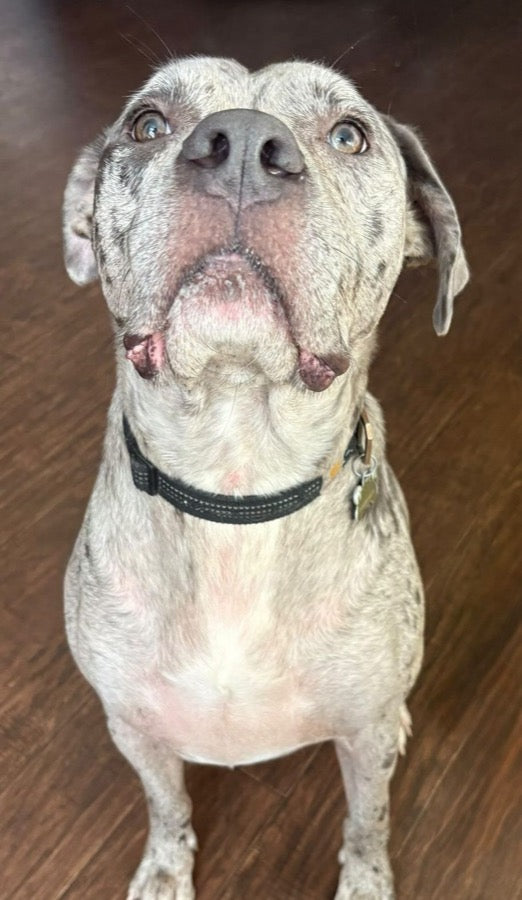
Itchy skin
“I was doubtful it would work.”
After more than a year of trying to calm Ranger’s itchy skin, MacKenzie almost didn’t try one more thing. Two bags of VitaDog Daily later, his coat was growing back and he was finally comfortable.
MacKenzie · Ranger’s owner
Try VitaDogIndividual results. VitaDog supports normal skin and coat health and is not a substitute for veterinary care.
What Is MSM?
MSM stands for methylsulfonylmethane. It's a natural sulfur-containing compound found in small amounts in many plants, fruits, vegetables, meat, and milk, but at levels too low to be therapeutic through diet alone.
The sulfur it delivers is the critical piece. Sulfur is an essential structural component of:
Dogs get some sulfur from protein in their diet, but in dogs with joint issues or chronic inflammation, the additional sulfur from MSM supplementation meaningfully supports repair and anti-inflammatory processes.
How Does MSM Work in Dogs?
Three primary mechanisms:
1. Anti-inflammatory action
MSM reduces production of inflammatory cytokines (signaling molecules) and inhibits nuclear factor kappa B (NF-kB), a master regulator of inflammatory genes. The effect is modest per molecule but consistent across multiple inflammation pathways.
Not as powerful as prescription NSAIDs, but safe for long-term daily use and complementary with other anti-inflammatories.
2. Connective tissue support
MSM provides sulfur in a highly bioavailable form for cartilage, collagen, and keratin synthesis. Dogs with chronic joint issues, coat problems, or slow wound healing often show measurable improvement on MSM supplementation, reflecting better raw-material availability for tissue repair.
3. Free radical scavenging
MSM has modest antioxidant activity and supports the body's own antioxidant enzymes. Relevant for aging dogs and dogs with chronic inflammatory conditions where oxidative stress accelerates tissue damage.
Benefits of MSM for Dogs
Evidence supports MSM for:
Which dogs benefit most?
MSM Dosage for Dogs (By Weight)
The general veterinary guideline: 50 to 100 mg MSM per 10 pounds body weight per day.
| Dog weight | Daily MSM dose | Loading dose (first 4-6 weeks) |
| Under 10 lbs | 50 to 100 mg | 100 to 150 mg |
| 10 to 25 lbs | 100 to 250 mg | 200 to 400 mg |
| 25 to 50 lbs | 250 to 500 mg | 400 to 750 mg |
| 50 to 75 lbs | 500 to 750 mg | 750 to 1,000 mg |
| 75 to 100 lbs | 750 to 1,000 mg | 1,000 to 1,500 mg |
| Over 100 lbs | 1,000+ mg | 1,500+ mg |
Practical tips
Divide doses morning and evening for better absorption if giving above 500 mg/day
Give with food to minimize any digestive upset
Consistency over perfection: a slightly lower dose given daily beats a higher dose given inconsistently
Loading phase of 4 to 6 weeks can speed initial effect but isn't strictly necessary
MSM Side Effects and Safety
MSM is one of the safest supplements available for dogs. Side effects are rare and typically mild:
Common (less than 5% of dogs):
Mild GI upset in the first 3 to 7 days: soft stool, gas, occasional vomiting
Increased thirst (MSM can mildly increase water turnover)
Rare:
Transient lethargy
Mild skin rash (very rare)
When to be cautious:
Dogs on blood thinners. MSM has very mild antiplatelet activity. Not a major concern at typical doses, but discuss with your vet if on warfarin or other anticoagulants.
Dogs with active GI disease. Introduce slowly; the sulfur can irritate already-inflamed GI tracts.
Dogs scheduled for surgery. Pause MSM 1 to 2 weeks before elective surgery out of caution, similar to many other joint supplements.
Pregnant or nursing dogs. Safety hasn't been well-established in reproduction. Avoid unless vet-recommended.
Toxicity
MSM has an extremely wide safety margin. Animal studies have tested doses many times higher than typical supplementation with no observed toxicity. Accidental overdose from eating a bag of supplements typically causes nothing more than GI upset from volume.
MSM Alone vs MSM Combinations
MSM works alone but works significantly better in combination. The most evidence-backed pairings:
MSM + Glucosamine
The most-studied canine joint combination. Multiple trials show better outcomes on pain, mobility, and stride length with the combination versus either alone. The mechanism is complementary: glucosamine rebuilds cartilage; MSM reduces the inflammation breaking down the cartilage you're trying to rebuild.
Most canine joint products that include both do so at appropriate ratios. See our glucosamine for dogs guide for the pairing logic.
MSM + Chondroitin + Glucosamine (The Classic Triple)
The glucosamine-chondroitin base with MSM layered on top. This is the profile of Cosequin Maximum Strength Plus MSM and most full-strength joint formulas. Evidence strongest when all three are at clinically-dosed levels.
MSM + Omega-3
Different anti-inflammatory pathways, both contributing to joint health. Omega-3 works through EPA/DHA on cell membrane prostaglandins; MSM works through NF-kB and cytokine modulation. Stacking makes sense.
For omega-3 dosage, see our Fish Oil Dosage for Dogs guide.
MSM + Turmeric (with black pepper extract)
Both anti-inflammatory, different mechanisms. Critical caveat: curcumin (the active in turmeric) has 1 to 2% oral bioavailability without an absorption enhancer. Black pepper extract (piperine) increases that by up to 2,000%. Turmeric without piperine is largely wasted. Used together, MSM and curcumin-with-piperine cover broader inflammatory pathways than either alone. See Can Dogs Have Turmeric for the curcumin side.
MSM + Quercetin
quercetin for dogs is a flavonoid with anti-inflammatory and antihistamine activity, often called "nature's Benadryl" for its histamine-modulating effect. Pairs well with MSM in dogs whose joint issues overlap with allergic load.
How Long Does MSM Take to Work?
Realistic timeline:
If no effect after 12 weeks at appropriate dose: the joint damage may be beyond what MSM can address alone. Consider adding a layered anti-inflammatory protocol (turmeric with piperine, omega-3, quercetin) or consulting your vet for imaging and additional options.
When to Start MSM
Like glucosamine, prevention works better than treatment. Consider starting MSM supplementation:
Typical maintenance can be indefinite. MSM isn't a drug you "come off of"; it's a nutritional support that continues to provide benefit as long as it's given.
What to Look For in an MSM Product
Purity. Pharmaceutical-grade MSM is preferred. Look for products specifying "OptiMSM" or similar third-party verified forms.
Dose per serving. Check milligrams of actual MSM, not total supplement weight.
Formulation context. Stand-alone MSM is fine but you'll almost certainly do better with a combined formula that includes glucosamine, omega-3, and ideally turmeric paired with piperine for layered anti-inflammatory action.
Avoid. Products with added artificial sweeteners, xylitol (toxic to dogs), excessive flavor fillers, brewers yeast (can drive itching and yeast overgrowth in sensitive dogs), or unclear sourcing.
The Multi-Pathway Approach
For real effect on canine joint health and broader anti-inflammatory support, MSM is one piece of a larger stack. Modern protocols layer:
Running these as separate products is expensive and makes daily compliance harder. VitaDog consolidates the multi-pathway approach into a single daily formula:
For related reading, see our DJD in dogs guide for the full multi-modal approach to canine arthritis, and best joint supplement for dogs for product comparison.
What is MSM in dog supplements?
MSM stands for methylsulfonylmethane. It's an organic sulfur compound that supports cartilage, connective tissue, and reduces inflammation in dogs. Commonly found in joint supplements alongside glucosamine.
Is MSM safe for dogs?
Yes. MSM has one of the widest safety margins among canine supplements. Side effects at appropriate doses are rare and mild. Caution in dogs on anticoagulants, with active GI disease, or scheduled for surgery.
How much MSM can I give my dog?
50 to 100 mg per 10 pounds body weight daily. For a 50-lb dog, that's 250 to 500 mg/day. During a 4 to 6 week loading phase, 1.5x that dose is reasonable. Give with food to minimize digestive upset.
Can I give my dog human MSM supplements?
Yes, if you dose by weight and check for inappropriate additives. Human MSM is chemically identical to pet-grade MSM. Avoid products with xylitol, artificial sweeteners, or flavorings not appropriate for dogs.
What's the difference between MSM and glucosamine?
Glucosamine provides raw material for cartilage repair. MSM provides sulfur for cartilage structure and reduces inflammation. They work on different parts of the problem and are commonly used together. See our glucosamine for dogs guide for the pairing logic.
How long does MSM take to work in dogs?
Most dogs show visible improvement by 6 to 8 weeks of consistent daily supplementation. Subtle effects may appear earlier (3 to 4 weeks). Full peak effect at 10 to 12 weeks. If no effect by 12 weeks, the dose may be inadequate or the joint damage may require additional interventions.
Should MSM be paired with turmeric?
Yes, with one important caveat: the turmeric must include black pepper extract (piperine) for the curcumin to actually absorb. Turmeric on its own delivers 1 to 2% of its labeled dose to the bloodstream. With piperine, that figure rises by up to 2,000%. MSM and curcumin-with-piperine work through complementary anti-inflammatory pathways and stack well.
Educational content only. This article is not veterinary advice. Always consult your veterinarian before starting, changing, or stopping any supplement, especially if your dog has a medical condition, is pregnant, or is on medication.
References
- Kim LS, Axelrod LJ, Howard P, Buratovich N, Waters RF. Efficacy of methylsulfonylmethane (MSM) in osteoarthritis pain of the knee: a pilot clinical trial. Osteoarthritis and Cartilage. 2006. View source
- Brien S, Prescott P, Bashir N, Lewith H, Lewith G. Systematic review of the nutritional supplement methylsulphonylmethane (MSM) in the treatment of osteoarthritis. Osteoarthritis and Cartilage. 2008. View source
- Usha PR, Naidu MU. Randomised, double-blind, parallel, placebo-controlled study of oral glucosamine, methylsulfonylmethane and their combination in osteoarthritis. Clinical Drug Investigation. 2004. View source
- Pagonis TA, Givissis PA, Kritis AC, Christodoulou AC. The effect of methylsulfonylmethane on osteoarthritic large joints and mobility. International Journal of Orthopaedics. 2014. View source
- Butawan M, Benjamin RL, Bloomer RJ. Methylsulfonylmethane: applications and safety of a novel dietary supplement. Nutrients. 2017. View source