
Salmon Oil for Dogs: Source, Dose & Quality That Matter
Salmon oil for dogs guide: wild Alaskan vs farmed, dose by weight, quality markers. Plus 1,200+ mg EPA + DHA per serving in VitaDog's daily powder.

 A VitaDog customer story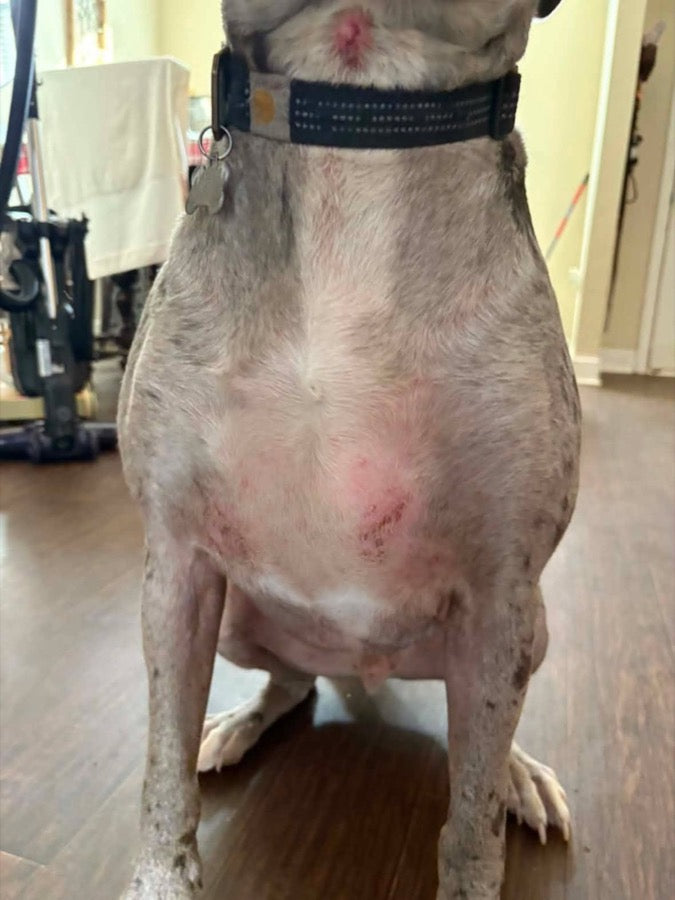
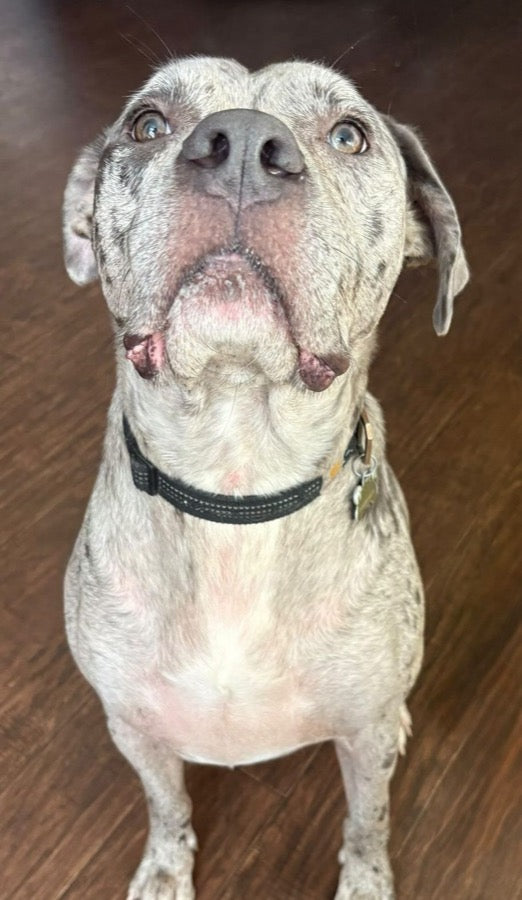
Itchy skin
“I was doubtful it would work.”
After more than a year of trying to calm Ranger’s itchy skin, MacKenzie almost didn’t try one more thing. Two bags of VitaDog Daily later, his coat was growing back and he was finally comfortable.
MacKenzie · Ranger’s owner
Try VitaDogIndividual results. VitaDog supports normal skin and coat health and is not a substitute for veterinary care.
Salmon Oil for Dogs: Why It's Not the Cleanest Omega-3 Option
Salmon oil is one of the most popular omega-3 sources for dogs. It's widely stocked, often cheaper per bottle than concentrated alternatives, and the "Wild Alaskan" branding reads as premium. But not all salmon oil is equal, and salmon oil itself isn't the cleanest omega-3 choice for every dog - anchovy and sardine sources are meaningfully purer per gram of EPA delivered.
This guide covers what you're actually buying when you pick up a bottle of salmon oil, how it compares to other best fish oil sources, which brands are worth the money, and when you should consider a non-salmon alternative.
What Is Salmon Oil?
Salmon oil is the extracted oil from salmon fish, primarily the flesh and skin, occasionally whole fish. It's rich in:
Salmon oil concentration typically runs 300 to 400 mg EPA + DHA per teaspoon. That's roughly half what concentrated anchovy-based products (Nordic Naturals Pet Omega-3, similar pharmaceutical-grade brands) deliver per teaspoon - so therapeutic doses require larger volumes of salmon oil to reach the same EPA + DHA target.
Benefits of Salmon Oil for Dogs
Same fundamental benefits as any high-quality omega-3 source:
For the deeper biochemistry on how omega-3 works in dogs, see our fish oil & omega-3 for dogs complete guide.
For exact dosing by weight and condition, see Fish Oil Dosage for Dogs.
The Source Quality Issue (Salmon vs Anchovy)
Here's the part of the salmon oil story most marketing skips: salmon isn't the cleanest fish source for omega-3 supplementation. Anchovy and sardine sit lower on the food chain and accumulate dramatically less mercury, PCBs, and dioxins per gram of oil delivered.
The mechanism is straightforward:
Anchovies are tiny fish (typically under 6 inches), live just 1 to 2 years, and feed on plankton at the bottom of the food chain. Limited time and limited dietary contamination input means limited bioaccumulation.
Salmon are mid-sized fish (1 to 3+ feet), live 5 to 8 years, and eat smaller fish (often anchovies, sardines, herring) that have already accumulated some marine pollutant load. The salmon then concentrates that contamination in its tissues over its longer lifespan.
This is why pharmaceutical-grade fish oil for human use - Nordic Naturals (in their human line), Carlson, Pure Encapsulations, Thorne - sources from anchovy and sardine, not salmon. Anchovy is also naturally higher in EPA per gram of oil than salmon, so the EPA density is better even before factoring in purity. MSC-certified Peruvian anchoveta is the gold standard.
The gap isn't huge - Wild Alaskan salmon oil with proper third-party testing is still genuinely cleaner than most human food fish - but at the supplement level, where you're concentrating fish into a daily dose, the difference compounds. For dogs at therapeutic-dose omega-3 (50 to 100 mg EPA + DHA per pound body weight), anchovy is meaningfully cleaner per dose delivered.
Wild Alaskan Salmon Oil vs Farmed Salmon Oil
Within the salmon category, source matters meaningfully for both purity and fatty acid profile.
Farmed Atlantic salmon
Within salmon, Wild Alaskan is the cleaner sub-category - better inputs, natural fatty acid profile, better contamination profile. But wild salmon is still salmon, and salmon is still higher on the food chain than anchovy.
A high-quality farmed operation with documented testing can outperform a poorly managed wild harvest, but the easiest way to maximize purity per dose is to step away from salmon entirely and use anchovy-source oil. The single biggest quality marker across any product is third-party contamination testing.
Salmon Oil vs Anchovy/Sardine Oil
Direct comparison:
| Salmon oil | Anchovy/Sardine oil | |
| Fish size | Medium-large (up to 3+ feet) | Small (typically under 12 inches) |
| Trophic level | Higher (predatory) | Lower (plankton-feeding) |
| Lifespan | 5 to 8 years | 1 to 2 years |
| Heavy metal accumulation | Higher potential | Lower potential |
| Omega-3 concentration per teaspoon | 300 to 400 mg EPA+DHA | 600 to 800 mg EPA+DHA in concentrated brands |
| EPA density per gram of oil | Lower | Higher |
| Astaxanthin | Present (natural) | Minimal |
| Flavor | Distinctive "salmon" (some dogs prefer) | Neutral |
| Cost per gram EPA+DHA | Higher | Lower |
| Used in pharmaceutical-grade human supplements | Rarely | Standard |
Practical takeaway: at therapeutic doses, concentrated anchovy/sardine products typically win on purity, EPA density, cost-per-dose, and overall quality. Salmon oil works for small dogs at maintenance doses where the lower concentration is sufficient, or for owners specifically wanting astaxanthin's antioxidant contribution.
For most dogs needing meaningful omega-3 support - therapeutic doses for arthritis, atopic skin, IBD, cardiac, or renal conditions - anchovy oil is the better default than salmon oil. Larger dogs in particular save meaningful money and reduce contamination ceiling by switching from salmon to concentrated anchovy.
See our Nordic Naturals vs Zesty Paws comparison for concrete brand math on this trade-off.
Quality Markers for Salmon Oil
If you're going to use salmon oil specifically, here's what separates worthwhile bottles from cheap ones:
1. Source transparency
Does the label specify "Wild Alaskan salmon"? Or just "salmon"? Vague sourcing is a red flag - it usually means farmed Atlantic salmon at commodity scale.
2. Third-party testing
Mercury, heavy metals, PCBs, dioxins. Look for IFOS certification (International Fish Oil Standards), published Certificate of Analysis on request, and specific contamination thresholds cited.
3. Triglyceride form
TG form preserves natural bioavailability. Ethyl ester (EE) form is cheaper but 20 to 30% less bioavailable. Quality salmon oils specify TG.
4. Packaging
Dark glass or oxygen-protected bottles extend shelf life. Clear plastic containers allow faster oxidation. Pump-top bottles introduce less oxygen per use than screw-caps.
5. Freshness indicators
Recent manufacture date, appropriate expiration window. Rancid fish oil is worse than no fish oil - oxidized omega-3 is pro-inflammatory rather than anti-inflammatory, undoing the entire point of supplementation. Always refrigerate after opening. If the oil smells overly fishy or rancid, throw it out.
6. Astaxanthin content
Wild salmon naturally contains astaxanthin. A reddish-orange oil color is a positive sign of natural preservation. Clear or faded-colored salmon oil suggests processing that may have damaged the profile.
Salmon Oil Dosage for Dogs
Dose depends on your dog's weight and reason for supplementation:
Maintenance (general health, coat support)
20 to 55 mg combined EPA + DHA per pound body weight daily.
For a 50-lb dog on 350 mg EPA+DHA per teaspoon salmon oil: 3 to 8 teaspoons daily.
Therapeutic (arthritis, allergies)
50 to 75 mg EPA+DHA per pound body weight daily.
For a 50-lb dog: 7 to 11 teaspoons daily.
Active disease (IBD, severe inflammation)
75 to 100 mg EPA+DHA per pound body weight daily.
For a 50-lb dog: 11 to 14 teaspoons daily.
At therapeutic and active-disease doses, salmon oil gets impractical by volume. A 50-lb dog needing therapeutic dose would be getting 2 to 3 tablespoons daily of salmon oil. This is one of the practical reasons many owners switch to concentrated anchovy alternatives at therapeutic dose levels - same EPA + DHA target in half the volume, with cleaner source material.
Zesty Paws Wild Alaskan Salmon Oil
Mass-market, widely available. Wild Alaskan sourcing claimed. Pump-top bottle convenience. 300 to 400 mg EPA+DHA per teaspoon typical. Adequate for small dogs at maintenance dose; gets impractical and contamination-ceiling at therapeutic dose for larger dogs.
Grizzly Salmon Oil
One of the longer-running pet salmon oil brands. Wild Alaskan source. Similar concentration to Zesty Paws. Available in larger pump bottles for multi-dog households.
Generic store-brand salmon oils
Variable quality. Often farmed Atlantic salmon without explicit labeling. Lower price point but contamination testing typically not published. Hard to recommend without seeing testing data.
For the salmon vs anchovy showdown specifically, see Nordic Naturals vs Zesty Paws.
When Salmon Oil Is the Right Choice
Salmon oil makes sense if:
Your dog is small (under 25 lbs) and the lower EPA + DHA per teaspoon is still sufficient for the maintenance dose
Your dog specifically prefers the salmon flavor (palatability is real)
You're using it as a maintenance supplement for general wellness, not therapeutic dosing for diagnosed conditions
You want the natural astaxanthin antioxidant contribution
Your budget prioritizes cost per bottle over cost per gram of EPA + DHA delivered
When to Pick a Cleaner Alternative
Switch to anchovy-source omega-3 if:
Your dog is medium or large and you're dosing at therapeutic levels
Your dog has diagnosed arthritis, atopic dermatitis, IBD, or cardiac/renal disease requiring higher EPA + DHA doses
You prioritize source purity (mercury, PCB, dioxin minimization)
You want maximum EPA + DHA per dose at minimum volume
You're already running a daily multi-pathway formula and want consistent source quality across all your dog's omega-3 intake
The Daily Foundation Approach
Most dogs' omega-3 needs are well-served by a daily multi-pathway formula that uses anchovy-source oil at moderate dose, rather than a high-volume salmon oil delivered as a standalone product.
VitaDog's daily oil dropper is a four-oil blend: anchovy oil (cleaner source than salmon, higher EPA density, lower contamination ceiling) + flaxseed oil (plant ALA) + evening primrose oil (GLA, the only fatty acid family that fish oil alone can't deliver, specifically evidence-backed for atopic dermatitis) + MCT oil (energy fats). Delivered fresh from a sealed amber dropper bottle that keeps the unstable polyunsaturated fatty acids stable until the moment of dosing - not baked into a chew where they oxidize.
For most dogs, this multi-pathway approach delivers more practical anti-inflammatory and skin-coat-joint benefit than chasing volume with a single-source salmon oil. For dogs with diagnosed conditions requiring therapeutic-dose omega-3, the daily foundation can be supplemented with a concentrated anchovy-source fish oil layered on top - typically a cleaner and more efficient path than running high-volume salmon oil.
Inside the all-in-one dog supplement.
Is salmon oil good for dogs?
Yes for general use, but it's not the cleanest fish oil source. Salmon sits higher on the food chain than anchovy or sardine, accumulating more mercury and PCBs over its longer lifespan. For maintenance doses in small dogs, salmon oil works fine. For therapeutic doses or larger dogs, anchovy-source fish oil is meaningfully cleaner per dose.
How much salmon oil should I give my dog daily?
Depends on EPA + DHA concentration of your specific product and your dog's weight. For maintenance: 20 to 55 mg EPA + DHA per pound body weight daily. For therapeutic dosing (under vet supervision): 50 to 100 mg per pound. Always read EPA and DHA labeling specifically - "fish oil" volume alone doesn't tell you how much active omega-3 you're delivering.
Wild Alaskan vs farmed salmon oil - does it matter?
Yes. Wild Alaskan salmon oil generally has cleaner contamination profile, more consistent fatty acid ratios, and better sustainability profile than farmed Atlantic salmon. Within the salmon category, Wild Alaskan is the better sub-choice. But wild salmon is still salmon - anchovy-source remains cleaner overall.
Is salmon oil or anchovy oil better for dogs?
Anchovy is generally the cleaner, higher-EPA-density, lower-contamination option per dose delivered. Pharmaceutical-grade fish oil for human use sources from anchovy or sardine for purity reasons. For most dogs, especially at therapeutic doses, anchovy-source oil is the better choice.
Can salmon oil cause weight gain in dogs?
Yes if you don't account for the calories. Salmon oil contains roughly 40 kcal per teaspoon. At therapeutic dosing for a large dog, that adds up to 100+ extra kcal per day. Reduce regular food intake proportionally to maintain healthy weight.
Should salmon oil be refrigerated?
Yes after opening. Fish oil oxidizes (goes rancid) at room temperature, especially in liquid form. Rancid oil is pro-inflammatory rather than anti-inflammatory, defeating the supplement's purpose. Refrigerate, use within the labeled period, and discard if the smell becomes overly fishy or off.
How long does salmon oil take to work in dogs?
Skin and coat changes typically visible at 4 to 8 weeks. Joint mobility benefits at 6 to 8 weeks. Inflammatory skin issues at 8 to 12 weeks for mild to moderate cases. Cognitive and cardiac effects accumulate over months.
Broader Context
Fish Oil & Omega-3 for Dogs Complete Guide, the broader omega-3 picture
Fish Oil Dosage for Dogs, exact dosing math by weight and condition
Nordic Naturals vs Zesty Paws Salmon Oil, brand-specific comparison
Educational content only. This article is not veterinary advice. Always consult your veterinarian before starting, changing, or stopping any supplement, especially if your dog has a medical condition, is pregnant, or is on medication.
References
- Logas D, Kunkle GA. Double-blinded crossover study with marine oil supplementation containing high-dose icosapentaenoic acid for the treatment of canine pruritic skin disease. Veterinary Dermatology. 1994. View source
- Mehler SJ, May LR, King C, Harris WS, Shah Z. A prospective, randomized, double blind, placebo-controlled evaluation of the effects of eicosapentaenoic acid and docosahexaenoic acid on the clinical signs and erythrocyte membrane polyunsaturated fatty acid concentrations in dogs with osteoarthritis. Prostaglandins, Leukotrienes and Essential Fatty Acids. 2016. View source
- Bauer JE. Therapeutic use of fish oils in companion animals. Journal of the American Veterinary Medical Association. 2011. View source
- Hall JA, Tooley KA, Gradin JL, Jewell DE, Wander RC. Effects of dietary n-6 and n-3 fatty acids and vitamin E on the immune response of healthy geriatric dogs. American Journal of Veterinary Research. 2003. View source
- Hesta M, Ottermans C, Krammer-Lukas S, Zentek J, Hellweg P, Buyse J, Janssens GP. The effect of vitamin C supplementation in healthy dogs on antioxidative capacity and immune parameters. Journal of Animal Physiology and Animal Nutrition. 2009. View source
- FDA Center for Veterinary Medicine. Aquaculture and seafood-derived supplements for dogs and cats: regulatory overview. U.S. Food & Drug Administration. 2023. View source


