
Nordic Naturals vs Zesty Paws: Best Salmon Oil for Dogs
Nordic Naturals vs Zesty Paws salmon oil: EPA + DHA per serving, source, purity, cost. Plus the daily mix that beats both for less. 30-day refund, free shipping.


 A VitaDog customer story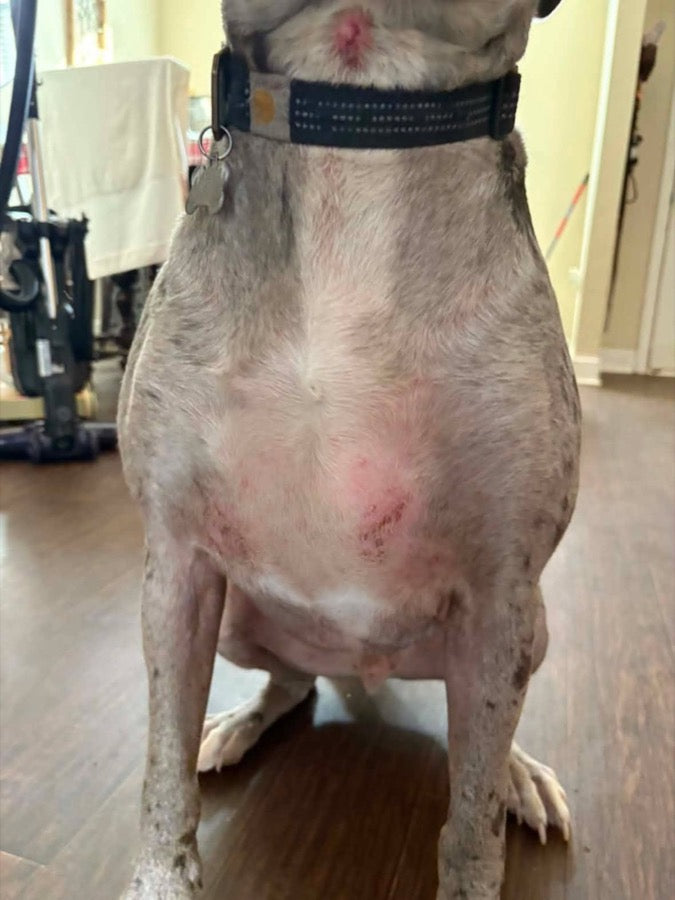

Itchy skin
“I was doubtful it would work.”
After more than a year of trying to calm Ranger’s itchy skin, MacKenzie almost didn’t try one more thing. Two bags of VitaDog Daily later, his coat was growing back and he was finally comfortable.
MacKenzie · Ranger’s owner
Try VitaDogIndividual results. VitaDog supports normal skin and coat health and is not a substitute for veterinary care.
Nordic Naturals Omega-3 Pet Liquid vs Zesty Paws Salmon Oil: Head-to-Head
Omega-3 is one of the few canine supplements with near-universal vet recommendation. The evidence is robust: EPA and DHA genuinely support joint mobility, skin and coat health, cognitive function, and cardiovascular health in dogs. Unlike some supplement categories where the efficacy data is debatable, canine omega-3 is settled science.
The question isn't whether to supplement. It's which product, and from what source.
Two of the most recognizable brands on the shelf are Nordic Naturals Omega-3 Pet Liquid and Zesty Paws Wild Alaskan Salmon Oil. Both are widely reviewed, both are popular, both are in a similar price range. They're also meaningfully different products built on different fish sources. Here's the direct comparison, plus a third option most owners haven't considered: anchovy oil delivered as part of a daily multi-active blend.
The Source Question Most Owners Skip
Before comparing products, the source matters more than the brand. Fish accumulate contaminants from their environment over their lifetime. Bigger, longer-lived fish accumulate more.
Anchovy: small, short-lived, low on the food chain. Lowest mercury and PCB contamination of common omega-3 sources. Naturally higher in EPA than salmon. Most premium human omega-3 brands use anchovy for exactly this reason.
Sardine: similar story to anchovy, very clean source.
Salmon: medium-bodied, longer-lived, higher up the food chain. Accumulates more contamination per gram of oil. Marketed heavily in pet supplements because "wild Alaskan salmon oil" sells, but it's not the cleanest source available.
This single distinction determines a lot of what follows.
Nordic Naturals Omega-3 Pet Liquid
| Attribute | Detail |
| Source | Wild-caught anchovies and sardines |
| Form | Triglyceride form (TG) |
| Concentration | 690 mg EPA + DHA per teaspoon |
| Bottle size | 8 fl oz (237 ml) typical |
| Purity testing | Third-party tested for heavy metals, PCBs, dioxins |
| Packaging | Dark glass bottle, oxygen-purged |
| Price range | $25 to $35 per 8 fl oz bottle |
Nordic Naturals is one of the most respected names in human omega-3 supplementation, and the pet line carries that same manufacturing rigor. The triglyceride form is the naturally-occurring form of omega-3 in fish, and it has higher bioavailability than the cheaper ethyl ester form that many competing fish oils use.
The anchovy and sardine sourcing is intentional. Small-bodied fish accumulate less mercury and other heavy metals than large predatory fish, so Nordic Naturals' raw material is inherently cleaner.
Zesty Paws Wild Alaskan Salmon Oil
| Attribute | Detail |
| Source | Wild-caught Alaskan salmon |
| Form | Natural salmon oil (not concentrated) |
| Concentration | ~300 to 400 mg EPA + DHA per teaspoon |
| Bottle size | 16 fl oz (473 ml) or larger |
| Purity testing | GMP-certified, less detailed third-party data |
| Packaging | Plastic bottle, pump top |
| Price range | $20 to $30 per 16 fl oz bottle |
Zesty Paws' positioning is "wild Alaskan salmon oil," selling the source story as the hook. The product is a genuine salmon oil, not a concentrated EPA/DHA formulation. That matters: per-teaspoon EPA + DHA delivery is roughly half what Nordic Naturals provides.
The larger bottle size partially offsets the lower concentration on a price-per-serving basis, but the overall purity documentation isn't as comprehensive as Nordic Naturals', and salmon as a source carries a higher contamination ceiling than anchovy.

The Direct Comparison
| Nordic Naturals Pet | Zesty Paws Salmon Oil | |
| EPA + DHA per tsp | ~690 mg | ~300 to 400 mg |
| Fish source | Anchovy + sardine (small fish) | Salmon (medium-large fish) |
| Form | Triglyceride (TG) | Natural oil |
| Heavy metal testing | Detailed third-party | GMP-certified |
| Packaging | Dark glass, oxygen-purged | Plastic with pump |
| Typical price | $30 / 8 fl oz | $25 / 16 fl oz |
| Price per 1000 mg EPA+DHA | ~$2.15 | ~$4.15 |
On cost-per-active basis, Nordic Naturals is actually cheaper despite the smaller bottle and higher sticker price. That's because the concentration is roughly 2x higher.
Which One for Which Dog?
Nordic Naturals is the right pick if:
Your dog is medium or large and needs real therapeutic-dose omega-3 without giving large volumes daily
You care about heavy metal purity and third-party testing transparency
You're already a Nordic Naturals user for yourself (the manufacturing standards carry over)
You want the triglyceride form for best bioavailability
Zesty Paws is the right pick if:
You specifically want salmon oil as the source (some owners prefer single-species ingredients despite the higher contamination ceiling)
Your dog is small and the lower per-teaspoon dose still meets their needs
You prioritize the pump-bottle convenience over glass-bottle freshness
You're comfortable with less detailed third-party documentation
For most mid-to-large dogs, Nordic Naturals wins on active delivery per serving and per dollar, plus on source quality.
The Third Option: A Daily Multi-Active With Anchovy Oil
If your dog's omega-3 supplementation is part of a broader daily routine, the standalone fish oil isn't your only option. VitaDog's daily formula uses wild-caught anchovy oil, the same fish source class as Nordic Naturals, alongside three other functional oils in a single daily blend:
This is a structurally different approach. Standalone fish oil delivers high EPA and DHA at a focused single-source dose. A multi-oil daily blend delivers a broader fatty acid profile (including GLA, which standalone fish oil lacks entirely) at a lower per-serving EPA+DHA dose, alongside the rest of a daily wellness stack.
For dogs needing therapeutic-dose EPA+DHA for severe arthritis, established skin conditions, or active inflammation, a concentrated standalone fish oil like Nordic Naturals is the right tool. For daily foundational support alongside joint, gut, and immune coverage, a multi-oil daily blend is the simpler protocol.
These aren't competing products. They're different jobs. Many owners run both: VitaDog daily for the full wellness profile, plus a Nordic Naturals top-up for dogs whose EPA+DHA needs exceed what any multi-active formula can fit in one serving.
For exact dose math by weight and condition, see our Fish Oil Dosage for Dogs guide.

Why Anchovy Beats Salmon (Even at the Same Brand)
The pet supplement category leans heavily on "wild Alaskan salmon oil" because the phrase sells. Owners associate salmon with premium. The biology says otherwise:
If you've been buying salmon oil because the marketing made it sound premium, anchovy is the upgrade most owners didn't know they were missing.
Clinical reference: PubMed: EPA/DHA in companion animals systematic review.
The Omega-3 Dosage Question
Regardless of brand, the dose matters more than the bottle. Therapeutic-range EPA + DHA dosing for dogs is roughly:
| Indication | EPA + DHA per day |
| General health / coat | 20 to 55 mg per lb body weight |
| Joint support | 50 to 75 mg per lb body weight |
| Active inflammation (IBD, allergies, severe OA) | 75 to 100 mg per lb body weight |
For a 50-lb dog on joint support, that's 2,500 to 3,750 mg EPA + DHA per day. Nordic Naturals delivers that in roughly 1 tablespoon; Zesty Paws requires roughly 2 tablespoons; a daily multi-active blend like VitaDog provides foundational omega coverage but won't hit therapeutic-range EPA+DHA on its own at that body weight, which is why many owners stack the two.
For a full dosage breakdown by weight, see Fish Oil Dosage for Dogs.
Clinical reference: PubMed: omega-3 dose response in dogs (Quality of Life trial).
Fish Oil Purity: Why It Matters
Fish accumulate contaminants from their environment. Without purity testing, fish oil can carry:
Mercury and other heavy metals
PCBs (polychlorinated biphenyls)
Dioxins and furans
Oxidation products from rancid oil
The two mitigations:
Nordic Naturals leads on both counts. Zesty Paws does fine on GMP certification but is less transparent on third-party contaminant panels and uses the higher-contamination salmon source. VitaDog uses the same anchovy source class as Nordic Naturals.
For any omega-3 product, look for: specified fish source, third-party purity testing results (or IFOS certification), oxygen-protected packaging, and a visible expiration date rather than just a production date.
Side Effects of Fish Oil in Dogs
Both standalone products share the same potential side effects that apply to any fish oil:
Introduce slowly: start at quarter-dose for the first 3 to 5 days, work up to full dose over 1 to 2 weeks.
Clinical reference: VCA Hospitals on omega-3 fatty acids in dogs.

Beyond Standalone Fish Oil: Why Anti-Inflammatory Stacking Matters
Fish oil alone covers one anti-inflammatory pathway. To stack omega-3 with the rest, see our omega-3 deep-dive, turmeric guide, and 6-brand fish oil comparison. Our all-in-one dog supplement includes anchovy-sourced EPA/DHA plus 39 other actives.
Both Nordic Naturals and Zesty Paws are excellent standalone omega-3 products. But omega-3 isn't the only anti-inflammatory pathway. The most evidence-backed canine anti-inflammatory protocols layer:
quercetin for dogs, sometimes called "nature's Benadryl," for histamine and inflammatory response
A standalone fish oil hits one pathway. VitaDog's daily formulation hits four: anchovy oil for omega-3, turmeric with black pepper extract for curcumin (the piperine is what makes the curcumin actually absorb, most pet turmeric products skip this and waste the active), quercetin for histamine, and an 8-strain probiotics blend with inulin for gut. That's a structurally broader anti-inflammatory profile than any single-source fish oil delivers.
For dogs needing more EPA+DHA than a multi-active blend can provide, stack a Nordic Naturals on top. For dogs whose owners are currently buying fish oil + turmeric + probiotic + multivitamin separately, a single daily formula consolidates the stack.
See the full VitaDog formulation, or read our deeper salmon oil for dogs guide for the omega-3 biochemistry background.
Is Nordic Naturals better than Zesty Paws for dogs?
On active delivery per serving, source quality, and per-dollar value, Nordic Naturals is the stronger product. The triglyceride form, higher concentration, anchovy and sardine sourcing, and third-party purity testing are all meaningful advantages over Zesty Paws' salmon-source product.
Is anchovy oil better than salmon oil for dogs?
Yes, on most measures that matter. Anchovies are smaller and shorter-lived, so they accumulate less mercury and PCBs. Anchovy oil is naturally higher in EPA (the more anti-inflammatory omega-3). Anchovy fisheries are more sustainable. The only reason salmon oil dominates pet shelves is marketing, not science.
Can I give my dog human Nordic Naturals omega-3?
The Nordic Naturals Pet line and the human line use the same manufacturing standards, and the fish oil itself is functionally identical. You can use human Nordic Naturals for a dog as long as you dose by EPA + DHA content (not by teaspoon, since concentrations differ). Avoid flavored human versions that may contain xylitol or other dog-inappropriate additives.
How much salmon oil can I give my dog?
Up to about 100 mg EPA + DHA per lb body weight per day for active inflammation; 20 to 55 mg per lb for general health. With Zesty Paws at ~350 mg per teaspoon, a 50-lb dog would need 3 to 5 teaspoons (1 to 2 tablespoons) per day for general health.
Does fish oil need to be refrigerated?
After opening, yes. Fish oil oxidizes quickly at room temperature once exposed to air. Refrigerate both Nordic Naturals and Zesty Paws after opening, use within 60 to 90 days, and discard if the oil smells sharply fishy or rancid (indicating oxidation).
Is salmon oil safe for dogs every day?
Yes, at appropriate doses. Daily omega-3 supplementation is one of the most consistently recommended canine supplement practices. Anchovy oil is the cleaner daily choice if available; salmon works but has a higher contamination ceiling. Watch for digestive upset when introducing; taper up gradually over 1 to 2 weeks.
Nordic Naturals vs Zesty Paws: which is cheaper?
Per teaspoon, Zesty Paws is cheaper. Per gram of EPA + DHA delivered, Nordic Naturals is cheaper (roughly half the cost per active). If you care about active-per-dollar and source quality, Nordic Naturals wins. If you care about sticker price and bottle size, Zesty Paws looks cheaper on the shelf.
Educational content only. This article is not veterinary advice. Always consult your veterinarian before starting, changing, or stopping any supplement, especially if your dog has a medical condition, is pregnant, or is on medication.


