
Cosequin for Dogs Review: Ingredients, Dose & Alternatives
Cosequin for dogs review: what's in it, what's missing, how it compares to Dasuquin. Plus the modern joint stack VitaDog packs daily. 30-day refund.

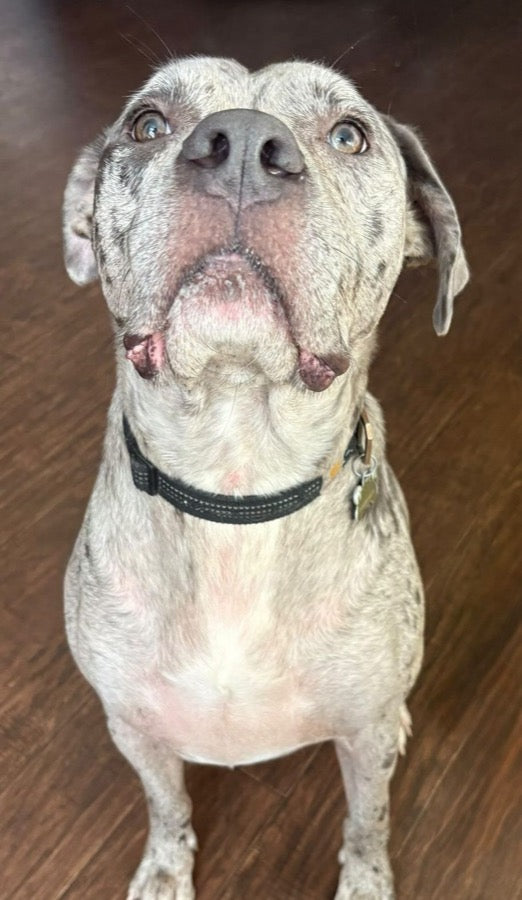
 A VitaDog customer story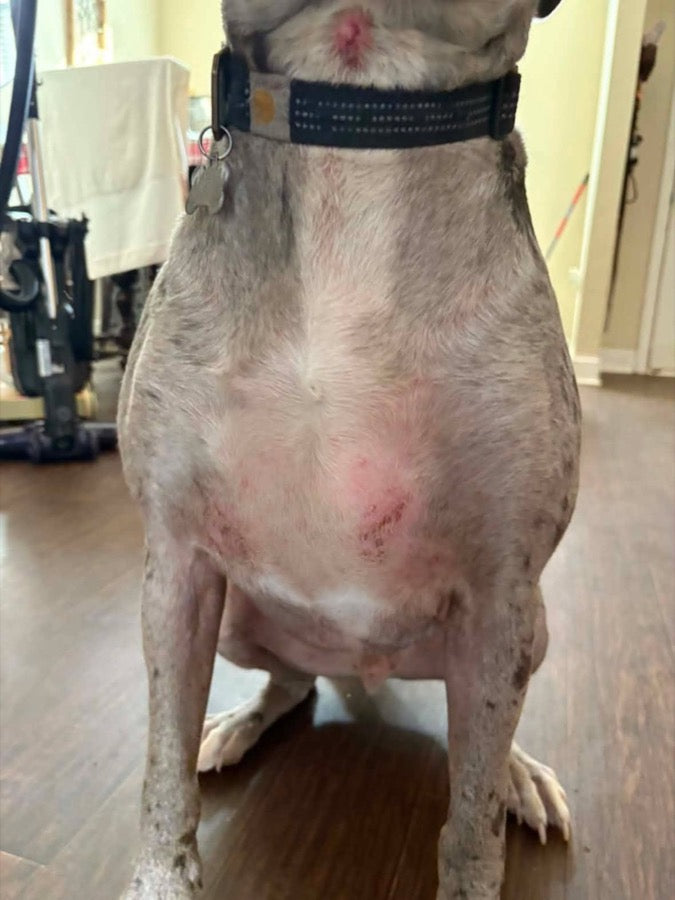
Itchy skin
“I was doubtful it would work.”
After more than a year of trying to calm Ranger’s itchy skin, MacKenzie almost didn’t try one more thing. Two bags of VitaDog Daily later, his coat was growing back and he was finally comfortable.
MacKenzie · Ranger’s owner
Try VitaDogIndividual results. VitaDog supports normal skin and coat health and is not a substitute for veterinary care.
Cosequin for Dogs: Honest Review + What the Label Doesn't Say
Cosequin is the best joint supplement most vets mention first. It's on the shelf at every pet store, it's been sold since the mid-1990s, and Nutramax (the manufacturer) funds most of the canine glucosamine + MSM research that exists.
That brand dominance has earned Cosequin a kind of default status. But default doesn't mean optimal. After reviewing the label, the dosing data, the competing formulations in the Nutramax lineup itself, and the independent literature on canine joint supplementation, here's what most owners don't realize before they buy.
This is a structured review: what Cosequin actually contains, what it does well, where the formulation falls short in 2026, and what a modern joint stack looks like by comparison.
What Is Cosequin?
Cosequin is a line of glucosamine-chondroitin chews and capsules made by Nutramax Laboratories, marketed for joint health in dogs (and cats). It comes in three main tiers:
Cosequin Maximum Strength Plus MSM: adds methylsulfonylmethane
There's also Cosequin Advanced and Cosequin Senior, which layer in omega-3 or additional antioxidants at small doses.
Nutramax positions Cosequin as the entry point into their joint care range. The step-up products, Dasuquin and Dasuquin Advanced, include avocado-soybean unsaponifiables (ASU) and additional actives, and are generally only sold through veterinary channels.
What's Actually in Cosequin
The core formula across the Cosequin product line rests on two ingredients:
| Ingredient | Role | Typical dose per chew (DS) |
| Glucosamine hydrochloride | Cartilage building block, supports matrix repair | 600 mg |
| Chondroitin sulfate | Helps retain water in cartilage, resists compression | 300 mg |
| MSM (Maximum Strength version) | Anti-inflammatory sulfur compound | 250 mg |
Glucosamine HCl and chondroitin are both supported by decades of use in dogs. Meta-analyses are mixed: some human studies show meaningful pain reduction, others show effects comparable to placebo. In dogs, most clinical benefit is seen in mild-to-moderate osteoarthritis with consistent daily use over 6+ weeks.
That's the foundation. Now here's where the label stops telling the full story.
What Cosequin Doesn't Include (And Why It Matters)
Modern canine joint research points to a stack across multiple inflammatory pathways, not just cartilage substrate. A 2026-era joint protocol typically layers:
quercetin for dogs for histamine and inflammatory response
Cosequin Original and DS give you 2 of these 7 categories. Cosequin Maximum Strength gives you 3 of 7. That's not a flaw exactly, it's a positioning choice. Nutramax reserves the premium actives for Dasuquin and the broader anti-inflammatory layer for nobody.
The practical implication: if you're buying Cosequin and seeing only partial improvement, you're not "doing joint support wrong." You're using a partial formula that addresses one pathway (cartilage substrate) and ignores the rest.
Cosequin Dosage for Dogs (By Weight)
Cosequin is typically given as a loading dose for the first 4 to 6 weeks, then reduced to maintenance. The standard Cosequin DS chew guidelines:
| Dog weight | Loading dose (first 4-6 weeks) | Maintenance |
| Under 25 lbs | 1 chew per day | ½ chew per day |
| 25 to 50 lbs | 2 chews per day | 1 chew per day |
| 50 to 100 lbs | 3 chews per day | 2 chews per day |
| Over 100 lbs | 4 chews per day | 3 chews per day |
Two practical notes most owners miss:
Glucosamine takes time. Expect 4 to 6 weeks minimum before you see mobility changes. If you stop after 2 weeks because "it's not working," you stopped before the active window.
Loading dose matters. Owners who skip the higher loading phase often under-dose and conclude the supplement failed, when the dog never reached the effective tissue concentration.
Cosequin Side Effects
Cosequin is considered safe for long-term daily use. The side effects that do show up are mild and mostly digestive:
Soft stool or loose stool in the first week
Reduced appetite in a small minority of dogs
Rare allergic reactions, most often tied to shellfish sources in the glucosamine (glucosamine is usually extracted from shellfish shells)
Shellfish allergy in dogs is uncommon but not zero. If your dog has known seafood sensitivity, ask for a plant-fermentation-source glucosamine or pick a supplement that specifies its glucosamine origin.
There's no clinically significant interaction with NSAIDs, and Cosequin is frequently given alongside Rimadyl, Metacam, or Galliprant as part of multi-modal arthritis management.
Cosequin vs Dasuquin vs Dasuquin Advanced
If you're shopping the Nutramax ladder, here's how the three tiers differ:
| Cosequin DS | Dasuquin | Dasuquin Advanced | |
| Glucosamine | ✓ | ✓ | ✓ |
| Chondroitin | ✓ | ✓ | ✓ |
| MSM | Max Strength only | Optional tier | ✓ |
| ASU (avocado-soybean unsaponifiables) | ✗ | ✓ | ✓ |
| Green tea extract, boswellia | ✗ | ✗ | ✓ |
| Availability | Retail + online | Vet-channel | Vet-channel |
The cost per day roughly doubles with each step up the ladder. Whether Dasuquin is worth the extra money depends on your dog's severity of joint issues and whether you're seeing meaningful results on Cosequin alone.
For a full side-by-side breakdown of all three tiers, see our Dasuquin vs Cosequin complete comparison.
When Cosequin Is the Right Choice
Cosequin is a legitimate pick if:
Your dog has early-stage joint stiffness or is genetically predisposed (Labrador, Golden Retriever, German Shepherd, Bulldog)
You want a vet-familiar brand with decades of safety data
You're starting joint support prophylactically in a healthy adult dog
Cost and retail availability matter more than maximal formulation
It's a reasonable foundation. It does what it says on the tin.
When to Look Beyond Cosequin
Cosequin stops being the obvious answer when:
Your dog is a senior (8+) with visible mobility decline
There's diagnosed osteoarthritis or hip dysplasia
You've run Cosequin for 2+ months with limited improvement
You're already adding omega-3, turmeric, or anti-inflammatory ingredients separately, meaning you've recreated a fuller stack at higher complexity and cost
You want a formulation that addresses more than one inflammatory pathway
At that point, the relevant question isn't "more Cosequin?" It's whether a daily multi-active that hits multiple pathways simultaneously is the better foundation.
The Alternative: A Daily Multi-Pathway Foundation
This is where VitaDog fits. Cosequin is a focused joint product. VitaDog is a daily multi-active built around the recognition that canine inflammation runs through several pathways at once, and addressing one isn't enough for most dogs over the long term.
The VitaDog formula provides:
For dogs with severe or late-stage DJD where chondroitin or ASU is specifically indicated by imaging, those can be added on top of the daily foundation. For most dogs in early to moderate joint decline, the multi-pathway foundation does more work than escalating glucosamine alone. See the VitaDog joint and longevity formula.
How long does Cosequin take to work in dogs?
Plan for 4 to 6 weeks of daily dosing before judging results. Some dogs show earlier response; many don't. This is typical of all glucosamine-based products, not unique to Cosequin. Owners who stop at 2 to 3 weeks usually stop before the effective threshold.
Can I give my dog human glucosamine instead of Cosequin?
Technically yes, but it's generally a worse choice. Human glucosamine often lacks the dog-appropriate dose, pairs the wrong chondroitin form, and is frequently combined with ingredients (xylitol, high-dose MSM, stimulants) that are inappropriate for dogs. Stick with canine-formulated products.
What's the difference between Cosequin and Dasuquin?
Both are made by Nutramax. Dasuquin adds avocado-soybean unsaponifiables (ASU), which research suggests meaningfully enhances joint protection beyond glucosamine-chondroitin alone. Dasuquin Advanced further adds green tea extract, boswellia, and other botanicals. Dasuquin is typically sold only through veterinarians, while Cosequin is widely retail-available.
Does Cosequin work for severe arthritis?
Cosequin alone is rarely sufficient for moderate-to-severe arthritis. It's a foundational component but typically needs to be combined with anti-inflammatory ingredients (turmeric with piperine, omega-3), and often prescription NSAIDs. Your vet should drive the protocol at that stage.
Why does turmeric need black pepper to work?
Curcumin (the active compound in turmeric) has very poor oral bioavailability on its own. The liver enzyme glucuronidation breaks it down before it reaches the bloodstream. Black pepper extract (piperine) inhibits that enzyme, increasing curcumin absorption by up to 2,000%. A turmeric supplement without piperine is effectively delivering 1 to 2% of its theoretical dose. This is why pet supplement turmeric products that don't include piperine usually underperform their label claims.
Educational content only. This article is not veterinary advice. Always consult your veterinarian before starting, changing, or stopping any supplement, especially if your dog has a medical condition, is pregnant, or is on medication.
Cosequin side effects and safety
Cosequin is generally considered well-tolerated in dogs, but a small percentage of owners report mild GI issues during the first 7 to 14 days of use. Below are the most common questions about Cosequin safety, with evidence-backed answers.
Is Cosequin safe for long-term use?
Yes. Glucosamine HCl and chondroitin sulfate (the two primary actives in standard Cosequin) have been studied for daily use up to 12+ months in client-owned dogs without reports of serious adverse events. The Aragon 2007 systematic review and McCarthy 2007 trial both used multi-month dosing without safety concerns. Cosequin is intended as a chronic maintenance supplement, not an acute course.
What are the most common Cosequin side effects?
Mild gastrointestinal upset is the most reported adverse effect, usually self-limiting within 7 to 14 days as the dog's gut adjusts. Specifically:
- Soft stool or mild diarrhea in the first 1 to 2 weeks (~5 to 10% of dogs)
- Reduced appetite at the start, especially with the chewable form
- Mild gas or flatulence as the dog adjusts
- Occasional vomiting if given on an empty stomach (give with food)
Are there dogs that should not take Cosequin?
The base ingredients (glucosamine HCl + chondroitin) are derived from shellfish. Dogs with confirmed shellfish allergies should avoid Cosequin and similar shellfish-derived joint supplements. Dogs with diabetes should be monitored : glucosamine has theoretically been associated with insulin resistance in human studies, though canine evidence is mixed. Coordinate with your vet if your dog is diabetic.
Can Cosequin interact with other medications?
Cosequin is commonly co-prescribed with NSAIDs (carprofen, meloxicam) and Adequan injections, with no documented adverse interactions. The main interaction concern is with blood thinners (warfarin, heparin) : chondroitin can theoretically extend bleeding time, so dogs on anticoagulants should consult their vet before starting.
How quickly do Cosequin side effects resolve?
If mild GI upset occurs, it typically resolves within the first 1 to 2 weeks of continued use as the gut microbiome adjusts. Splitting the daily dose into two meals (half at breakfast, half at dinner) helps most dogs through the adjustment phase.


