
Green Lipped Mussel for Dogs: Benefits & Dosage Guide (2026)
Green-lipped mussel for dogs: the natural joint supplement with strong evidence, dose by weight, when it works. Plus GLM in VitaDog's daily powder shake.

Green lipped mussel (GLM) is one of the better-evidenced natural joint ingredients for dogs, and also one of the least talked about. Most owners have never heard of it. Most joint supplement aisles don't prominently feature it. And yet the research base is genuinely interesting: in some studies, green lipped mussel performs comparably to glucosamine for canine joint comfort.
This guide covers what GLM actually is, how the evidence stacks up, how it compares to the better-known joint ingredients, the right dose for your dog, and where it fits in a broader joint protocol.
 A VitaDog customer story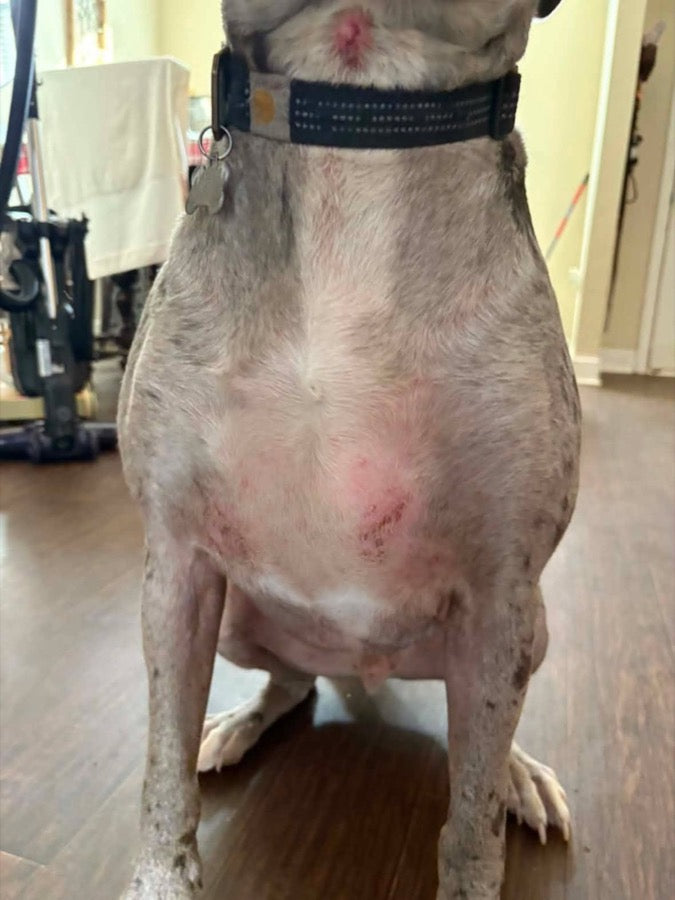
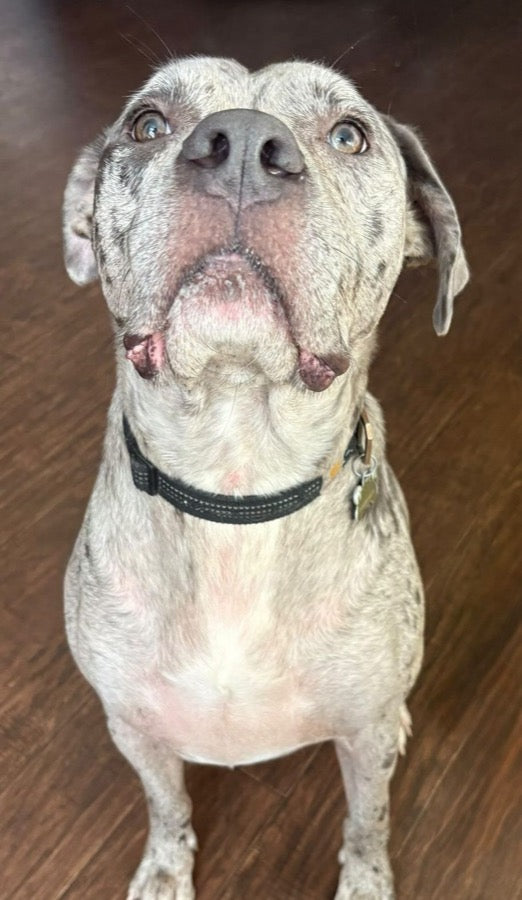
Itchy skin
“I was doubtful it would work.”
After more than a year of trying to calm Ranger’s itchy skin, MacKenzie almost didn’t try one more thing. Two bags of VitaDog Daily later, his coat was growing back and he was finally comfortable.
MacKenzie · Ranger’s owner
Try VitaDogIndividual results. VitaDog supports normal skin and coat health and is not a substitute for veterinary care.
What Is Green Lipped Mussel?
Green lipped mussel (Perna canaliculus) is a shellfish native to New Zealand, easily identified by the distinctive green edges of the shell. It's been harvested commercially for decades, originally for human consumption and increasingly for joint health supplementation in both humans and dogs.
What makes it relevant for joints isn't the mussel meat - it's the concentrated dried powder containing:
Omega-3 fatty acids (including a specific type called ETA, eicosatetraenoic acid, relatively unique to GLM)
It's essentially a natural, food-based concentration of several joint-relevant compounds in one source.
What the Evidence Says
GLM has accumulated reasonable clinical evidence in canine osteoarthritis:
The mechanism appears to be multi-pathway: anti-inflammatory effect from the unique ETA omega-3, cartilage support from the GAGs and chondroitin content, and antioxidant activity from the natural vitamin and mineral profile.
That said, the evidence base is smaller than for glucosamine, MSM, or best fish oil - in part because GLM is harder to standardize across products. Different processing methods preserve different amounts of the heat-sensitive bioactive compounds, so two GLM products with identical labels can deliver meaningfully different effects.
A common question: should I use GLM instead of glucosamine, MSM, or omega-3?
| Green Lipped Mussel | Glucosamine | MSM | Fish oil (anchovy) | |
| Primary mechanism | Multi-pathway natural blend | Cartilage substrate | Sulfur donor + anti-inflammatory | EPA/DHA anti-inflammatory |
| Evidence base | Growing | Long-established | Long-established | Strongest of the four |
| Cost per gram | Higher | Lower | Lower | Moderate |
| Source | Shellfish (Perna canaliculus) | Shellfish (shrimp, crab) or synthetic | Synthetic or sulfur-rich foods | Marine fish |
| Standardization | Variable across products | Highly standardized | Highly standardized | Standardized |
| Side effects | Rare, mild | Rare, mild | Rare, mild | Mild GI possible |
Practical answer: these aren't competitors - they work on different parts of joint health. The strongest canine joint protocols layer multiple mechanisms rather than picking one ingredient.
A complete joint protocol typically covers:
Multi-pathway anti-inflammatory: turmeric paired with piperine for absorption
Histamine and inflammatory response: quercetin for dogs
GLM can layer on top of this protocol as a natural multi-component adjunct, particularly for dogs who haven't responded fully to a standard glucosamine + omega-3 stack. It's a complement, not a replacement.
For the foundational joint ingredients, see our glucosamine for dogs guide and MSM for dogs guide.
Green Lipped Mussel Dosage for Dogs
Typical dosing guidelines for GLM powder:
| Dog weight | Daily dose of GLM powder |
| Under 10 lbs | 50 to 100 mg |
| 10 to 25 lbs | 100 to 200 mg |
| 25 to 50 lbs | 200 to 400 mg |
| 50 to 75 lbs | 400 to 600 mg |
| 75 to 100 lbs | 600 to 800 mg |
| Over 100 lbs | 800 to 1,200 mg |
Exact dose depends on the product. Check for GLM content per serving, not total product weight. Many products include other ingredients (glucosamine, chondroitin, MSM) that add to the bottle weight without adding to the GLM dose.
Loading vs maintenance: some products recommend a 4 to 6 week loading dose at 1.5x the maintenance dose. Not strictly necessary but can speed initial response.
Timing: give with food, once or twice daily. Well-tolerated digestively.
Forms and Quality
Freeze-dried vs cooked
Freeze-dried GLM preserves the full bioactive profile including the fragile ETA omega-3. This is the form with the strongest research support.
Heat-processed or cooked GLM loses some of the heat-sensitive omega-3 compounds. Still beneficial but may underperform freeze-dried in head-to-head comparisons.
Look for "freeze-dried" or "stabilized cold-processed" language on quality products.
Whole-mussel vs extracts
Whole-mussel powder includes the full nutrient profile: GAGs, omega-3, chondroitin, minerals, amino acids.
Oil extracts isolate the omega-3 fraction specifically. Useful but misses the cartilage-support components.
For most joint applications, whole-mussel powder is the better choice.
Source and sustainability
New Zealand is the primary commercial source. Aquaculture is well-regulated with reasonable sustainability practices. Quality products specify New Zealand sourcing.
Who Benefits Most
Strong candidates for GLM supplementation:
Dogs with mild to moderate osteoarthritis (DJD)
Large breeds with hip or elbow dysplasia
Senior dogs with age-related mobility decline
Active or working dogs with high joint stress
Dogs who've had joint surgery (post-operative support)
Dogs already on a daily multi-pathway joint formula who plateau and need an additional layer
Dogs who don't tolerate higher doses of NSAIDs
Less useful for:
Puppies (joints are still developing; supplementation rarely needed)
Dogs with shellfish allergies (real contraindication)
Young adult dogs without joint concerns
Dogs whose joint issues haven't been worked through with the foundational ingredients first (glucosamine, MSM, omega-3, turmeric with piperine)
Side Effects and Safety
GLM has one of the better safety profiles among joint supplements.
Common (rare overall):
Mild GI upset in the first 3 to 5 days
Transient soft stool
Precautions:
Toxicity is not a practical concern at standard supplementation doses.
What to Look For in a GLM Product
Named species. Perna canaliculus specifically.
New Zealand source. Sustainability and quality best-documented here.
Freeze-dried processing. Preserves full bioactive profile.
Stated GLM content per serving. Not "proprietary blend" totals.
Third-party testing. For heavy metals and contaminants.
Where GLM Fits in a Daily Protocol
If you're building a joint protocol from scratch, the foundational ingredients (glucosamine, MSM, omega-3, turmeric with piperine) cover the majority of the evidence-backed joint support. GLM is an additional layer on top of that foundation, useful particularly for dogs with persistent stiffness despite standard supplementation, or for owners specifically wanting a natural food-based ingredient profile.
VitaDog's daily formula provides the foundational multi-pathway joint protocol in a single product: glucosamine HCl + MSM (600mg combined active blend) for cartilage and sulfur, turmeric paired with black pepper extract for piperine-enabled curcumin absorption, quercetin dihydrate for histamine and inflammatory response, astragalus root, liquorice root, and rosemary extract for adaptogenic and antioxidant support, anchovy oil + flaxseed + evening primrose oil + MCT four-oil blend for EPA/DHA + GLA, and an 8-strain probiotics at 1 billion CFU for gut-joint axis support. No brewers yeast.
For dogs needing additional joint support beyond this foundation - late-stage DJD, post-surgical recovery, or persistent mobility issues - green-lipped mussel is one of the more evidence-backed standalone ingredients to layer on top. Standalone GLM products from quality brands integrate cleanly with the daily multi-pathway formula.
Inside the all-in-one dog supplement.
Is green lipped mussel safe for dogs long-term?
Yes. GLM has one of the better long-term safety profiles among joint supplements. Daily supplementation for years is well-tolerated in healthy dogs without shellfish allergies.
How long does green lipped mussel take to work?
Most dogs show visible mobility improvements at 4 to 6 weeks of consistent daily supplementation. Some respond faster (2 to 3 weeks), some slower (8 weeks). If no improvement at 8 weeks, the dose may be inadequate or the joint damage may need additional interventions.
Can dogs with shellfish allergies have green lipped mussel?
No. Shellfish allergy is the primary contraindication for GLM. Dogs with confirmed allergies to shrimp, crab, lobster, or other shellfish should avoid GLM and use plant or synthetic-source joint ingredients instead.
Is green lipped mussel better than glucosamine?
Different mechanism, not better or worse. Glucosamine provides cartilage substrate (raw material for repair). GLM provides a multi-component natural blend (some cartilage substrate plus anti-inflammatory ETA omega-3 plus antioxidants). They complement each other; the strongest joint protocols use both.
Where do I buy green lipped mussel for dogs?
Multiple brands sell GLM-based supplements. Look for Perna canaliculus species name, New Zealand source, freeze-dried processing, and stated GLM content per serving. Avoid products that list GLM in a proprietary blend without specifying the dose.
Can I give my dog human green lipped mussel supplements?
Yes if you dose by weight and check for inappropriate additives. Human GLM is chemically identical to canine-grade. Common reputable brands include Lyprinol, Antinol (vet-channel in some regions), and various practitioner-grade options.
Is green lipped mussel a complete joint solution?
No. GLM is a useful component but doesn't replace the foundational protocol of glucosamine, MSM, omega-3, and an anti-inflammatory layer (turmeric with piperine, quercetin). For dogs with significant joint issues, a multi-pathway approach outperforms any single ingredient including GLM.
Broader Context
DJD in Dogs, the canine osteoarthritis protocol GLM fits within
Glucosamine for Dogs, foundational cartilage substrate ingredient
MSM for Dogs, foundational anti-inflammatory and sulfur-donor ingredient
Best Joint Supplement for Dogs, comparison across the joint supplement category
Educational content only. This article is not veterinary advice. Always consult your veterinarian before starting, changing, or stopping any supplement, especially if your dog has a medical condition, is pregnant, or is on medication.
References
- Bui LM, Bierer TL. Influence of green lipped mussels (Perna canaliculus) in alleviating signs of arthritis in dogs. Veterinary Therapeutics. 2003. View source
- Bierer TL, Bui LM. Improvement of arthritic signs in dogs fed green-lipped mussel (Perna canaliculus). Journal of Nutrition. 2002. View source
- Pollard B, Guilford WG, Ankenbauer-Perkins KL, Hedderley D. Clinical efficacy and tolerance of an extract of green-lipped mussel (Perna canaliculus) in dogs presumptively diagnosed with degenerative joint disease. New Zealand Veterinary Journal. 2006. View source
- Hielm-Björkman A, Tulamo RM, Salonen H, Raekallio M. Evaluating complementary therapies for canine osteoarthritis Part I: Green-lipped mussel (Perna canaliculus). Evidence-Based Complementary and Alternative Medicine. 2009. View source
- Vijayan T, Dhanasekaran S, Rajashekaran A. Therapeutic potential of green-lipped mussel oil in joint health: a comprehensive review. Marine Drugs. 2020. View source
Related reading


