
Do Dogs Really Need Supplements? What the Science...
You want to do the right thing for your dog. The supplement industry is noisy, everyone's selling something, and it's hard to know what's legitimate and

You want to do the right thing for your dog. The supplement industry is noisy, everyone's selling something, and it's hard to know what's legitimate and what's marketing.
So let's answer the question honestly: does your dog actually benefit from supplements?
The short answer for most dogs is yes. Not because the marketing is right, but because of how modern dog food actually works versus how the marketing presents it. Here's the longer, more useful answer.
 A VitaDog customer story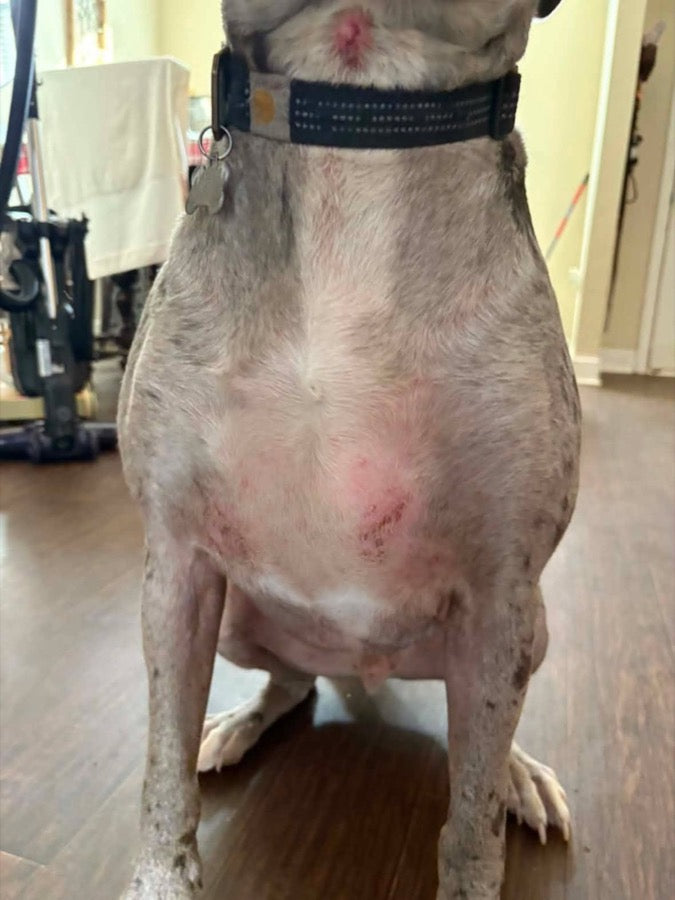

Itchy skin
“I was doubtful it would work.”
After more than a year of trying to calm Ranger’s itchy skin, MacKenzie almost didn’t try one more thing. Two bags of VitaDog Daily later, his coat was growing back and he was finally comfortable.
MacKenzie · Ranger’s owner
Try VitaDogIndividual results. VitaDog supports normal skin and coat health and is not a substitute for veterinary care.
The Marketing Myth: "Complete Food Means No Supplements Needed"
The most common message in pet nutrition is "if your dog eats a complete and balanced commercial diet, supplements are unnecessary." This sounds reassuring and saves owners money - and it's also not how kibble actually works.
Here's what the bag doesn't tell you:
1. High-heat extrusion destroys heat-sensitive nutrients
Kibble manufacturing uses extrusion at temperatures that destroy meaningful percentages of B-complex vitamins, vitamin C, vitamin E, and the more delicate fatty acids. Manufacturers add extra synthetic vitamins to compensate ("over-fortification"), but post-extrusion fortification has variable bioavailability compared to nutrients in their natural food matrix.
2. Storage degrades what survives manufacturing
The vitamin and fatty acid content stamped on the bag represents what was added at manufacture - not what's there 6 months later in your pantry, especially after the bag has been opened. Fat-soluble vitamins (A, D, E) and omega-3 oils continue degrading throughout shelf life. By the time your dog eats food from a partially-used bag stored at room temperature, actual delivered nutrient content is often well below label.
3. Minimum requirements aren't optimal levels
Regulatory feed standards define thresholds to prevent deficiency disease, not levels for peak health, longevity, joint protection, skin support, cognitive maintenance, or any specific health objective. The difference between "enough vitamin E to prevent muscle degeneration" and "enough vitamin E to support skin barrier function and reduce systemic oxidative stress" is meaningful.
4. One-size-fits-all formulation can't match individual needs
A 10-lb senior Chihuahua and a 90-lb working German Shepherd eating the same "adult dog" food get the same nutrient ratios despite very different metabolic loads, breed predispositions, life stages, and health histories. The same kibble can't optimally serve a brachycephalic apartment dog and a high-mileage trail-running Vizsla.
5. Omega-3 is almost universally insufficient
The omega-6 to omega-3 ratio in most commercial kibble runs 15:1 to 20:1. The ratio for actual anti-inflammatory benefit is closer to 5:1 to 10:1. Even kibbles marketed with "added omega-3" usually under-deliver because the EPA + DHA either oxidizes during manufacturing or degrades during storage.
6. The probiotics content of kibble is functionally zero
High-heat extrusion kills any live bacteria. Most kibble is functionally sterile by the time it reaches your dog. The microbiome receives no live bacterial input from the food - meaning the gut diversity that matters for immune function, skin health, and digestion is built entirely from whatever else the dog encounters or supplements with.
7. Other diets have their own gaps and inconsistencies
Raw and home-cooked diets have well-documented deficiency patterns - see Dog Supplement Powder for Homemade Food. Fresh subscription foods are nutritionally better than typical kibble but vary by formulation. Even therapeutic prescription diets are calibrated for specific medical conditions rather than general optimal health.
The Honest Position
So the more accurate framing isn't "your dog doesn't need supplements." It's: most dogs benefit from supplementation, and the question is what kind makes the most difference for your specific dog.
The cases where supplementation delivers the largest measurable difference:
1. Your dog eats homemade or raw food
This is the most clear-cut case. A UC Davis study found that 95% of homemade dog food recipes are deficient in at least one essential nutrient. Common gaps: zinc, vitamin D, vitamin E, omega-3, calcium, and iodine.
If you cook for your dog or feed raw, supplementation isn't optional - it's essential to prevent nutritional deficiency. Full guide: Dog Supplement Powder for Homemade Food.
2. Your dog is a large or giant breed
Large and giant breeds (Labrador, German Shepherd, Golden Retriever, Great Dane, Rottweiler) face disproportionate joint stress. An estimated 60% or more of large-breed dogs develop some degree of osteoarthritis in senior years.
Glucosamine and omega-3 supplementation started early (around age 1 to 2 for large breeds, after growth plates close) can slow joint degeneration and delay the onset of arthritis symptoms. This is preventive supplementation with reasonable evidence behind it. See Glucosamine for Dogs and our Dog Joint Health Guide.
3. Your dog is middle-aged or senior
As dogs age, three things happen:
Natural cartilage repair slows (joints deteriorate faster than they rebuild)
Gut bacteria populations shift (digestion and immunity weaken)
Antioxidant defenses decrease (cellular damage accelerates)
Commercial food still meets baseline nutrition, but baseline isn't enough for an aging body that's actively losing ground. Targeted supplementation (joint support, multi-strain probiotic, anti-inflammatory layer) can meaningfully extend quality of life. See Best Supplements for Senior Dogs.
4. Your dog has chronic skin or allergy issues
The gut-skin axis is well-established in veterinary research. Dogs with allergies, itching, or recurring skin issues often have underlying gut imbalances. Omega-3 fatty acids, GLA from evening primrose oil, multi-strain probiotics, and quercetin can reduce symptoms by addressing the root inflammatory pathway, not just the surface symptoms. See our Dog Skin, Coat & Allergy Guide.
5. Your dog has been on antibiotics
Antibiotics save lives, but they devastate the gut microbiome - killing beneficial bacteria along with harmful ones. Post-antibiotic probiotic supplementation is recommended by most veterinarians to restore gut balance and prevent secondary issues (diarrhea, yeast overgrowth, immune suppression). See Probiotics for Dogs with Diarrhea.
6. Your dog is a healthy young adult on quality kibble
Even this group typically benefits, just to a smaller degree than the categories above. Comprehensive daily nutritional support - particularly multi-strain probiotic (because kibble has none), anchovy-source omega-3 (because the omega-6:omega-3 ratio is wrong), and bioavailable B12 (because heat-sensitive vitamins degrade) - corrects the structural gaps that even quality commercial food has. Whether the gain is worth the cost is a judgment call, but the gain isn't zero.
7. Specific medical conditions
Targeted supplementation has reasonable evidence for:
What the Veterinary Research Says
The strongest evidence for canine supplementation exists in three areas:
Omega-3 fatty acids
Multiple peer-reviewed studies support EPA + DHA supplementation for dogs with osteoarthritis (improved mobility), atopic dermatitis (reduced itch scores), inflammatory bowel disease (reduced inflammatory markers), cardiac disease (reduced arrhythmias), and chronic kidney disease (reduced proteinuria). Marine source preferred over plant ALA (dogs convert ALA poorly). Anchovy-source is cleaner than salmon for purity per dose.
Joint support (glucosamine + MSM + multi-pathway anti-inflammatory)
Reasonable evidence for slowing osteoarthritis progression and reducing pain scores. Multi-pathway approaches (cartilage substrate + sulfur + anti-inflammatory layer) outperform single-ingredient approaches. Turmeric paired with black pepper extract (piperine) is meaningfully more effective than turmeric alone - without piperine, only 1 to 2% of curcumin absorbs.
Multi-strain probiotics
Strong evidence for acute diarrhea resolution, post-antibiotic gut recovery, and chronic gut maintenance. Multi-strain at 1 billion+ CFU with prebiotic outperforms single-strain or low-CFU products. Brewers-yeast-free formulations matter for dogs with skin or ear issues alongside gut concerns.
What Doesn't Have Strong Evidence
Worth being honest about:
Common Supplement Mistakes
1. Buying based on marketing rather than formulation
The most-marketed products (PetLab, Dog Is Human, mass-market chews) aren't always the best-formulated. Read labels: named strains and doses, bioavailable forms, no brewers yeast for sensitive dogs, anchovy-source omega rather than generic best fish oil, turmeric paired with piperine.
2. Stacking too many products
Running 4 to 5 separate stand-alone supplements is expensive ($150 to $250/month combined) and creates dosing complexity. A comprehensive multi-pathway daily formula often consolidates the same support at meaningfully lower cost.
3. Skipping supplementation for raw and home-cooked diets
The most clear-cut case for supplementation, frequently skipped by raw and home-cooked feeders who think their diet is automatically complete. UC Davis data shows 95% of homemade recipes are deficient.
4. Using chew-format omega-3
EPA/DHA oxidize during chew manufacturing and on-shelf storage. Fresh oil delivery (sealed amber dropper bottle) preserves the unstable polyunsaturated fatty acids until dosing.
5. Using cyanocobalamin B12 in seniors
Methylcobalamin is the bioavailable form, ready for cellular use. Cyanocobalamin requires liver conversion, which is incomplete in dogs with absorption issues or liver disease. Common in cheap multivitamins.
6. Ignoring brewers yeast on supplement labels
Many chew-format products use brewers yeast as binder. For yeast-prone, atopic, or itch-prone dogs, this single ingredient can perpetuate the problems being targeted.
7. Trusting "complete and balanced" labeling as enough
The label is a regulatory minimum, not an optimization target. Most dogs benefit from supplementation that fills the structural gaps in commercial food (omega-3 ratio, probiotic content, heat-degraded vitamins, source-quality minerals).
How to Decide What Your Dog Actually Needs
Honest framework:
Step 1. Audit current food and existing supplements. Quality commercial food provides a baseline. Brewers yeast in supplements should be questioned for sensitive dogs.
Step 2. Identify the specific situation. Senior? Large breed? Chronic skin issues? Recent antibiotics? Homemade diet? Each profile has different supplement priorities.
Step 3. Pick supplementation matching the profile. For most dogs in any of the supplement-relevant categories above, a multi-pathway daily formula handles broader needs better than stand-alone products. For specific therapeutic doses (severe arthritis, cardiac, renal), add targeted products under vet guidance.
Step 4. Give it 8 to 12 weeks before judging effect. Most supplements need sustained use for measurable benefit.
Step 5. Track outcomes. Coat quality, energy, mobility, stool consistency, skin issues. Adjust based on what you see.
The Multi-Pathway Daily Foundation
For most dogs, a comprehensive daily formula typically delivers more value than running multiple stand-alone products.
VitaDog's daily formula bundles:
For dogs whose situation puts them in any supplement-relevant category - homemade diet, large breed, senior, chronic skin or gut issues, post-antibiotic, or just owners who want to address the structural gaps in commercial food - this consolidates what would otherwise be 4 to 5 separate products.
See the all-in-one dog supplement.
Are dog supplements actually necessary?
Most dogs benefit. Even on quality commercial food, the combination of extrusion-driven nutrient destruction, storage degradation, regulatory-minimum fortification levels, missing probiotic content, and skewed omega-6:omega-3 ratios creates real gaps. The honest question isn't whether supplementation matters - it's which supplementation matters most for your specific dog.
What's the most important supplement for dogs?
Depends on the specific situation. For dogs eating homemade or raw food: a comprehensive multi-pathway formula. For seniors: joint and gut support with anti-inflammatory layer. For atopic dogs: omega-3 + GLA + multi-strain probiotic + quercetin. For most dogs: a multi-pathway daily formula handles broader needs in one product.
Can I give my dog too many supplements?
Yes. Fat-soluble vitamins (A, D, E, K) accumulate and can reach toxic levels. Some minerals (iron, copper) are toxic at excess doses. Multiple stand-alone products risk over-supplementing specific nutrients while under-supplementing others. A single multi-pathway formula at appropriate dose is generally safer than stacking multiple products.
Are vet-recommended supplements better?
Sometimes. Vet-channel products (Cosequin, Dasuquin, Proviable, Adequan) generally have stronger quality control and clinical evidence than mass-market chews. But "vet-recommended" doesn't always mean best-formulated - it often means "what the rep dropped off this month." Read labels and judge by formulation, not branding.
How long do supplements take to work?
Acute effects (probiotic for diarrhea): 48 to 72 hours. Joint mobility benefits: 4 to 8 weeks. Skin and coat changes: 6 to 12 weeks. Cognitive support: 8 to 12 weeks. Don't judge effectiveness before 8 weeks at full dose for chronic conditions.
Can I give my dog human supplements?
Some yes, some no. Single human vitamins, fish oil, glucosamine, quercetin, and turmeric at weight-appropriate doses are typically OK. Avoid products with xylitol, high-dose iron, human-formulated multivitamins, or inappropriate excipients.
My vet says my dog doesn't need supplements. Are they wrong?
Vets advising against supplementation typically have one of three positions: a generally cautious approach to anything beyond AVMA-endorsed protocols, a specific concern about over-supplementation (real risk for fat-soluble vitamins), or a focus on diet quality rather than supplements. None of these positions are wrong, but they don't account for the structural gaps in modern dog food that supplementation addresses. Worth a frank conversation: "Given the heat-sensitive nutrient destruction in kibble extrusion, the storage degradation, and the omega-3 deficit, are there specific daily supplements you'd recommend for my dog's age, breed, and history?" Most vets will engage productively when the question is framed that way.
What's the best dog supplement?
For most dogs, a multi-pathway daily formula that addresses joint, gut, skin, and anti-inflammatory needs together. For specific situations (severe arthritis, atopic dermatitis, cardiac disease), targeted therapeutic-dose products under vet guidance. For brand comparisons across categories, see Best Multivitamin for Dogs, Best Joint Supplement for Dogs, and Best Probiotics for Dogs.
Broader Context
Dog Supplement Powder for Homemade Food, homemade-diet supplementation
Best Supplements for Senior Dogs, senior-specific approach
Best Multivitamin for Dogs, brand comparison
Educational content only. This article is not veterinary advice. Always consult your veterinarian before starting, changing, or stopping any supplement, especially if your dog has a medical condition, is pregnant, or is on medication.
“Even with any of the supplements that I recommend to my clients, I always tell them to use a journal, document what's going on.”


