
Best Fish Oil for Dogs 2026: Nordic, Zesty, Native Pet &...
Fish oil is one of the few canine supplements with near-universal vet recommendation, and also one of the most variable in terms of product quality. A


Fish oil is one of the few canine supplements with near-universal vet recommendation, and also one of the most variable in terms of product quality. A $15 bottle and an $80 bottle both say “fish oil” on the label. The difference in what your dog actually gets can be 3-5x.
This guide covers the seven fish oil products most worth considering in 2026, ranked by what actually matters (EPA + DHA content, purity, form, cost per active) and helps you pick the right one for your dog’s size and needs.
 A VitaDog customer story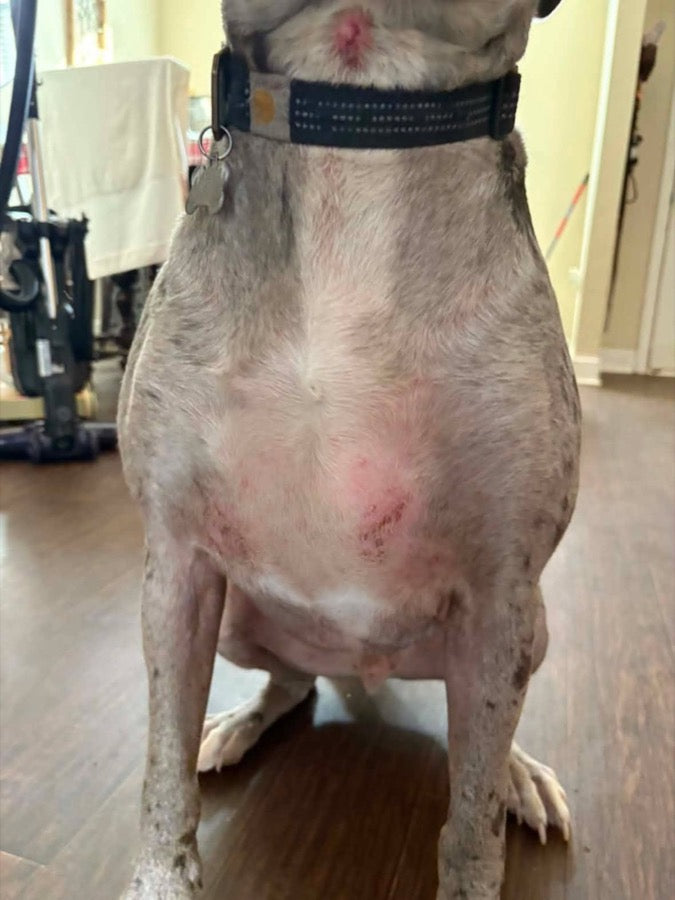

Itchy skin
“I was doubtful it would work.”
After more than a year of trying to calm Ranger’s itchy skin, MacKenzie almost didn’t try one more thing. Two bags of VitaDog Daily later, his coat was growing back and he was finally comfortable.
MacKenzie · Ranger’s owner
Try VitaDogIndividual results. VitaDog supports normal skin and coat health and is not a substitute for veterinary care.
What Makes a Fish Oil Worth Buying
The criteria that actually matter:
1. EPA + DHA content per serving
Total fish oil volume doesn’t matter. The active omega-3 fatty acids (EPA and DHA combined) are what produce the clinical effect. Compare products on EPA + DHA per teaspoon (or per softgel), not total fish oil amount.
2. Fish source
Small fish (anchovy, sardine, menhaden) accumulate fewer heavy metals and contaminants than large predatory fish (salmon is middle-ground; tuna and swordfish are highest).
3. Form (triglyceride vs ethyl ester)
Triglyceride (TG) form is the naturally-occurring form with ~20-30% better bioavailability than synthetic ethyl ester (EE) form. Quality products specify TG.
4. Purity testing
Heavy metals, PCBs, dioxins, oxidation products. Look for IFOS (International Fish Oil Standards) certification or documented third-party testing.
5. Packaging and freshness
Dark glass or oxygen-purged containers preserve freshness. Plastic and clear bottles allow faster oxidation. Rancid fish oil is actively harmful (oxidized omega-3 creates inflammatory free radicals).
6. Cost per gram of EPA + DHA
The price that matters is not per bottle but per gram of active. A high-concentration product at $40 can be cheaper per active than a diluted product at $20.
For the full omega-3 biochemistry, see our fish oil & omega-3 for dogs complete guide. For exact dosing math, see fish oil dosage for dogs.

1. VitaDog · Best whole-dog omega-3 delivery
EPA + DHA per serving: ~1,200 mg (large-dog serving) Form: Anchovy-source fish oil paired with flaxseed, evening primrose oil (GLA), and MCT in a four-oil blend Fish source: Anchovy Integration: Part of the complete VitaDog formula
Why it leads this list:
- Broader fatty acid profile than any pure fish oil, anchovy-source EPA + DHA paired with flaxseed (ALA), evening primrose oil (GLA), and MCT
- Small-fish sourcing (anchovy) for lower heavy-metal load, the same purity logic Nordic Naturals leans on
Trade-offs: bundled into the full VitaDog formula rather than sold as a stand-alone fish oil. The right pick if you want omega-3 alongside joint, gut, and vitamin coverage in one daily serving, less so if you specifically need a single-purpose fish oil bottle.
See the daily dog multivitamin.
2. Nordic Naturals Omega-3 Pet Liquid · Best stand-alone fish oil
EPA + DHA per teaspoon: ~690 mg Form: Triglyceride (TG) Fish source: Anchovy and sardine Testing: Third-party, detailed heavy metal panels Packaging: Dark glass, oxygen-purged Price: $25-$35 per 8 fl oz
Why it’s the strongest stand-alone fish oil:
- Among the highest EPA + DHA concentrations per serving in the pet category
- Small-fish sourcing minimizes heavy metal contamination
- Triglyceride form for best bioavailability
- Third-party testing transparency Nordic Naturals is known for
- Glass bottle preserves freshness
Trade-offs: higher sticker price per bottle (though often lower per gram of EPA+DHA because of concentration). Strong fish smell some dogs dislike.
Full comparison: Nordic Naturals vs Zesty Paws Salmon Oil.
3. Zesty Paws Wild Alaskan Salmon Oil · Best mainstream salmon oil
EPA + DHA per teaspoon: ~300-400 mg Form: Natural salmon oil Fish source: Wild Alaskan salmon Testing: GMP-certified Packaging: Plastic bottle with pump Price: $20-$30 per 16 fl oz
Why it’s a solid mainstream pick:
- Wild Alaskan sourcing
- Pump-top bottle convenience
- Widely available (Chewy, Amazon dog supplements buyer's guide, pet stores)
- Many dogs prefer salmon flavor over anchovy
Trade-offs: lower concentration than Nordic Naturals means more volume per dose (problematic for therapeutic-dose needs on large dogs). Less detailed third-party documentation. Plastic packaging.
4. Grizzly Wild Alaskan Salmon Oil · Best long-standing salmon oil
EPA + DHA per teaspoon: ~350 mg Form: Natural salmon oil Fish source: Wild Alaskan salmon Packaging: Pump bottle
Why it’s still worth knowing:
- Longest track record in the canine salmon oil category
- Wild Alaskan sourcing
- Good availability
- Reasonable pricing
Trade-offs: similar profile to Zesty Paws, moderate concentration, plastic packaging, less detailed third-party testing than premium brands.
5. Native Pet Omega 3 Fish Oil · Best clean label salmon
EPA + DHA per teaspoon: ~400-500 mg Form: Wild Alaskan salmon oil Fish source: Wild Alaskan salmon Packaging: Glass bottle
Why it’s worth considering:
- Clean label positioning (no extras)
- Glass bottle preservation
- Direct-to-consumer with transparency
- Slightly higher concentration than generic salmon oils
Trade-offs: lower volume bottles at higher per-ounce price. Still lower concentration than Nordic Naturals. Subscription model.
6. Iceland Pure Pharmaceutical Grade Salmon Oil · Best unscented
EPA + DHA per teaspoon: ~400 mg Form: Triglyceride salmon oil Fish source: North Atlantic salmon, processed in Iceland Packaging: Glass bottle
Why it’s worth knowing:
- Unscented formulation, better tolerated by dogs who reject strong fish flavor
- Glass bottle
- Triglyceride form specified
- Pharmaceutical grade processing
Trade-offs: smaller market footprint, harder to find at big-box retail. Price point in premium territory without the concentration advantage.
7. Generic pet-store fish oil · Best budget
Various private-label and store-brand products. Quality varies enormously.
What to verify: - Explicit EPA + DHA content per serving - Named fish source (not just “fish oil”) - Third-party testing reference - Expiration date within reasonable window
Best for: price-sensitive owners willing to scrutinize labels carefully. Skip any product that doesn’t tell you the specific EPA + DHA content.
Clinical reference: PubMed: omega-3 dose response in dogs.
Head-to-Head Comparison Table
| Product | EPA+DHA/tsp | Fish source | Form | Testing | Cost per 1000mg EPA+DHA |
|---|---|---|---|---|---|
| VitaDog | Built-in ~1200mg/serving | Anchovy + flaxseed + EPO + MCT | TG | Third-party | See pricing |
| Nordic Naturals Pet | ~690 mg | Anchovy + sardine | TG | IFOS / detailed | ~$2.15 |
| Zesty Paws Salmon Oil | ~350 mg | Wild Alaskan salmon | Natural | GMP | ~$4.15 |
| Grizzly Wild Alaskan | ~350 mg | Wild Alaskan salmon | Natural | GMP | ~$4.00 |
| Native Pet Omega 3 | ~450 mg | Wild Alaskan salmon | Natural | Third-party | ~$4.50 |
| Iceland Pure | ~400 mg | North Atlantic salmon | TG | Third-party | ~$5.25 |
| Generic pet-store | Varies | Varies | Varies | Varies | $3-$8 |

Prices approximate, check current retail.
If you have a small dog (under 25 lbs)
Best picks: Zesty Paws, Grizzly, or Native Pet.
Small dogs don’t need therapeutic-dose concentration. The lower-concentration salmon oils work fine and are usually more palatable than concentrated anchovy products.
If you have a medium-large dog (25-100 lbs) on maintenance dose
Best picks: Nordic Naturals (for efficient dosing) or Zesty Paws (for budget-conscious maintenance).
Nordic Naturals saves volume per dose; Zesty Paws costs less per bottle but requires more teaspoons.
If you have a dog on therapeutic dose (arthritis, allergies, inflammation)
Best picks: VitaDog (broadest fatty acid profile and whole-dog coverage in one daily serving) or Nordic Naturals Pet (if you specifically want a stand-alone fish oil).
At therapeutic doses (50-75 mg EPA+DHA per lb body weight), salmon oil’s lower concentration means impractical volumes. Concentrated products deliver the same active with less volume.
If your dog is finicky about taste
Best picks: Iceland Pure (unscented) or a chew format alternative (though most pure fish oils are liquids).
Some dogs reject strong fishy smells. Unscented processing or palatable chews help.
If purity testing matters most
Best picks: Nordic Naturals (most transparent third-party testing) or Native Pet (clean label with documentation).
If you want the complete supplement approach
Best pick: VitaDog.
If you’re considering fish oil alongside joint, probiotics, and multivitamin, consolidating into VitaDog often delivers more value than stacking a separate fish oil.
Dosing by teaspoon instead of by EPA+DHA
Every product has different concentration. “One teaspoon daily” on the label doesn’t mean the same dose across products. Calculate by the EPA+DHA number on your specific label and your dog’s weight.
Buying total fish oil by volume
Big bottles of diluted fish oil often cost more per gram of EPA+DHA than smaller bottles of concentrated product. Ignore bottle size; calculate per active.
Not refrigerating after opening
Fish oil oxidizes quickly once exposed to air. Refrigerate liquids after opening. Discard if the oil smells sharp, metallic, or distinctly “off.”
Ignoring quality for price
A $12 bottle of generic fish oil with no testing documentation and unclear sourcing can contain heavy metals or be oxidized before you use it. Cheap isn’t always cheap.
Skipping the introduction phase
Don’t give full dose on day one. Start at 25% for the first week, ramp to full dose over 4 weeks. Reduces GI upset dramatically.
Expecting fast results
Coat improvements: 4-6 weeks. Joint effects: 6-8 weeks. Allergy/itch improvements: 6-12 weeks. Omega-3 works slowly and requires consistency.
Side Effects to Monitor
Common and mild: - Fishy breath - Soft stool in the first week - Weight gain from calorie contribution
Uncommon: - Persistent digestive upset - Skin greasiness - Allergic reactions in fish-allergic dogs
Stop and consult vet: - Diarrhea lasting more than 2 weeks - Unusual bleeding or bruising - Signs of pancreatitis (vomiting, abdominal pain)
Clinical reference: PubMed: EPA/DHA in companion animals (review).

Related Reading
Read also our Nordic vs Zesty head-to-head, the omega-3 deep-dive, and glucosamine guide if joint support is the main goal. Our daily supplement includes anchovy-sourced EPA/DHA plus 39 other actives.
Reference guides: - Fish Oil & Omega-3 for Dogs Complete Guide - Fish Oil Dosage for Dogs - Salmon Oil for Dogs - Nordic Naturals vs Zesty Paws
Hub guides: - Complete Dog Joint Health Guide - Complete Dog Skin, Coat & Allergy Guide
Related reviews: - Best Joint Supplement for Dogs - Best All-in-One Dog Supplement
The VitaDog approach: - VitaDog Full Formulation
Which fish oil is best for dogs?
For comprehensive omega-3 delivery alongside joint, gut, and multivitamin support: VitaDog (anchovy + flaxseed + evening primrose oil + MCT four-oil blend, ~1,200mg EPA+DHA at large-dog serving). For a stand-alone fish oil with tight third-party testing: Nordic Naturals Pet Omega-3. For mainstream availability and palatability: Zesty Paws Wild Alaskan Salmon Oil. The right pick depends on your dog’s size, taste preferences, and whether you want fish oil alone vs integrated whole-dog support.
How much fish oil should I give my dog?
For general health: 20-55 mg EPA+DHA per pound body weight daily. For arthritis or allergies: 50-75 mg/lb. For active disease: 75-100 mg/lb. Calculate using EPA+DHA content (not total fish oil amount) on your specific product label.
Is Nordic Naturals fish oil worth it for dogs?
For most medium-to-large dogs, yes, the concentration means fewer teaspoons per dose, the purity documentation is strong, and per-gram-of-active cost is usually favorable despite higher sticker price. For small dogs at maintenance dose, cheaper salmon oils work fine.
Is salmon oil the same as fish oil for dogs?
Salmon oil is a type of fish oil specifically from salmon. “Fish oil” in supplements often means concentrated EPA+DHA from anchovy, sardine, or other small fish. Both deliver EPA and DHA. Salmon has astaxanthin (an antioxidant) and often a flavor dogs prefer; anchovy/sardine oil is typically more concentrated and cleaner for contaminants.
Can I give my dog human fish oil?
Yes, if you dose by EPA+DHA content and check for inappropriate additives. Avoid flavored human products with citrus or mint, and any gummies or chewables containing xylitol.
How long does fish oil take to work in dogs?
Coat improvements: 4-6 weeks. Joint effects: 6-8 weeks. Allergy and itch improvements: 6-12 weeks. Consistency at appropriate dose matters far more than occasional high doses.
Educational content only. This guide is not veterinary advice. Always consult your veterinarian before starting, changing, or stopping any supplement, especially if your dog has a medical condition, is pregnant, or is on medication.


