All-in-One Dog Supplements: Are They Actually Worth It?

You’ve read the articles. Your dog could use joint support, probiotics, omega-3, maybe some antioxidants. Now you’re staring at Amazon with five separate supplements in your cart, a $120 monthly total, and the nagging question: is there a simpler way?
All-in-one dog supplements promise exactly that, everything your dog needs in one product. But do they deliver? Or are they watered-down jack-of-all-trades that master nothing?

Let’s break it down honestly.
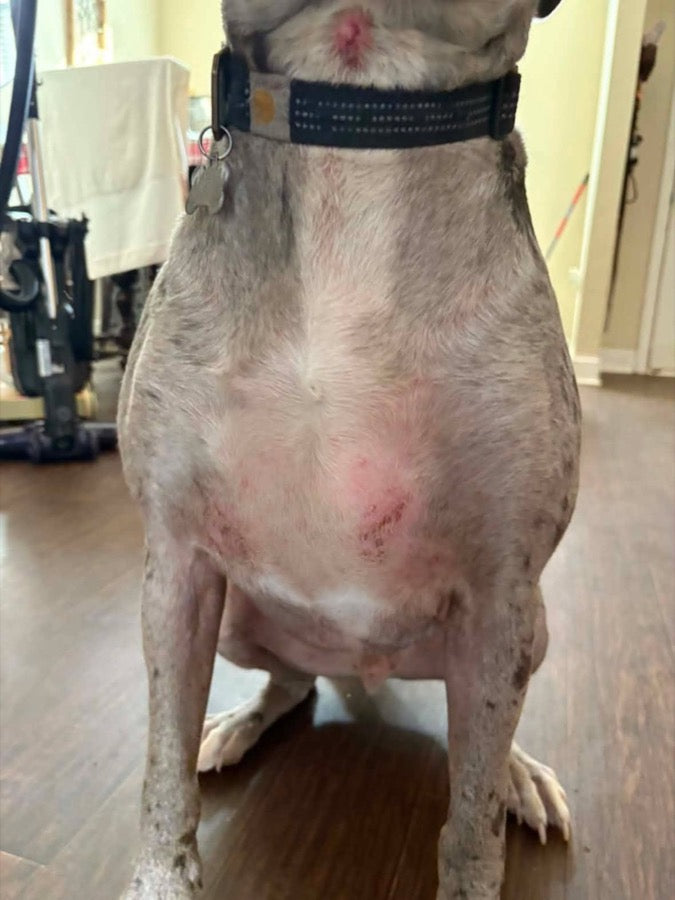

Itchy skin
“I was doubtful it would work.”
After more than a year of trying to calm Ranger’s itchy skin, MacKenzie almost didn’t try one more thing. Two bags of VitaDog Daily later, his coat was growing back and he was finally comfortable.
MacKenzie · Ranger’s owner
Try VitaDogIndividual results. VitaDog supports normal skin and coat health and is not a substitute for veterinary care.
What Is an All-in-One Dog Supplement?
An all-in-one supplement combines multiple categories of nutritional support into a single product:
- Joint support (glucosamine HCl, MSM)
- Gut health (probiotics, prebiotics, digestive enzymes)
- Skin and coat (omega-3 fatty acids, biotin, zinc)
- Immune support (vitamins C, E, antioxidants)
- Foundational nutrition (vitamins, minerals)
Instead of buying 4-5 separate products, you give one daily dose that covers all bases.
The category is growing fast because the problem it solves is real: most dog owners who start supplementing end up with a confusing (and expensive) collection of bottles.
For a broader product-by-product comparison, see our Best All-in-One Dog Supplement 2026 guide.
The Honest Pros and Cons
Pros
Simplicity
One product, one dose, one routine. You’re far more likely to supplement consistently when it’s one scoop versus juggling multiple products with different instructions.
Consistency matters more than people realize. A comprehensive supplement given every day beats a “perfect” multi-product stack given inconsistently because it’s too complicated.
Balanced formulation
A well-designed all-in-one balances ingredients that interact with each other: zinc-to-copper ratios, omega-3-to-omega-6 balance, calcium-to-phosphorus ratios, and probiotic-prebiotic pairings. When you buy individual products, nobody’s coordinating these ratios.
Synergistic effects
The body is interconnected. Joint inflammation is worsened by gut inflammation. Skin health depends on gut bacteria. Nutrient absorption depends on digestive health. The canine gut microbiome and its systemic implications are reviewed in Pilla 2020 (Front Vet Sci) and Pilla 2021 (Vet Clin North Am). A supplement addressing all systems simultaneously creates compounding benefits that isolated products don’t achieve.
Cost efficiency
The math typically favors all-in-one:
| Approach | Monthly cost (medium dog) |
|---|---|
| Joint supplement alone | $25-$40 |
| + Probiotic | $20-$30 |
| + Fish oil | $15-$25 |
| + Multivitamin | $15-$20 |
| Individual total | $75-$115 |
| All-in-one | $30-$70 |
Cons (and what to watch for)
Risk of sub-therapeutic doses
This is the biggest legitimate concern. Some all-in-one products list impressive ingredient panels but include each ingredient at token amounts, enough to put on the label, not enough to make a difference.
A product listing “glucosamine” without specifying the amount, or including only 200 mg for a 60-lb dog that needs 1,200 mg, is decoration, not supplementation.
How to check: divide the amount of each key ingredient by your dog’s weight. Compare to the therapeutic dose. If a product doesn’t list exact amounts per ingredient, move on.
“Proprietary blend” opacity
Some products hide behind “proprietary blend” labels that disclose the total weight of a blend but not the amount of each ingredient. This makes it impossible to verify therapeutic dosing. Transparent labeling is non-negotiable.
One-size-fits-all limitations
A 10-lb Chihuahua and a 100-lb Great Dane have different needs. Good all-in-one products address this with weight-based dosing (1 scoop for small, 2 for medium, 3 for large). Products with a single flat dose for all sizes are poorly designed.
Not for acute medical conditions
An all-in-one supplement is daily maintenance, not targeted treatment. A dog with severe arthritis may need prescription-strength joint support beyond what an all-in-one provides. A dog with acute diarrhea may need a concentrated probiotic dose (see Probiotics for Dogs with Diarrhea). In these cases, an all-in-one serves as the foundation alongside targeted intervention.
Quick note · Daily nutritional support matters for almost every aspect of canine health. VitaDog is the all-in-one we built specifically against the 5-point checklist below: transparent labeling, therapeutic doses, multi-strain probiotic, weight-based dosing, and a clean powder format with no fillers.
All-in-One vs NaturVet · The Market Leader
NaturVet All-in-One is one of the most recognized products in this category. Here’s an honest look at what you’re getting:
NaturVet All-in-One (soft chew):
- Format: soft chew
- Key ingredients: glucosamine (typically 250-500 mg per chew), omega blend, probiotic, vitamins
- Typical serving: 1-2 chews per day
- Ingredient count: ~12 active ingredients
Limitations:
- Soft chew format means fillers, flavorings, and processing heat that can degrade probiotics
- Glucosamine per chew is often at the lower end, a 60-lb dog eating 2 chews gets ~500-1,000 mg when they need 1,200 mg
- Single probiotic strain vs the multi-strain approach supported by research
- Limited omega-3 content (chew format can’t hold much oil)
When it works: for small dogs or as a basic daily supplement for healthy dogs without specific issues. The convenience is real.
When it falls short: for medium-to-large dogs needing therapeutic doses, dogs with joint issues, or dogs with gut/skin problems requiring more robust probiotic and omega-3 support.
For other all-in-one options (Dog Is Human, VitaDog, Zesty Paws 8-in-1), see our Best All-in-One Dog Supplement 2026.
Powder vs Chew · The Format Debate
Most all-in-one supplements come in either powder or soft chew format. The choice matters more than you might think:
| Factor | Powder | Soft chews |
|---|---|---|
| Ingredient concentration | Higher, no filler needed | Lower, binding agents, sweeteners, coatings take up space |
| Probiotic viability | Better, no heat processing | Worse, manufacturing heat kills bacteria |
| Omega-3 content | Can include meaningful amounts | Limited, oils don’t bind well in chews |
| Dosing flexibility | Scalable by weight (1-3 scoops) | Usually 1-2 chews regardless of size |
| Palatability | Mixes into food, dogs don’t notice | Dogs eat them as treats |
| Shelf stability | Excellent when stored properly | Good, but ingredients degrade faster |
| Cost per therapeutic dose | Lower (more active ingredient per unit) | Higher (paying for fillers and processing) |
Bottom line: powder delivers more active ingredients at therapeutic doses for the same price. Chews are more convenient but often sacrifice potency. For dogs over 30 lbs, powder is almost always the better value.
How to Evaluate an All-in-One Supplement
The 5-point checklist
1. Transparent labeling
Every active ingredient should list the exact amount per serving. No “proprietary blends.” If you can’t calculate the dose per pound for your dog, the product doesn’t respect your intelligence.
2. Therapeutic-dose key ingredients
Check these specifically:
- Glucosamine: at least 500 mg per serving (for a medium dog dose). See Glucosamine for Dogs.
- Omega-3 (EPA+DHA): at least 200 mg per serving. See Fish Oil Dosage for Dogs.
- Probiotics: at least 1 billion CFU with multiple strains. See Best Probiotics for Dogs.
If any of these are missing or at token amounts, it’s a marketing product, not a health product.
3. Multi-strain probiotics

Single-strain probiotics (like FortiFlora’s Enterococcus faecium alone) are fine for acute issues. Daily gut support requires multiple strains covering different functions. Look for at least 3-5 strains. See Lactobacillus Strains for Dogs.
4. Weight-based dosing
The product should have different serving sizes for small, medium, and large dogs. One flat dose for all sizes means someone’s getting too much or too little.
5. Clean formulation
Minimal fillers, no artificial colors, no artificial preservatives, no sweeteners. If you’re supplementing for health, the product shouldn’t introduce new problems.
Who Should Use an All-in-One (and Who Shouldn’t)
Best candidates
- Dogs needing support across multiple areas (joints + gut + skin + general health)
- Owners who want a simple daily routine
- Dogs on homemade or raw diets (comprehensive nutrition coverage). See Dog Supplement Powder for Homemade Food.
- Senior dogs (multiple age-related systems need support simultaneously). See Best Supplements for Senior Dogs.
- Owners currently buying 3+ separate supplements (cost and simplicity benefit)
Better served by targeted products
- Dogs with a single specific issue (only joint problems, only acute diarrhea)
- Dogs requiring prescription-level doses of a specific ingredient
- Dogs with severe conditions under active veterinary treatment (the vet should direct the supplement protocol)
The hybrid approach
Many owners use an all-in-one as the foundation and add one targeted supplement if needed. For example: all-in-one daily + extra fish oil for a dog with severe skin issues. This gives broad coverage plus targeted intensity where it’s most needed.
The VitaDog Approach
VitaDog was built specifically around the criteria in the 5-point checklist:
- Transparent labeling with exact mg per ingredient
- Therapeutic doses of glucosamine HCl, MSM, curcumin with piperine
- Multi-strain probiotic (8 strains) with inulin prebiotic
- Therapeutic-dose omega-3 from anchovy in the four-oil dropper (EPA + DHA, plus ALA from flaxseed and GLA from evening primrose oil)
- Weight-based dosing (small/medium/large)
- Clean powder format: no fillers, no artificial colors or sweeteners
- Daily mixing into food for maximum compliance
One daily serving replaces joint supplement + probiotic + fish oil + multivitamin with appropriate clinical doses. See the VitaDog formulation.
Related Reading
Category overview: - Best All-in-One Dog Supplement 2026 - Do Dogs Need Supplements?
Product reviews: - Dog Is Human Multivitamin Review - PetLab Probiotic Chews Review
By category best-of: - Best Joint Supplement for Dogs - Best Probiotics for Dogs - Best Fish Oil for Dogs - Best Multivitamin for Dogs
Hub guides: - Complete Dog Joint Health Guide - Complete Dog Gut Health Guide - Complete Dog Skin, Coat & Allergy Guide
The VitaDog approach: - VitaDog Full Formulation
Frequently Asked Questions
Are all-in-one dog supplements as effective as individual products?
When properly formulated at therapeutic doses, yes. The body doesn’t care whether glucosamine came from a joint supplement or an all-in-one. What matters is the dose and the quality. A well-formulated all-in-one at the right doses is equally effective and often more effective due to ingredient synergies.
How many active ingredients should an all-in-one have?
There is no magic number, but a true all-in-one dog supplement should have enough active ingredients to cover every base a dog needs daily: joint support, gut health, omega-3, and a complete foundation of vitamins and minerals. The problem is that most products marketed as all-in-one only cover one or two of these areas and leave the rest to a second purchase, which means they are not really complete at all. Rather than counting ingredients on the label, look at the coverage: does the formula support joints, digestion, skin and coat, and overall vitamins and minerals at meaningful doses, or are there gaps you would need another product to fill? A genuine all-in-one leaves no gap behind.
Can I give an all-in-one supplement to my puppy?
Most all-in-one supplements are formulated for adult dogs. Puppies on a quality industry standards-complete puppy food typically don’t need supplementation. If the puppy has specific needs (large breed joint support, digestive issues), consult your vet for age-appropriate products and doses.
My dog is already on medication. Can I add an all-in-one supplement?
In most cases, yes. The majority of supplement ingredients don’t interact with common medications. Exceptions: omega-3 with blood thinners (increases bleeding risk), glucosamine with diabetes drugs (monitor blood sugar). Always inform your veterinarian about any supplements you give alongside medication.
How long does an all-in-one supplement take to show results?
Digestive improvements: 2-3 weeks. Joint and mobility improvements: 6-8 weeks. Skin and coat improvements: 8-12 weeks. The comprehensive approach means you’ll see improvements in multiple areas on different timelines.
Is it possible to over-supplement with an all-in-one?
At recommended doses, a well-formulated all-in-one is safe. The risk comes from stacking an all-in-one with additional individual supplements, you could exceed safe limits on fat-soluble vitamins (A, D, E) or minerals (zinc, calcium). If you use an all-in-one, you generally don’t need additional supplements unless targeting a specific condition at prescription-level doses.
Broader Context
- Do Dogs Need Supplements · the first question, does your dog even need supplementation?
One Daily Powder, the Whole Stack · with VitaDog
A good all-in-one is worth it when it hits therapeutic doses across the systems that matter. VitaDog is built exactly that way: full joint stack, 8-strain probiotic with inulin, therapeutic-dose omega-3 from anchovy oil, complete vitamin/mineral profile, and weight-based dosing, all in one clean powder.
→ Replace four bottles with one daily scoop · see VitaDog.
Educational content only. This article is not veterinary advice. Always consult your veterinarian before starting, changing, or stopping any supplement, especially if your dog has a medical condition, is pregnant, or is on medication.
“It doesn't really matter what you choose to feed. It's what you add in that's going to make the biggest difference.”