Anxiety in Dogs: Signs, Symptoms, and Treatment

Anxiety in dogs isn’t a single condition. It’s a category that includes separation distress, noise phobia, social anxiety, and generalized anxiety, and each one looks slightly different in the dog and responds to different interventions.
This article covers the four main types, what they actually look like behaviorally, and a tiered approach to treatment from environment first, supplements and behavior work second, prescription medication last when needed.

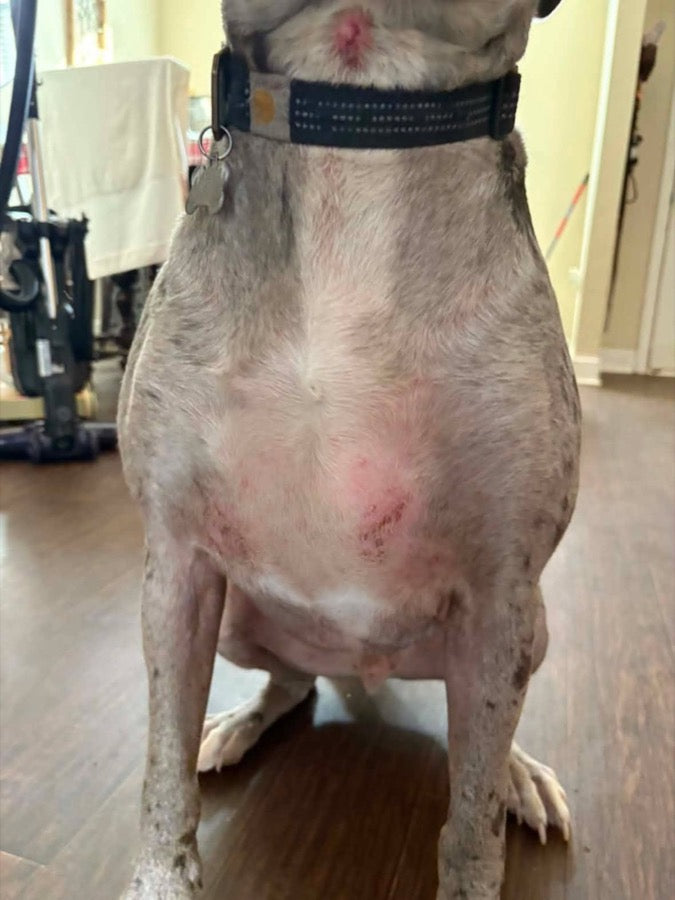
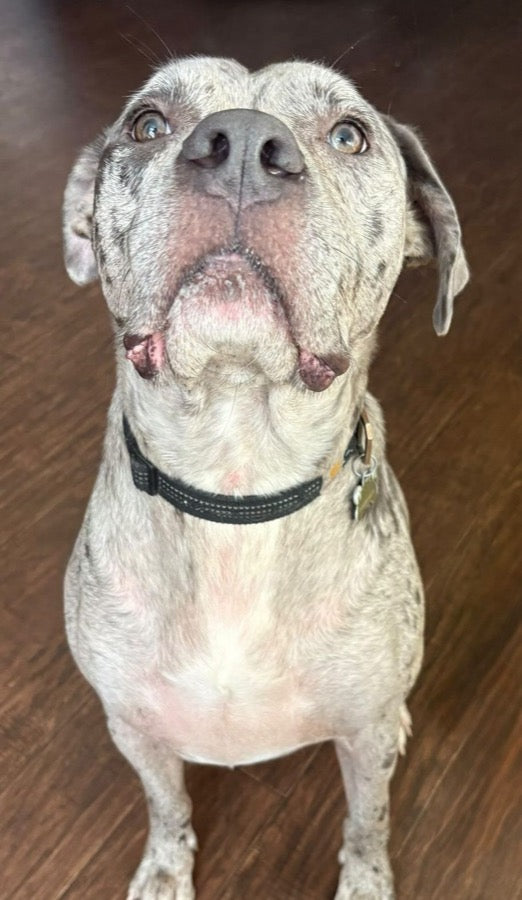
Itchy skin
“I was doubtful it would work.”
After more than a year of trying to calm Ranger’s itchy skin, MacKenzie almost didn’t try one more thing. Two bags of VitaDog Daily later, his coat was growing back and he was finally comfortable.
MacKenzie · Ranger’s owner
Try VitaDogIndividual results. VitaDog supports normal skin and coat health and is not a substitute for veterinary care.
The Four Main Types
Most canine anxiety falls into one of four categories. They can overlap.
- Separation anxiety. Distress when left alone. Destructive chewing focused on doors and windows, vocalization that starts within minutes of departure, house soiling in an otherwise trained dog, and over-the-top reunion behavior.
- Noise phobia. Acute fear of thunderstorms, fireworks, gunshots, vacuum cleaners. The dog hides, trembles, drools excessively, and may try to escape (a real risk during fireworks holidays).
- Social anxiety. Fear of unfamiliar people, dogs, or environments. Often presents as either freezing/hiding or as fear-based reactivity that looks like aggression.
- Generalized anxiety. Persistent baseline tension with no specific trigger. The dog is always vigilant, slow to settle, easily startled.
Some breeds are predisposed (Border Collies, German Shepherds, many small toys), but anxiety occurs across breeds. Early life experience matters more than breed alone, and dogs adopted from shelters or rescued from neglect carry a higher baseline risk.
What Anxiety Actually Looks Like
The textbook list (panting, pacing, hiding) catches the obvious cases. The subtle ones are easier to miss:
- Lip licking and yawning when nothing has prompted them
- Whale eye (whites of the eyes showing) during otherwise neutral situations
- Refusing food or treats they normally accept
- Excessive grooming that creates bald patches or raw skin
- Sudden gut symptoms including soft stool or diarrhea before triggering events
A dog who paces, drools, and pants during a thunderstorm is obviously anxious. A dog who licks his lips and turns away every time you reach for the leash is also anxious; he’s just communicating it more quietly.
Quick note · The gut-brain axis is real in dogs. Chronic anxiety often coexists with gut dysbiosis, and supporting the baseline (probiotic, omega-3, B vitamins) doesn’t replace behavior work but it makes the behavior work effective. VitaDog bundles those into one daily powder. See the formulation →
Treatment, Tiered from Least to Most Invasive
1. Environment and Routine
Most mild-to-moderate anxiety improves substantially with environment changes alone, before any pharmacology.
- Predictable schedule. Feeding, walks, and bedtime at consistent times. Anxious dogs settle when the day is predictable.
- A real safe space. Crate or quiet corner with the dog’s bedding and an item that smells like you. The crate is for retreat, never punishment.
- Reduced exposure to known triggers. Walk the reactive dog at quiet hours, not at the dog park. Don’t push through situations the dog can’t handle.
2. Behavior Work
The two evidence-based behavior approaches are desensitization and counter-conditioning. Both work by changing the dog’s emotional response to the trigger over time.
- Desensitization. Expose the dog to the trigger at an intensity low enough that no fear response occurs, then increase intensity gradually. For noise phobia this means recordings at low volume. For separation it means leaving for 30 seconds, then 60, then 5 minutes.
- Counter-conditioning. Pair the trigger with something the dog values (food, play). Done correctly, the trigger starts predicting good things instead of fear.
This work is slow. Real progress takes weeks to months. A certified veterinary behaviorist or a CCPDT-credentialed positive-reinforcement trainer is worth the cost for moderate-to-severe cases.
3. Nutritional and Supplement Support
Several interventions have research support, with varying strength of evidence:
- Omega-3 fatty acids (fish oil) support brain function and reduce neuroinflammation. The effect on anxiety is modest but real over weeks to months.
- Probiotics have shown effects on anxious behaviour in canine research. The gut-brain axis is increasingly understood as a driver of mood, with the broader canine gut microbiome reviewed in Pilla 2020 (Front Vet Sci) and Pilla 2021 (Vet Clin North Am) on diet-microbiome interactions.
- L-theanine and casein-derived peptides appear in some calming supplements with mixed evidence.
- CBD products are widely marketed for canine anxiety. The research is preliminary, dosing is inconsistent across products, and quality control is poor. Use only with veterinary guidance and with COA-verified products.
4. Medication
For severe anxiety that doesn’t respond to environment and behavior work, prescription medication is appropriate and not a failure of care.
- Daily SSRIs (fluoxetine, sertraline) for chronic generalized or separation anxiety. Takes 4 to 6 weeks to reach full effect.
- Situational anxiolytics (trazodone, gabapentin) for predictable triggers like vet visits, fireworks nights, travel.
- Combination protocols under a veterinary behaviorist for complex cases.
Medication works best alongside behavior modification, not instead of it.
What Doesn’t Work (Or Works Less Than People Think)
- Punishing the anxious behavior. Yelling at a dog who’s destroying the door during separation makes the underlying state worse, not better.
- “Flooding” exposure. Forcing the noise-phobic dog to sit through a fireworks show with no escape worsens the phobia.
- Thundershirts as a solo intervention. They help some dogs marginally. They’re not a substitute for the rest of the protocol.
- Generic calming chews with no specific ingredient profile. Most are placebo for the dog and reassurance for the owner.
When to Get Professional Help
Get a referral to a veterinary behaviorist (DACVB) or a board-certified veterinary behaviorist if:

- The dog has injured himself or others
- Destructive behavior during separation is severe (broken teeth, bloody paws from escape attempts)
- Reactivity has escalated despite owner-led training
- You’re considering rehoming because of behavior
A regular vet can rule out medical causes, prescribe medication, and refer. A behaviorist designs the full protocol.
The Foundation Matters
Behavior is downstream of physiology. A dog with chronic gut inflammation, omega-3 deficiency, or thyroid issues will be more anxious than the same dog with those baselines corrected. Address the foundation first; then the behavior work and the medication, if needed, have something stable to build on.
Related Reading
More on health:
- Diagnosing Hip & Elbow Dysplasia in Dogs
- Respiratory Problems in Dogs: Causes & Solutions
- Must-Have Vaccinations for Dogs: Complete Guide
- Effective Dog Allergy Treatments: Foods & Remedies
Related health topics:
Build the Foundation · Daily Support from VitaDog
Every condition covered in this article is influenced by baseline nutritional support. VitaDog is the comprehensive daily supplement designed for whole-dog health: therapeutic-dose omega-3 from anchovy oil, an 8-strain probiotic with inulin prebiotic, complete joint stack (glucosamine HCl, MSM, curcumin with piperine), full vitamin and mineral profile. One daily powder instead of stacking 4-5 separate bottles.
→ See the VitaDog formulation and get your dog started today.
Educational content only. This article is not veterinary advice. Always consult your veterinarian before starting, changing, or stopping any supplement or treatment, especially if your dog has a medical condition, is pregnant, or is on medication.