
Effective Treatments for Dog Allergies

2-minute fit check
What does your dog actually need?


Part of the Dog Skin, Coat & Allergy Guide. This article covers treatment options in depth. For the complete framework (causes, home remedies, supplements, prescription options), see the main hub.
A dog who’s chronically scratching, licking their paws raw, or chewing the same patch of skin doesn’t have a behavior problem; they have an allergy problem. Allergies in dogs are common, lifelong, and manageable. They’re rarely curable, but with the right combination of trigger identification, environmental control, and treatment, most allergic dogs live comfortably.
This article covers the three main allergy types, how to actually identify the trigger, and the treatment options that work, from cheap and easy through prescription specialty medication.
 A VitaDog customer story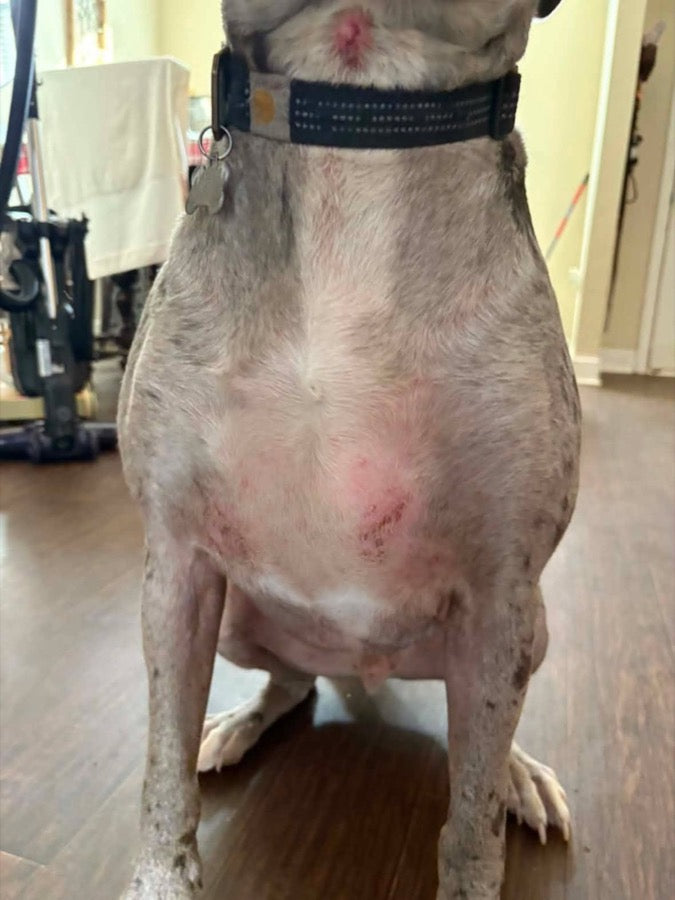
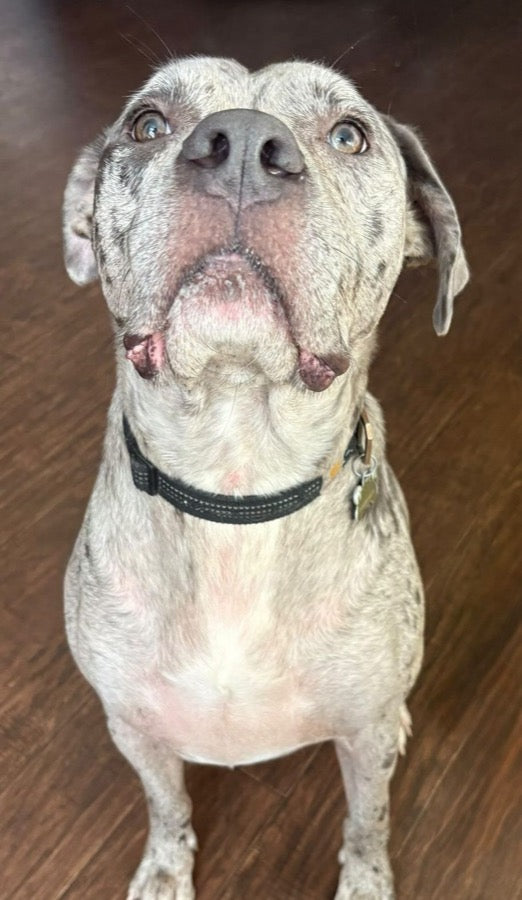
Itchy skin
“I was doubtful it would work.”
After more than a year of trying to calm Ranger’s itchy skin, MacKenzie almost didn’t try one more thing. Two bags of VitaDog Daily later, his coat was growing back and he was finally comfortable.
MacKenzie · Ranger’s owner
Try VitaDogIndividual results. VitaDog supports normal skin and coat health and is not a substitute for veterinary care.
The Three Main Types
1. Environmental (Atopic Dermatitis)
The most common allergy type in dogs. Reactions to inhaled or contact allergens: pollen, mold, dust mites, grass.
- Hallmark. Symptoms tied to seasons or environments. Itching at paws, ears, belly, armpits, face. Recurrent ear infections.
- Onset. Typically 1 to 3 years of age.
- Predisposed breeds. Golden Retrievers, Labradors, Bulldogs, West Highland Whites, Boxers, German Shepherds.
2. Flea Allergy Dermatitis (FAD)
Allergy to flea saliva. A single bite can trigger weeks of itching in sensitive dogs.
- Hallmark. Intense itching at the tail base, lower back, and inner thighs. Often hair loss in those areas.
- Even on flea preventive. A dog can react to a single bite before the preventive kills the flea.
- Diagnosis. Often confirmed by response to strict flea control.
3. Food Allergy / Adverse Food Reaction
Less common than the other two. Reactions to a specific protein, less often to a carbohydrate or additive.
- Hallmark. Itching that doesn't follow seasons. Often involves the face, ears, paws, and rear. May include GI symptoms (diarrhea, gas, soft stool, vomiting). For atopic dermatitis specifically, GLA from evening primrose oil has been evaluated in Scarff 1992 (35-dog double-blind crossover, Vet Rec) and Sture 1995 (EPO + fish oil combination, Vet Rec).
- Common triggers. Beef, chicken, dairy, wheat, lamb, soy, egg, and increasingly poultry-related novel proteins.
- Onset. Any age, but often within the first 2 years on a particular protein.
A dog can have more than one type. Many do.
Symptom Patterns Worth Reading
- Paw licking specifically. Brown saliva-stained fur on the paws, with continuous licking, is a high-confidence allergy sign in adult dogs.
- Recurrent ear infections. A dog who has had ear infections more than twice in a year almost certainly has an underlying allergy driving them.
- Anal gland issues. Repeated scooting and gland problems sometimes trace back to food allergies.
- GI symptoms with skin symptoms. Strong food allergy signal.

How to Actually Identify the Trigger
This is where most allergy management falls apart. The wrong test gets ordered, results don’t reproduce, owners give up.
For environmental allergies
Intradermal skin testing (injecting small amounts of allergens under the skin and reading wheal reactions) is the gold standard. Done at a veterinary dermatologist’s office. Results are precise and guide allergen-specific immunotherapy.
Serum (blood) IgE testing is easier and cheaper but less reliable. Useful for identifying broad categories. Don’t make major treatment decisions on serum results alone.
For food allergies
Elimination diet is the only validated method. Blood tests and saliva tests sold commercially for canine food allergies do not perform reliably; the published research doesn’t support them.
The protocol:
- Choose a novel protein the dog has never eaten (kangaroo, venison, alligator, rabbit) or a hydrolyzed protein prescription diet (Hill’s z/d, Royal Canin Hydrolyzed)
- Feed only this diet, plus water, for 8 weeks. No treats, no flavored medications, no table scraps
- If symptoms resolve, start reintroducing single proteins one at a time, watching for reaction
- Identify the trigger and avoid it long-term
The 8-week strict trial is the part owners struggle with. Cheating once on day 30 means restarting.
Quick note · The gut-skin axis means digestion and skin health share infrastructure. Probiotics and omega-3 support both. VitaDog delivers an 8-strain probiotic plus therapeutic-dose omega-3 daily. See the formulation →
Treatment Options, From Conservative to Aggressive
Environmental and Topical First
- Bathing 1 to 2x weekly with a hypoallergenic or chlorhexidine shampoo. Removes pollen and dander from the coat. This alone helps a lot of mild atopic dogs.
- Wipe-downs after walks with a damp cloth or pet wipe to remove pollen.
- Foot soaks for paw lickers (lukewarm water with a small amount of betadine).
- HEPA filtration at home. Clean bedding weekly.
Diet Adjustments
- Limited-ingredient diet with a single protein source for at-least-suspected food allergy
- Omega-3 supplementation for skin barrier support
- Probiotic for gut-skin axis support, particularly in dogs with both GI and skin symptoms
- Avoid free-feeding which makes elimination diets harder
OTC Options
- Antihistamines (diphenhydramine, cetirizine, loratadine). Modest efficacy in dogs, much less than in humans. Try one for 2 weeks; if no response, move on.
- Topical hydrocortisone for spot lesions. Short term only.
- Colloidal oatmeal sprays and shampoos for symptomatic itch relief.
Prescription Options
For moderate-to-severe atopic dermatitis, modern prescription medications have transformed treatment outcomes:
- Apoquel (oclacitinib). Fast-acting JAK inhibitor for itch. Effective within hours. Long-term safety studies are reassuring.
- Cytopoint (lokivetmab). Monthly injection. Monoclonal antibody targeting the itch signal. Few side effects.
- Cyclosporine (Atopica). Older immunomodulator. Effective but slower onset.
- Allergen-specific immunotherapy. Customized “allergy shots” or sublingual drops based on testing. Slow to work (months) but treats the underlying problem rather than the symptoms.
- Short-course corticosteroids for severe flare-ups. Effective and cheap. Long-term use carries side effects, so they’re not the right baseline.
What’s Worth Skipping
- Saliva-based and hair-based “food sensitivity tests.” Not reliable.
- Most “natural allergy chews” with vague ingredient claims. The active ingredients (omega-3, quercetin, probiotic) are useful; the chew’s dosing of them often isn’t therapeutic.
- Frequent shampooing with harsh shampoos. Damages the skin barrier.
- Switching foods every few weeks when symptoms persist; that’s not how allergies work.
When to Refer to a Veterinary Dermatologist
A regular vet handles most allergy cases. Refer to a dermatologist if:
- Symptoms persist after 2 to 3 treatment trials
- The dog has had recurrent secondary infections (yeast, bacteria) for more than a year
- You’re considering immunotherapy and want intradermal testing
- The case involves multiple confounding conditions (allergy plus endocrine plus autoimmune)
Related Reading
More on health:
- Anxiety in Dogs: Effective Treatment & Relief
- Diagnosing Hip & Elbow Dysplasia in Dogs
- Respiratory Problems in Dogs: Causes & Solutions
- Must-Have Vaccinations for Dogs: Complete Guide
Related health topics:
Build the Foundation · Daily Support from VitaDog
Every condition covered in this article is influenced by baseline nutritional support. VitaDog is the comprehensive daily supplement designed for whole-dog health: therapeutic-dose omega-3 from anchovy oil, an 8-strain probiotic with inulin prebiotic, complete joint stack (glucosamine HCl, MSM, curcumin with piperine), full vitamin and mineral profile. One daily powder instead of stacking 4-5 separate bottles.
→ See the VitaDog formulation and get your dog started today.
Educational content only. This article is not veterinary advice. Always consult your veterinarian before starting, changing, or stopping any supplement or treatment, especially if your dog has a medical condition, is pregnant, or is on medication.


