
Why Is My Old Dog So Stiff


Your old dog is stiff. Slow to get up, hesitant at stairs, reluctant to jump. Cold weather makes everything worse. The morning routine takes longer than it used to. You're watching them age in real time and wondering whether this is just what happens, or whether you should be doing something about it.
You should be doing something about it. Senior stiffness is rarely "just old age" and rarely needs to be accepted as inevitable. This guide covers what's actually happening, why it's happening, and what to do about it.
For the action-focused playbook on helping a stiff senior dog, see How to Help My Old Dog With Stiff Joints and How to Help My Senior Dog Get Up Easier.
 A VitaDog customer story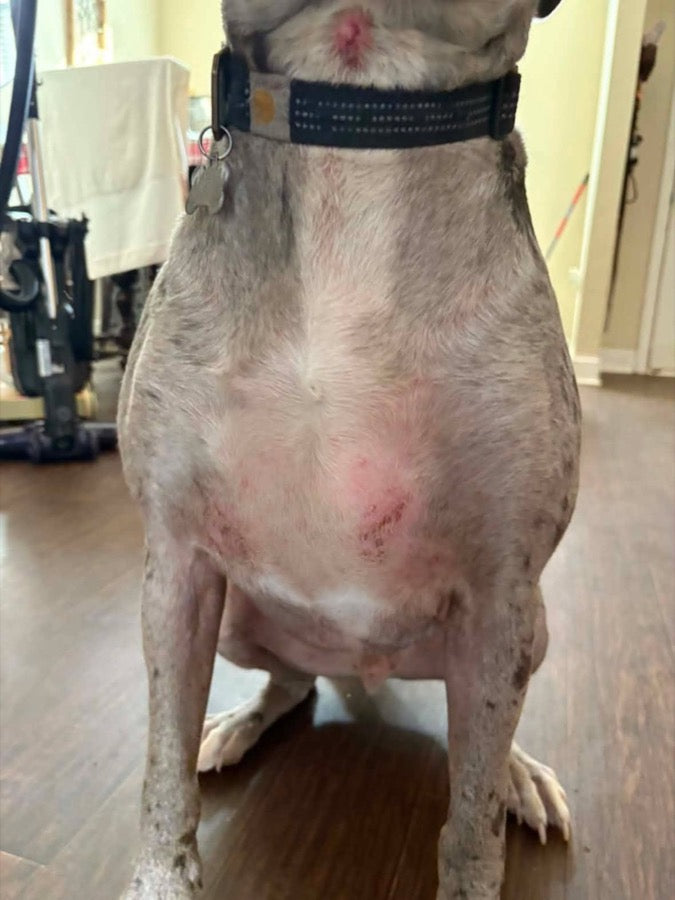
Itchy skin
“I was doubtful it would work.”
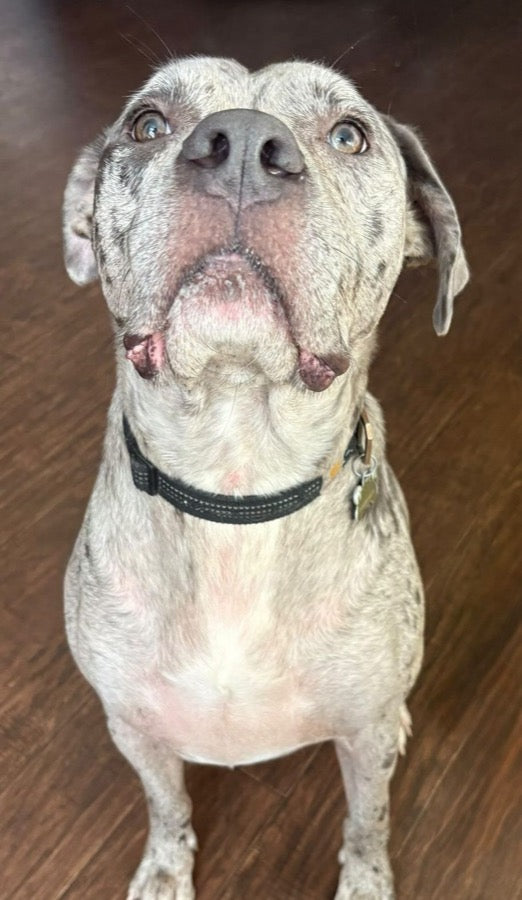
After more than a year of trying to calm Ranger’s itchy skin, MacKenzie almost didn’t try one more thing. Two bags of VitaDog Daily later, his coat was growing back and he was finally comfortable.
MacKenzie · Ranger’s owner
Try VitaDogIndividual results. VitaDog supports normal skin and coat health and is not a substitute for veterinary care.
What's Actually Happening
Senior stiffness is almost always degenerative joint disease (DJD), the canine version of osteoarthritis. By the time you're seeing visible stiffness, the process has often been progressing silently for 1 to 3 years.
The mechanism, simplified:
Cartilage starts thinning at points of high mechanical stress
Synovial fluid quality declines, providing less cushioning
Bone surfaces start rubbing with friction
Inflammation kicks in as damaged cartilage releases inflammatory signaling molecules
The body responds with bone remodeling (bone spurs, joint capsule thickening)
Pain and stiffness become more pronounced
The dog uses the joint less, surrounding muscles atrophy
Reduced muscle support means more joint stress, the cycle compounds
The earlier you intervene, the more leverage you have. Catching the cycle at "noticeably stiff but still mobile" is meaningfully easier than waiting until "barely able to walk."
The Five Drivers Behind Senior Stiffness
1. Osteoarthritis (DJD)
The big one. Most senior stiffness is DJD until proven otherwise. Estimated 60%+ of large-breed dogs and 40%+ of all dogs over 8 have some degree of DJD.
How it presents:
Slow to get up from lying down
Morning stiffness that loosens with movement ("warming up")
Reluctance at stairs, jumping into car, jumping on furniture
Sloppy sit posture with hip tucked to one side
Worse in cold or damp weather
Reduced enthusiasm for activities they used to love
2. Hip dysplasia (breed-predisposed)
Genetic abnormality in hip joint formation. Common in larger breeds: Labradors, German Shepherds, Golden Retrievers, Rottweilers, Bernese Mountain Dogs. Often presents as DJD-pattern stiffness in middle age, accelerating in senior years.
3. Elbow dysplasia (breed-predisposed)
Front-leg version of hip dysplasia. Common in same large breeds. Presents as front-leg stiffness, lameness, reluctance to jump or use stairs.
4. Cruciate ligament tears
Acute or progressive ligament damage in the knee. Acute tears cause sudden severe lameness; progressive partial tears cause increasing stiffness over weeks to months. Common in middle-aged and older dogs of any breed.
5. Disc disease (IVDD)
Degenerative changes in the spine causing back stiffness, sometimes weakness in the rear legs. Common in long-backed breeds (Dachshunds, Corgis, Basset Hounds), older dogs of any breed.
6. Less common
Lyme disease (tick-borne, can cause polyarthritis)
Immune-mediated polyarthritis (rare, often-missed)
Chronic muscle wasting from inactivity
Spinal cord conditions (degenerative myelopathy in older German Shepherds especially)
Endocrine conditions (Cushing's disease causes muscle weakness that can mimic stiffness)
How to Figure Out What's Going On
Diagnostic framework:
| Pattern | Most likely cause |
| Gradual onset over months/years, all four limbs | DJD (osteoarthritis) |
| Large breed, both rear legs, lifelong | Hip dysplasia → DJD |
| Large breed, both front legs | Elbow dysplasia → DJD |
| Sudden severe lameness on one leg | Acute cruciate tear |
| Back stiffness, rear weakness, long-backed breed | IVDD |
| Sudden multi-joint stiffness with fever | Immune-mediated polyarthritis (vet now) |
| Senior with stiffness + muscle weakness + drinking more | Cushing's disease (vet workup) |
Most senior stiffness is DJD with breed-specific underlying contributors. X-rays at the vet provide a baseline that informs which interventions make sense.

Why "Just Old Age" Is Often the Wrong Frame
The "old age" framing is often used to justify under-treating treatable conditions. A few realities worth knowing:
Most senior stiffness responds meaningfully to appropriate intervention. Even moderate-to-advanced DJD typically improves substantially with multi-modal management (weight control, multi-pathway supplements, prescription pain control, exercise modification, environmental support).
Modern prescription options have changed the picture. Galliprant, Adequan, and Librela are well-tolerated, meaningfully effective, and increasingly accessible. Many seniors who were previously dismissed as "just old" do remarkably well on these.
Progressive decline isn't inevitable. With consistent management, many senior dogs maintain stable mobility for years rather than declining linearly.
Ignoring it makes it worse faster. Untreated chronic pain leads to muscle atrophy, reduced activity, weight gain, more joint stress, faster decline. Treating it often slows or stalls the progression.
What Actually Works
The strongest results come from a multi-modal approach:
1. Weight management (often highest leverage)
Every pound of excess body weight amplifies joint forces. Even 10 to 15% weight reduction often produces visible mobility improvement within 4 to 6 weeks.
2. Daily multi-pathway joint support
The modern evidence base points to multi-pathway support, not single-ingredient solutions. Glucosamine + MSM (cartilage and sulfur, with McCarthy et al. 2007 in The Veterinary Journal evaluating glucosamine/chondroitin in canine OA), turmeric paired with black pepper extract for piperine-enabled curcumin absorption (Shoba et al. 1998, Planta Medica), quercetin, adaptogens, omega-3 with GLA (Roush et al. 2010, JAVMA), multi-strain probiotic for gut-joint axis.
3. Environmental support
Non-slip rugs on hardwood floors. Orthopedic memory foam bed. Ramps for cars and furniture. Heated bed in cold months. Often-overlooked low-cost interventions with same-day improvement.
4. Targeted exercise
Daily moderate low-impact activity (controlled walks on soft surfaces, hydrotherapy if accessible, sit-to-stand reps to strengthen rear-end muscles). Two short walks beat one long walk.
5. Prescription pain management
For moderate-to-severe stiffness:
Galliprant (newer NSAID, fewer GI/kidney concerns than older NSAIDs)
Adequan injections (PSGAG, genuinely disease-modifying)
Librela (monoclonal antibody, monthly injection, well-tolerated)
Gabapentin for adjunctive pain control in advanced cases
6. Professional rehab
Vet rehabilitation specialists (CCRT-certified) can dramatically improve mobility through underwater treadmill therapy, laser therapy, acupuncture, and structured exercise programs.
When to See a Vet
Schedule a vet visit if:
First time you're noticing significant stiffness (baseline workup including bloodwork is appropriate)
Sudden onset vs gradual progression
Severe one-sided lameness (could be cruciate ligament tear or other acute injury)
Multi-joint stiffness with fever (immune-mediated polyarthritis is a vet-now case)
Back stiffness with rear-leg weakness (rule out IVDD)
Visible muscle wasting beyond mild
Quality of life clearly declining despite home interventions
X-rays, joint exam, and bloodwork at the vet provide a baseline that informs which prescription interventions make sense.
The Daily Foundation for Senior Stiffness
For senior stiff dogs, daily multi-pathway support outperforms running multiple stand-alone products and addresses several drivers simultaneously.
VitaDog's daily formula is built around exactly the multi-pathway profile senior joints respond to:
Glucosamine HCl + MSM (600mg combined active blend) for the cartilage and sulfur layer.
Turmeric paired with black pepper extract for piperine-enabled curcumin absorption (the difference between turmeric supplementation that works and turmeric that doesn't).
Quercetin dihydrate for histamine and inflammatory response.
Astragalus, liquorice, rosemary adaptogens.
Anchovy + flaxseed + evening primrose oil + MCT four-oil blend. Anchovy-source omega-3 (cleaner than salmon), GLA from evening primrose oil, plant ALA, and MCT (ketone substrate for the aging brain, relevant for senior cognitive support).
8-strain probiotic at 1 billion CFU with inulin and pumpkin prebiotic. Particularly relevant for seniors on chronic NSAIDs because NSAIDs disrupt the gut microbiome.
Methylcobalamin B12 (bioavailable form for absorption-impaired seniors), niacinamide as NAD+ precursor.
No brewers yeast for sensitive senior skin.
For senior dogs on prescription NSAIDs or Librela, this daily foundation works alongside the prescription, often allowing reduced doses or fewer flares. See the full formulation.
Frequently Asked Questions
Why is my old dog suddenly so stiff?
Most likely causes: progression of underlying osteoarthritis (the dog has had it for years and you're now noticing), acute injury (cruciate tear, soft tissue strain), or in some cases an underlying medical condition (Cushing's, hypothyroidism, immune-mediated polyarthritis). Sudden onset stiffness warrants vet evaluation, not home management alone.
How do I know if my old dog is in pain?
Subtle signs: panting at rest, reluctance to move, sloppy sit posture, change in temperament, reduced appetite, restlessness or pacing, licking specific joints, slow tail wag where there used to be enthusiasm. Many seniors stoically hide pain. A vet pain assessment is appropriate if any of these are persistent.
What's the best thing for an old dog with stiff joints?
A daily multi-pathway joint formula (glucosamine + MSM + turmeric with piperine + quercetin + adaptogens + omega-3 with GLA + multi-strain probiotic) plus weight management, environmental support, exercise modification, and prescription pain control for moderate-to-severe cases. Multi-modal management consistently outperforms any single intervention.
Can my old dog's stiffness be reversed?
Not fully reversed, but meaningfully improved. The structural cartilage damage is permanent, but pain reduction, inflammation control, muscle rebuilding, and weight management can dramatically improve perceived mobility and quality of life. Many seniors regain function they'd lost with appropriate intervention.
Does cold weather actually make joint stiffness worse?
Yes. Lower temperatures increase synovial fluid viscosity, reduce blood flow to joints, and make connective tissue stiffer. Heated beds, sweaters during cold walks, and warmth before exercise meaningfully help.
When should I consider a wheelchair for my stiff old dog?
When mobility decline is severe enough that the dog can't get up reliably or has significant rear-end weakness despite multi-modal management. Mobility harnesses (Help Em Up, Walkin' Wheels, GingerLead) provide assistance without pulling on collars. Wheelchairs for severe cases.
Can I give my old dog Tylenol or Advil for stiffness?
No. Multiple human NSAIDs are toxic to dogs and can cause severe GI ulceration, kidney failure, liver failure, or death. Always use canine-formulated prescription pain medications under vet guidance.
How long do joint supplements take to work in old dogs?
Multi-pathway formulas: 2 to 4 weeks partial, 8 weeks full effect. Glucosamine + MSM alone: 4 to 6 weeks. Loading-phase dosing for the first 6 weeks accelerates joint tissue saturation. Don't judge effectiveness before 8 weeks at full dose.
Broader Context
How to Help My Old Dog With Stiff Joints, action-focused playbook
How to Help My Senior Dog Get Up Easier, mobility-focused playbook
Dog Joint Health Guide, foundational biology
DJD in Dogs, canine osteoarthritis picture
Best Supplements for Senior Dogs, senior-specific approach
Best Joint Supplement for Dogs, brand comparison
Educational content only. This article is not veterinary advice. Always consult your veterinarian before starting, changing, or stopping any supplement, especially if your dog has a medical condition, is pregnant, or is on medication.


