
Dog Supplement Powder for Homemade Food: What Your Dog's...
More dog owners than ever are cooking for their dogs. Whether it's raw, fresh, or home-cooked meals, the motivation is the same: you want to know exactly

More dog owners than ever are cooking for their dogs. Whether it’s raw, fresh, or home-cooked meals, the motivation is the same: you want to know exactly what’s going into your dog’s bowl.
The problem: nearly every homemade dog diet, no matter how thoughtfully prepared, is nutritionally incomplete. Not because the food is bad, but because dogs need specific vitamins, minerals, and compounds that whole foods alone rarely provide in the right amounts.
This is where a supplement powder designed for homemade diets becomes essential. Not optional. Essential.
 A VitaDog customer story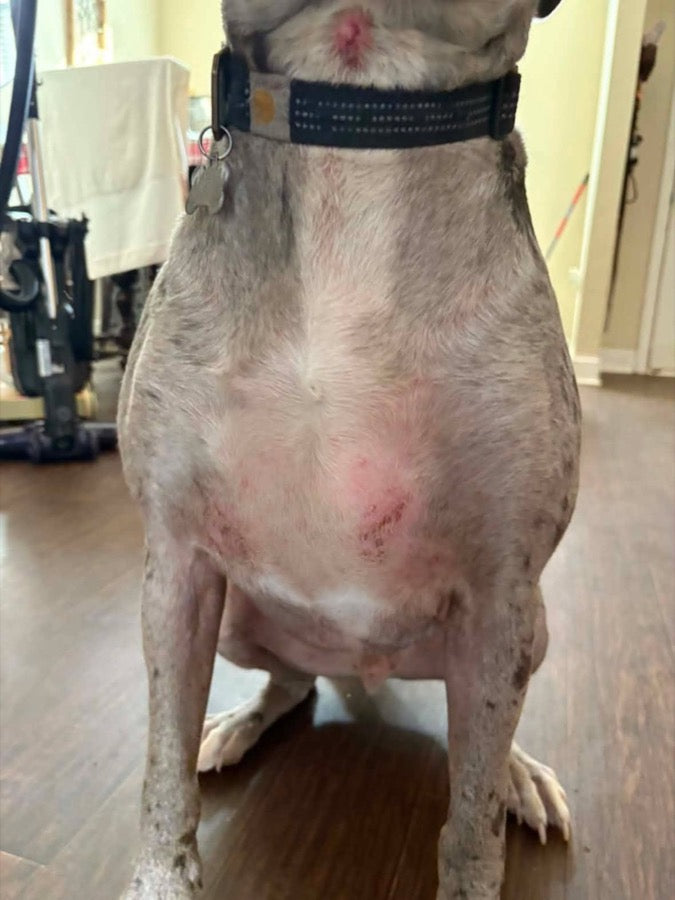

Itchy skin
“I was doubtful it would work.”
After more than a year of trying to calm Ranger’s itchy skin, MacKenzie almost didn’t try one more thing. Two bags of VitaDog Daily later, his coat was growing back and he was finally comfortable.
MacKenzie · Ranger’s owner
Try VitaDogIndividual results. VitaDog supports normal skin and coat health and is not a substitute for veterinary care.
Why Homemade Dog Food Needs Supplementation
A landmark study from UC Davis analyzed 200 homemade dog food recipes, including recipes from veterinary textbooks, dog care books, and websites. The result: 95% of the recipes were deficient in at least one essential nutrient, and 84% were deficient in multiple nutrients.
| Nutrient | % of recipes deficient | Why it matters |
|---|---|---|
| EPA/DHA (Omega-3) | 70%+ | Anti-inflammatory, brain, heart, joint, skin |
| Zinc | 62% | Immune function, skin health, wound healing |
| Choline | 55% | Liver function, brain health |
| Vitamin D | 53% | Bone health, calcium absorption, immunity |
| Vitamin E | 48% | Antioxidant protection, muscle function |
| Copper | 42% | Red blood cell formation, iron absorption |
| Calcium | 35% | Bones, teeth, muscle and nerve function |
| Iodine | 30% | Thyroid function |
These aren’t obscure micronutrients. They’re essential compounds that, when missing over months, lead to real health problems: dull coat, weakened immune system, joint deterioration, organ damage, and shortened lifespan.
The cruel irony: owners switch to homemade food to improve their dog’s health, and end up creating nutrient deficiencies that commercial kibble (for all its flaws) actually covers through fortification.
What About Raw Diets?
Raw feeding (BARF, prey model, and similar approaches) has the same fundamental challenge. Raw diets often provide excellent protein and fat profiles, but consistently fall short on:
- Omega-3 balance: even fish-based raw diets may not provide optimal EPA/DHA ratios. See Fish Oil & Omega-3 for Dogs.
The raw feeding community sometimes claims that “nature provides everything.” But wild canids eat entire prey animals, including the stomach contents (partially digested plant matter), bones, organs, brains, eyes, and skin. Very few raw-fed domestic dogs eat this complete spectrum.
A supplement powder bridges the gap between what a raw diet provides and what a dog’s body actually requires.
Vitamins
Vitamin D3: dogs cannot produce vitamin D from sunlight. They rely entirely on dietary sources. Deficiency leads to weak bones, poor calcium absorption, and immune dysfunction. Most homemade diets provide only 10-30% of the recommended amount.
Vitamin E: a critical antioxidant that protects cell membranes from oxidative damage. Cooking destroys much of the vitamin E in food. Supplementation prevents muscle degeneration and supports immune function.
B-complex vitamins: water-soluble vitamins lost during cooking and storage. Essential for energy metabolism, nerve function, and red blood cell production. Niacin (B3) is especially important for dogs and poorly supplied in many homemade recipes. Full breakdown: Dog Vitamins Explained.
Minerals
Zinc: the most commonly deficient mineral in homemade diets. Essential for skin health, immune function, and over 300 enzymatic reactions. Zinc deficiency shows up as dull coat, hair loss, slow wound healing, and recurrent infections.
Copper: works synergistically with zinc and iron. Needed for red blood cell formation, connective tissue health, and iron metabolism. Too little or too much is problematic; balance matters.
Calcium: unless you’re grinding bone into the food (and most home cooks don’t), calcium is almost certainly insufficient. The calcium-to-phosphorus ratio is critical: meat is high in phosphorus and low in calcium, creating an imbalance that leaches calcium from bones over time. See Calcium for Dogs.
Iodine: supports thyroid function. Rarely present in adequate amounts in homemade diets unless kelp or iodized salt is included.
Fatty acids
EPA and DHA (Omega-3): the anti-inflammatory fatty acids that support joints, skin, coat, brain, and heart health. Even if a recipe includes fish, the amount and frequency may not provide therapeutic levels. Most homemade diets are heavily skewed toward omega-6 (from meat and vegetable oils), which is pro-inflammatory. For exact dosing, see Fish Oil Dosage for Dogs.
Functional ingredients
Beyond basic vitamins and minerals, dogs benefit from compounds that whole foods don’t provide in therapeutic amounts:
- Glucosamine: joint support. Only present in cartilage and connective tissue, which most homemade recipes exclude. See Glucosamine for Dogs.
Quick note · Daily nutritional support matters for almost every aspect of canine health. VitaDog bundles the joint stack, multi-strain probiotics with inulin, therapeutic-dose omega-3, and a complete vitamin/mineral profile into one powder designed to mix straight into homemade or raw meals.
Why Powder Format Is Ideal for Homemade Diets
If you’re preparing your dog’s food from scratch, a powder supplement integrates seamlessly:
The powder format is also the only practical way to deliver probiotics with home-cooked food. Since cooking kills all beneficial bacteria, adding a powder with live probiotic strains after the food has cooled ensures the dog gets viable gut support.
The all-in-one advantage
Most homemade feeders end up buying 4-5 separate supplements: a multivitamin, best fish oil, probiotics, a best joint supplement, and maybe a calcium source. This gets expensive ($80-$120/month combined) and complicated (multiple products, different dosing schedules, potential ingredient overlaps or interactions).
A comprehensive all-in-one powder designed for dogs simplifies this to one scoop per meal. It’s formulated with balanced ratios (calcium-to-phosphorus, zinc-to-copper, omega-3-to-omega-6) that standalone products don’t coordinate.
VitaDog was built exactly for this use case: 8-strain probiotic with inulin and pumpkin prebiotic, therapeutic-dose omega-3 (fish oil) paired with flaxseed, evening primrose oil, and MCT, glucosamine HCl + MSM joint blend with multi-pathway anti-inflammatory layer (turmeric with piperine, quercetin, adaptogens), and a complete vitamin and chelated mineral profile, all in a single daily powder. Inside the all-in-one dog supplement.
1. Relying on variety instead of balance
“I rotate proteins, so my dog gets everything” is the most common misconception. Rotating chicken, beef, and turkey provides variety in protein, but all three are deficient in the same vitamins and minerals. Rotation doesn’t fix systematic gaps.
2. Using human supplement guidelines
Dogs have different nutritional requirements than humans. They need more zinc per body weight, different ratios of B vitamins, and cannot utilize certain nutrient forms that humans can (like plant-based omega-3 ALA or beta-carotene as a vitamin A source).
3. Adding calcium randomly
Eggshell powder, bone meal, or calcium supplements without knowing the phosphorus content of the diet can create dangerous imbalances. The ideal calcium-to-phosphorus ratio for dogs is 1.2:1 to 1.4:1.
4. Skipping supplementation for “complete” raw diets
Even the most thoughtful prey-model raw diet (80% muscle meat, 10% bone, 10% organ) is typically deficient in zinc, manganese, vitamin E, and iodine. “Complete” in the raw feeding community often doesn’t mean complete in the nutritional-science sense, recipes are usually missing one or more essential micronutrients when measured against established canine nutritional requirements.
5. Not accounting for cooking losses
Water-soluble vitamins (B-complex, vitamin C) are significantly reduced by cooking. Fat-soluble vitamins (A, D, E, K) are more stable but still degrade with high heat. What’s in the raw ingredients is not what’s in the final meal.
How to Serve a Supplement Powder
The process is simple:
For raw feeders: add the powder at serving time, mixed into the thawed raw food. The cold temperature actually helps preserve the probiotics.
Consistency matters more than perfection. A daily supplement routine covers the nutritional bases the recipe misses. No need to stress about every meal being perfectly balanced, the supplement handles the micronutrient safety net.
Related Reading
Hub guides: - Complete Dog Gut Health Guide - Complete Dog Joint Health Guide
Ingredient deep-dives: - Dog Vitamins Explained - Glucosamine for Dogs - Fish Oil & Omega-3 for Dogs - Fish Oil Dosage for Dogs
Related comparisons: - Best Multivitamin for Dogs - Best All-in-One Dog Supplement 2026
The VitaDog approach: - See the all-in-one formulation
What supplements do dogs need on a homemade diet?
At minimum: a complete multivitamin (D3, E, B-complex), zinc, copper, calcium (balanced with phosphorus), omega-3 fatty acids (EPA/DHA from fish oil), and iodine. Ideally also probiotics and glucosamine. A comprehensive all-in-one powder covers all of these in one scoop.
Can I just add a human multivitamin to my dog’s food?
No. Human multivitamins contain different nutrient ratios, may include ingredients toxic to dogs (like xylitol), and often lack dog-specific nutrients. They also typically contain iron at levels that can be excessive for dogs. Use a supplement formulated for canine nutritional needs.
How much supplement powder should I add to homemade dog food?
Follow the product’s dosing instructions based on the dog’s weight. Typical powder supplements use a scoop system: 1 scoop for small dogs, 2 for medium, 3 for large. The key is consistency: supplement every meal, every day.
Is homemade dog food better than kibble?
It can be, if properly supplemented. Unsupplemented homemade food is nutritionally inferior to commercial kibble, which is fortified to meet regulatory feed minimums. Properly supplemented homemade food gives you the best of both worlds: quality whole-food ingredients plus complete nutrition.
Do I need to supplement if I feed a commercial fresh food (The Farmer’s Dog, JustFoodForDogs)?
Most commercial fresh/cooked dog food brands formulate their recipes to be nutritionally complete and already include vitamin/mineral premixes. Check the label, if it’s formulated to meet established canine nutritional requirements as a “complete and balanced” diet, basic supplementation isn’t necessary. You might still choose to add joint support or probiotics for specific health goals.
Can I over-supplement my dog on a homemade diet?
Yes, particularly with fat-soluble vitamins (A, D) and certain minerals (calcium, zinc, iron). This is why a balanced, dog-specific supplement is safer than combining individual supplements, the formulation accounts for safe upper limits and nutrient interactions.
Fill the Gaps in Homemade Diets · Daily Support with VitaDog
Cooking for your dog or feeding raw is a real commitment to quality. The micronutrient gaps that show up in nearly every homemade recipe are the part most owners don’t see. VitaDog is a single daily powder built to bridge those gaps: 8-strain probiotic with inulin and pumpkin, therapeutic-dose omega-3 (fish oil) paired with flaxseed, evening primrose oil, and MCT, glucosamine HCl + MSM joint blend, and a complete vitamin and chelated mineral profile.
→ Make every homemade meal nutritionally complete · see VitaDog.
Educational content only. This article is not veterinary advice. Always consult your veterinarian before starting, changing, or stopping any supplement, especially if your dog has a medical condition, is pregnant, or is on medication.


