
My Female Dog Smells Like Fish: When It's Normal and...
A fishy smell from your female dog is more diagnostic than it sounds. The location, timing, and accompanying signs can point to anything from completely

A fishy smell from your female dog is more diagnostic than it sounds. The location, timing, and accompanying signs can point to anything from completely normal hormonal cycling to a genuine veterinary emergency.
This guide is specifically for female dogs. We cover the conditions that produce fishy odors in females, how to tell which one you're dealing with, and exactly when "wait and watch" turns into "vet now."
For the broader hub on fishy smells in dogs of any sex, see Why Does My Dog Smell Like Fish.
 A VitaDog customer story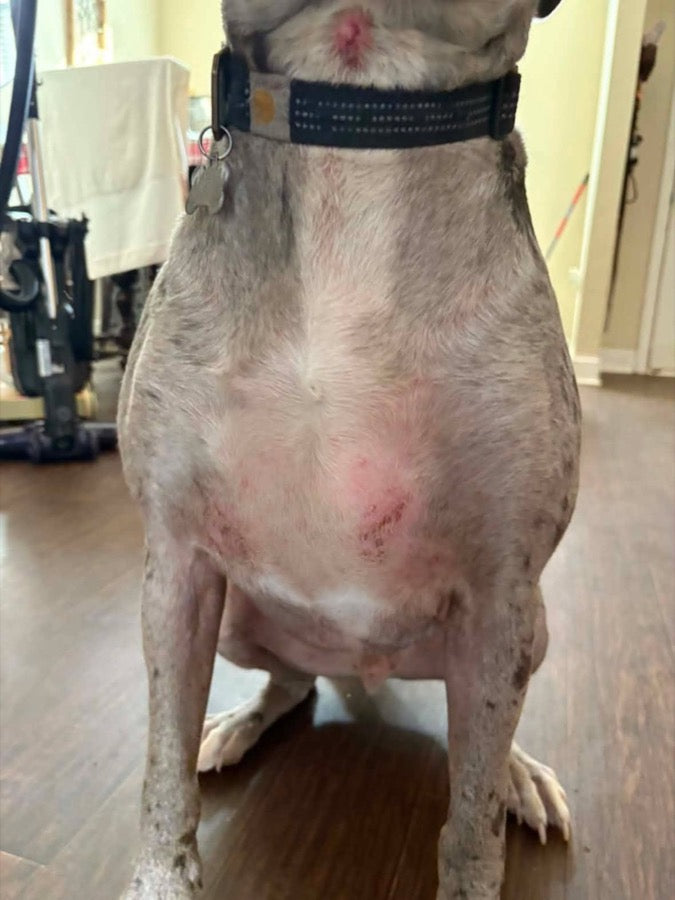
Itchy skin
“I was doubtful it would work.”
After more than a year of trying to calm Ranger’s itchy skin, MacKenzie almost didn’t try one more thing. Two bags of VitaDog Daily later, his coat was growing back and he was finally comfortable.
MacKenzie · Ranger’s owner
Try VitaDogIndividual results. VitaDog supports normal skin and coat health and is not a substitute for veterinary care.
The Five Female-Specific Causes
In addition to the universal causes (anal glands, dental, ear yeast, skin yeast), female dogs have several reproductive-tract conditions that can produce fishy odors. The cluster:
1. Urinary tract infection (UTI)
Female dogs are anatomically more prone to UTIs than males. The shorter urethra and proximity to the anus make bacterial migration easier. UTIs frequently produce a fishy or ammonia-fishy smell from the genital area.
What it smells like: sharp, fishy, sometimes ammonia-tinged. Concentrated near the genital area and in fresh urine.
Other signs:
Action: vet visit. UTIs are a same-week issue, not a wait-and-watch one. Untreated UTIs can ascend to the kidneys, which is meaningfully more serious. Your vet will run a urinalysis and prescribe antibiotics based on the bacterial profile.
UTIs can become chronic if not properly treated, especially in spayed females who can develop urinary incontinence and recurrent infection patterns.
2. Vaginitis
Inflammation of the vaginal tissue, sometimes with bacterial overgrowth. Common in young pre-pubescent females, can also occur in adults from various triggers.
What it smells like: mild fishy or yeast-like, originating specifically from the vulva area.
Other signs:
Action: vet visit for evaluation. Mild vaginitis sometimes resolves with topical care and gentle cleaning. Persistent or recurrent cases warrant cytology, culture, and possible antibiotic treatment.
In young female puppies (pre-puberty), juvenile vaginitis is relatively common and often resolves at the first heat cycle. Still worth a vet check to rule out other causes.
3. Pyometra (uterine infection: emergency)
This is the female-specific cause that owners need to know about because it's life-threatening and often missed in the early stages.
Pyometra is a uterine infection that occurs in unspayed females, typically several weeks after a heat cycle. The uterus fills with pus. The condition is fatal if untreated.
What it smells like: foul, fishy, sometimes putrid, often accompanied by vaginal discharge that's pus-like.
Other signs:
Action: same-day vet visit. Pyometra is a surgical emergency. Treatment is typically emergency spay surgery; some dogs are too unstable to spay immediately and need stabilization first. Prognosis is good with prompt treatment, fatal without it.
Critical point: closed-cervix pyometra has no visible discharge. The dog just looks "off": lethargic, off her food, drinking more than usual. If you have an unspayed female 2 to 8 weeks post-heat who seems unwell, even without obvious discharge, get her checked. This isn't a "wait and see" situation.
4. Heat cycle (estrus)
Unspayed females in heat produce vaginal discharge as part of the cycle. The discharge has a distinctive smell that some owners describe as fishy.
What it smells like: musky-fishy, sometimes metallic from the bloody phase. Concentrated near the vulva.
Other signs:
Action: usually no action needed beyond standard heat-cycle management (keeping the dog away from intact males, hygiene products if available in your region). Heat cycles last 2 to 4 weeks total. The smell resolves with the cycle.
However: if the discharge becomes notably foul-smelling, pus-like, or persists past the normal cycle window, or if the dog seems unwell during or after the heat, see "pyometra" above.
5. Spayed female urinary incontinence
Spayed female dogs, especially older ones, can develop urinary incontinence (USMI: urethral sphincter mechanism incompetence). Small amounts of urine leak, often during sleep. The urine on the bedding produces a fishy or ammonia smell over time.
What it smells like: ammonia-fishy, often most noticeable from bedding or where the dog has slept.
Other signs:
Action: vet visit for diagnosis. USMI is well-managed with medications (PPA: phenylpropanolamine: is the standard). Distinct from a UTI in that the dog isn't sick, isn't straining, isn't producing concentrated urine: just leaking small amounts.
Many dogs with USMI also develop intermittent UTIs because of the constant low-level moisture, so vet workup typically includes both evaluations.
How to Tell Which Cause You're Dealing With
Quick diagnostic framework:
| Signs | Likely cause | Urgency |
| Frequent urination, straining, cloudy urine, fishy genital smell | UTI | Same-week vet |
| Vulvar discharge, vulva licking, otherwise healthy | Vaginitis | Vet visit, not urgent |
| Recent heat 2 to 8 weeks ago, lethargy, off food, drinking more | Pyometra | Same-day vet |
| Currently in heat, bloody/pink discharge | Normal estrus | Usually no action |
| Wet patches when sleeping, no other signs | USMI (incontinence) | Vet visit, not urgent |
| Anal-area smell, scooting | Anal glands (not female-specific) | See butt smell article |
When This Is an Emergency
Same-day vet visit if:
Unspayed female, recent heat, off food + lethargic + drinking more (rule out pyometra)
Severe vulvar discharge with foul smell
Visible vulvar swelling combined with systemic illness
Any indication of severe pain in the abdomen
Sudden severe lethargy or collapse
Vomiting + lethargy + recent heat in unspayed female
These are the patterns that point toward pyometra or severe ascending UTI/sepsis. Don't wait.
Same-week vet visit for:
New-onset UTI signs (frequent urination, straining, cloudy urine)
Persistent vulvar discharge in non-heat females
Recurrent UTI patterns (more than 2 to 3 in a year)
Suspected USMI in a spayed female
What's NOT a Female-Specific Cause
Anal gland issues: not female-specific despite some online claims. Female dogs get gland issues at the same rates as males of the same breed and body condition. See butt smells like fish.
Dental disease: same in both sexes.
Skin yeast and ear yeast: same in both sexes.
Diet: female-specific issues aren't caused by diet, though dietary triggers can drive secondary issues like recurring UTIs (some food sensitivities cause urinary pH changes that predispose to infection).
Prevention and Daily Support
For chronically affected female dogs (recurrent UTIs, USMI, post-heat issues), several daily practices help:
1. Hydration
Dilutes urine and reduces UTI risk. Consider water fountains for fussy drinkers; some dogs drink more from moving water.
2. Cranberry supplementation (mixed evidence)
Cranberry extract may help reduce UTI recurrence in some dogs, though evidence is weaker than in humans. Veterinary cranberry products (Crananidin, others) are reasonable to try in chronic-UTI dogs.
3. D-mannose
Sugar that prevents E. coli adhesion to bladder walls. Used in human UTI prevention; canine evidence is anecdotal but the safety profile is good.
4. Multi-strain probiotics
Daily probiotic support normalizes the gut microbiome and may indirectly support urogenital health through systemic immune effects. Brewers-yeast-free for sensitive dogs.
5. Spay if not done
For pyometra prevention specifically, spaying eliminates the risk entirely. Discuss timing with vet: there's some debate about optimal age in larger breeds, but spaying before middle age effectively eliminates pyometra risk.
6. Proper hygiene during heat
For unspayed females in heat, keeping the vulva area clean (with vet-approved wipes, not human hygiene products) reduces secondary bacterial issues.
Daily Wellness Foundation
While daily supplementation doesn't directly prevent pyometra (only spaying does that), it does support the broader systems that reduce urinary and reproductive tract issues:
VitaDog's daily formula provides:
This isn't a substitute for vet care of female-specific reproductive or urinary issues: those need targeted veterinary management. It's a daily foundation that supports the broader systems. See the all-in-one formulation.
Why does my female dog smell like fish?
Most common female-specific causes: UTI, vaginitis, normal estrus discharge, urinary incontinence (in spayed seniors), or pyometra (in unspayed females with recent heat: emergency). Universal causes (anal glands, dental, skin yeast) also possible. Location of the smell narrows it down.
Is fishy smell normal in a female dog?
Some smell during heat cycles is normal. Persistent fishy smell outside of heat is not normal and warrants investigation. Sudden onset of strong fishy smell with any other signs (lethargy, off food, increased thirst) needs prompt vet evaluation, especially in unspayed females.
Can a UTI cause fishy smell in dogs?
Yes. UTIs commonly produce fishy or ammonia-fishy smell from the genital area. Other UTI signs include frequent urination, straining, cloudy or bloody urine, and excessive licking at the vulva. UTIs are a same-week vet visit, not wait-and-watch.
What is pyometra and how do I know if my dog has it?
Pyometra is a life-threatening uterine infection in unspayed females, typically occurring 2 to 8 weeks after a heat cycle. Signs include lethargy, decreased appetite, increased thirst, vomiting, distended abdomen, and sometimes (but not always) foul vulvar discharge. Closed-cervix pyometra has no visible discharge and is harder to detect. Any unspayed female with these signs post-heat needs same-day vet evaluation.
My female dog is leaking pee: is that an emergency?
Not an emergency, but worth a vet visit. USMI (urinary incontinence) is common in spayed older female dogs and well-managed with medications like PPA. Distinguishing USMI from a UTI (which IS more urgent) requires vet workup. Either way, address it rather than living with it.
Does spaying prevent fishy smells in female dogs?
Spaying eliminates pyometra risk entirely and stops heat-cycle-related smell. It doesn't prevent UTIs (and may slightly increase USMI risk in some breeds spayed early). For overall reproductive tract issues, spaying eliminates a meaningful category of female-specific causes.
Can young female puppies get vaginitis?
Yes. Juvenile vaginitis is relatively common in pre-pubescent female puppies. Often resolves with the first heat cycle. Vet evaluation is still appropriate to confirm diagnosis and rule out other issues.
How can I tell if my female dog's smell is from the vulva or the anal glands?
Location is the clearest distinguisher. Anal gland smell is concentrated at the anus and amplifies after defecation. Vulvar smell is concentrated at the vulva and may amplify during urination, after sleeping (USMI), or correlates with heat cycle timing. If you can't tell, your vet can distinguish during exam.
Broader Context
Why Does My Dog Smell Like Fish, the broader hub on fishy smells
My Dog's Butt Smells Like Fish, anal gland deep dive
Educational content only. This article is not veterinary advice. Always consult your veterinarian before starting, changing, or stopping any supplement, especially if your dog has a medical condition, is pregnant, or is on medication. Reproductive and urinary tract issues in female dogs warrant prompt veterinary evaluation.


