
My Dog's Breath Smells Like Fish: What It Means and How...
Your dog yawns near your face, and the smell is unmistakable: fishy, sharp, like something that shouldn't be there. Not normal 'dog breath' funk.

Your dog yawns near your face, and the smell is unmistakable: fishy, sharp, like something that shouldn't be there. Not normal "dog breath" funk. Genuinely fishy.
If the smell is specifically coming from the mouth, you're almost certainly dealing with one of three issues, and the most common one is dental disease. This guide covers exactly what causes fishy breath in dogs, how to tell which cause you're dealing with, and what to do about each.
For the broader picture of fishy smells coming from anywhere on the dog (not just the mouth), see our hub article: Why Does My Dog Smell Like Fish.
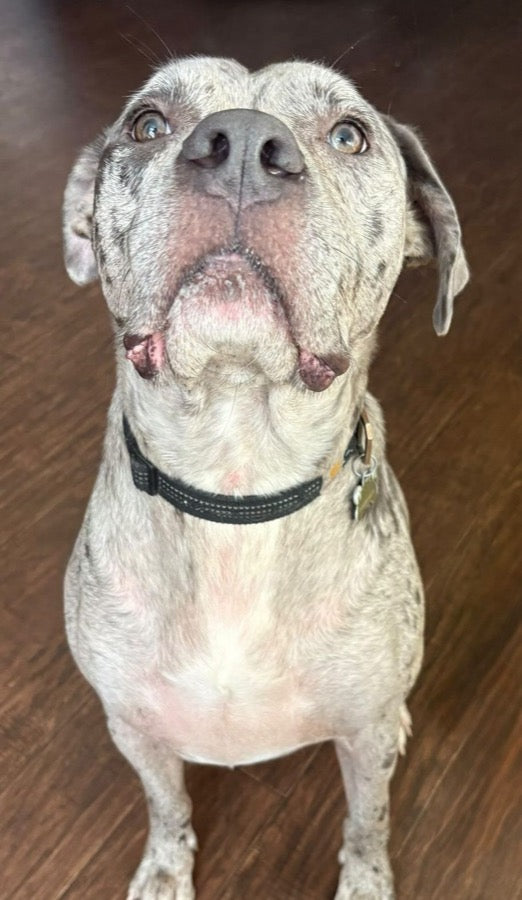
 A VitaDog customer story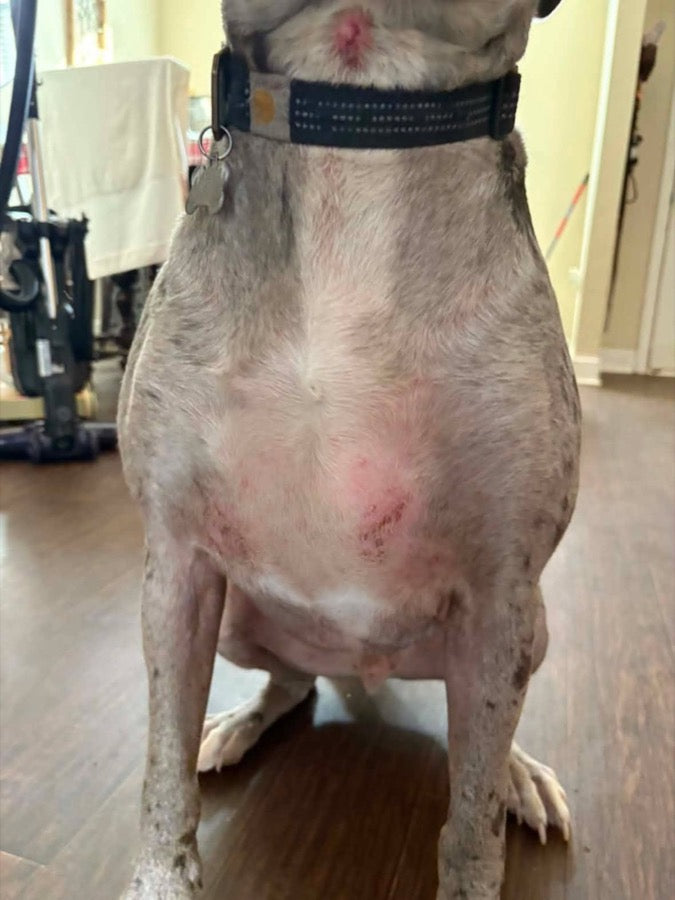
Itchy skin
“I was doubtful it would work.”
After more than a year of trying to calm Ranger’s itchy skin, MacKenzie almost didn’t try one more thing. Two bags of VitaDog Daily later, his coat was growing back and he was finally comfortable.
MacKenzie · Ranger’s owner
Try VitaDogIndividual results. VitaDog supports normal skin and coat health and is not a substitute for veterinary care.
The #1 Cause: Periodontal Disease
By age 3, an estimated 80% of dogs have some degree of periodontal disease. The bacteria that build up in plaque and tartar produce volatile sulfur compounds plus other smell-creating molecules: including the fishy notes that make owners reach for Google.
What it smells like
The smell intensifies when your dog yawns, pants, or licks your face, because that's when more air is moving past the affected teeth.
Signs of dental disease
Look in the mouth (or have your vet check):
Behavioral signs:
Why dental disease produces fishy breath specifically
Plaque is a biofilm of bacteria. Different bacterial species produce different odor compounds. Common periodontal pathogens like Porphyromonas gingivalis and Fusobacterium nucleatum produce volatile sulfur compounds (the rotten-egg notes) plus methylamines and trimethylamine: the same family of compounds responsible for fishy odor in spoiling seafood.
The deeper the periodontal pockets, the more anaerobic bacteria thrive, and the more fishy compounds accumulate.
What to do for dental disease
Daily home care:
Vet visit needed if:
Visible tartar isn't improving after 4 to 6 weeks of home care
Red or bleeding gums
Your dog is 3+ years and hasn't had a dental cleaning
Loose teeth, visible swelling, or obvious pain
Breath remains foul despite consistent home care
Professional cleaning under anesthesia is the only way to remove subgingival tartar and address periodontal pockets. Most dogs need one every 1 to 3 years. Cost typically runs $300 to $1,500 depending on extractions needed and geographic region.
For broader bad breath context, see Dog Bad Breath Home Remedies.
Cause #2: Gut-Origin Fishy Breath
This one surprises most owners. Bad breath doesn't always come from the mouth. Roughly 10 to 15% of canine halitosis cases originate in the gut, and gut-origin bad breath frequently has fishy or sour notes.
How gut issues produce fishy breath
When digestion isn't running cleanly, fermentation byproducts and undigested protein can produce volatile compounds that travel up through the esophagus or get exhaled through the lungs after intestinal absorption. Common contributors:
Signs the breath is gut-origin not dental-origin
Teeth and gums look reasonably clean
Smell persists immediately after teeth brushing
Smell coincides with other GI signs: gas, soft stool, occasional vomiting, regurgitation
Smell is worse before meals than after (empty-stomach acid)
Breath fluctuates with diet rather than staying consistent
What to do for gut-origin fishy breath
Anchovy-source omega-3 to reduce gut wall inflammation
For the full gut framework, see Dog Gut Health Guide.
Cause #3: Kidney or Liver Disease (Senior Dogs)
In senior dogs, sudden onset of strong, distinct fishy or ammonia-like breath can signal kidney dysfunction. This isn't subtle dental tartar: it's a notable change in breath character that wasn't there before.
Signs that point toward kidney/liver
These signs warrant a vet visit promptly. Bloodwork can identify kidney or liver dysfunction quickly. Both conditions are manageable with appropriate diet and supportive care, but earlier intervention produces meaningfully better outcomes.
How to Tell Which Cause You're Dealing With
Quick decision framework:
| Signs | Most likely cause |
| Visible tartar, red gums, dog is 3+ years | Dental disease |
| Persistent smell after brushing, GI symptoms, soft stool | Gut-origin |
| Sudden onset in senior dog, increased thirst, weight loss | Kidney/liver: vet now |
| Dog recently chewed something gross | Transient, will pass in 24 hours |
| Mouth ulcers, drooling, can't eat normally | Oral injury or tumor: vet |
What's NOT Causing Fishy Breath
Fish in the food. Fish-based kibble and best fish oil supplements don't cause fishy breath. The smell people associate with fishy breath is one of the causes above, not the diet itself.
"Old dog breath." Senior dogs do accumulate dental issues, but "fishy specifically" isn't an inevitability of aging: it's almost always one of the identifiable causes.
Just needing a teeth wipe. If brushing alone doesn't resolve fishy breath in 1 to 2 weeks, the problem is below the gum line (subgingival tartar requiring professional cleaning) or originating from the gut.
The Daily Foundation for Fresh Breath
For dogs prone to chronic mild fishy breath, the layered approach is more effective than any single intervention:
VitaDog's daily formula supports the gut-origin lever specifically: an 8-strain probiotics at 1 billion CFU with inulin and pumpkin prebiotic substrate, plus anchovy + flaxseed + evening primrose oil + MCT four-oil blend for gut wall anti-inflammatory support. No brewers yeast: meaningful for dogs whose gut and skin issues overlap. The probiotic and gut support work alongside daily dental care rather than replacing it. See the all-in-one formulation.
Why does my dog's breath smell like fish?
The most common cause is dental disease: bacteria in plaque produce fishy-smelling compounds (volatile sulfur compounds and trimethylamines). Less commonly, gut dysbiosis or food sensitivities produce gut-origin fishy breath. In senior dogs, sudden onset can signal kidney or liver issues.
Is fishy dog breath an emergency?
Usually not. Dental disease and mild gut-origin causes are manageable. It becomes urgent if combined with: weight loss, increased thirst, vomiting, lethargy, jaundice, or sudden onset in a senior dog. Those combinations warrant a same-day vet visit.
Will brushing my dog's teeth get rid of the fishy smell?
For dental-origin smell, yes: partially. Brushing reduces above-the-gum-line plaque and helps prevent further buildup. It doesn't reach subgingival tartar that requires professional cleaning. For gut-origin or kidney-origin smell, brushing won't help.
Can fishy breath mean something serious?
In senior dogs especially, sudden onset of strong fishy or ammonia-like breath can signal kidney or liver dysfunction. Bloodwork rules this in or out quickly. In younger dogs, fishy breath is almost always dental or gut-origin and not a serious systemic issue.
How long does it take to fix dental fishy breath?
Daily brushing produces noticeable improvement at 2 to 4 weeks for mild cases. Severe tartar requires professional cleaning before home care can keep up. Plan for 4 to 6 weeks before judging whether home dental care alone is sufficient.
Can probiotics help with fishy dog breath?
For gut-origin cases, yes. Multi-strain probiotic with prebiotic over 4 to 8 weeks reduces dysbiosis and the fermentation byproducts that contribute to bad breath. For purely dental-origin cases, probiotics don't reach the source.
Why does my dog's breath smell fishy after eating?
If the smell is consistent rather than a transient post-meal spike, you're likely seeing dental disease (food gets caught in periodontal pockets, intensifying bacterial activity) or gut-origin issues amplified by the meal. Persistent post-meal fishy breath warrants both dental evaluation and a gut review.
Does fish-based food cause fishy breath?
No. Fish-based diets don't cause fishy breath. If your dog's breath changed when you switched to a fish-based food, the underlying cause is something else (often dental issues that became more noticeable with the diet change, or food sensitivity to a different ingredient in the new diet).
Broader Context
Why Does My Dog Smell Like Fish, the broader hub on fishy smells in dogs
Dog Bad Breath Home Remedies, comprehensive bad breath protocol
Educational content only. This article is not veterinary advice. Always consult your veterinarian before starting, changing, or stopping any supplement, especially if your dog has a medical condition, is pregnant, or is on medication.


