
My Dog Smells Like Fish After Pooping: What's Actually...
Your dog finishes going to the bathroom, comes back inside, and there's a sharp fishy smell that wasn't there before. It lingers.

Your dog finishes going to the bathroom, comes back inside, and there's a sharp fishy smell that wasn't there before. It lingers. Sometimes it gets on the rug or wherever they sit down. The walk is supposed to make things less smelly, not more.
If this is happening regularly, you're seeing a specific phenomenon: spontaneous anal gland expression during defecation. This guide covers exactly what's happening, why it's happening to your dog specifically, and what to do about it.
For the broader picture of fishy smells, see our hub article: Why Does My Dog Smell Like Fish.
 A VitaDog customer story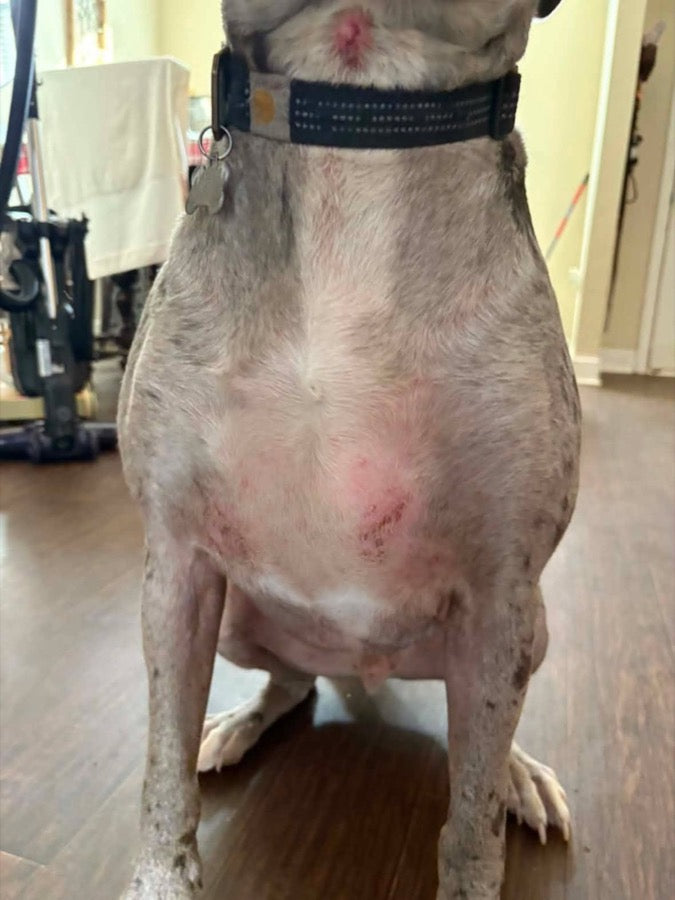
Itchy skin
“I was doubtful it would work.”
After more than a year of trying to calm Ranger’s itchy skin, MacKenzie almost didn’t try one more thing. Two bags of VitaDog Daily later, his coat was growing back and he was finally comfortable.
MacKenzie · Ranger’s owner
Try VitaDogIndividual results. VitaDog supports normal skin and coat health and is not a substitute for veterinary care.
What's Actually Happening
Dogs have two anal glands sitting just inside the anus. They produce a brownish oily fluid with a sharp fishy smell, used for territorial marking and individual identification. The fluid is supposed to express in small amounts during normal defecation: that's the design.
The pattern of "fishy smell after pooping" usually means one of three things:
Pattern 1: Normal but pungent expression
Some dogs have anatomically positioned glands that release a larger volume during defecation than average. The smell is technically normal, just more obvious to your nose than it would be in a different dog. Common in:
Small breeds (Chihuahua, Pug, Shih Tzu, Cocker)
Anxious or excitable dogs (stress amplifies expression)
Dogs with naturally larger glands
If this is your dog's pattern from puppyhood and they're otherwise healthy, this is just how they're built. The smell is temporary, dissipates within an hour, and isn't accompanied by other signs.
Pattern 2: Backed-up fluid releasing all at once
When glands are partially impacted between bowel movements, the pressure of a particularly firm stool can release a larger-than-normal volume in one go. The smell is more intense and lingers longer than normal expression.
This is the most common pattern in dogs with chronic mild gland issues. The dog isn't fully impacted (no scooting between movements, no obvious discomfort), but the glands aren't fully emptying daily either, so what does come out is more concentrated.
Pattern 3: Soft stool failing to express, then sudden release
Dogs with chronically soft stool often go several days without proper gland expression because soft stool doesn't apply enough pressure. When a firmer stool finally comes through, it may force out backed-up fluid at higher volume than normal, producing a noticeably fishy episode.
This pattern is common in dogs with food sensitivities, gut dysbiosis, or recent diet changes.
How to Tell Which Pattern You're Dealing With
Quick framework:
| Pattern | Frequency | Other signs? | Concern level |
| 1: Normal but pungent | Every defecation, lifelong | None | Cosmetic only |
| 2: Periodic backup release | Every few days, not every time | Mild scooting between movements possible | Address proactively |
| 3: Variable stool driving variable expression | Inconsistent, correlates with diet | Soft stool, gas, occasional GI symptoms | Address underlying GI issue |
If the smell is getting worse over time, the dog is scooting more frequently, or there's visible swelling or wound near the anus, you've moved past simple "fishy after pooping" into proper anal gland disease: see our butt smells like fish guide.
Why Your Dog Specifically
Patterns 2 and 3 (the addressable ones) usually have an identifiable driver:
Soft stool consistency
The single biggest factor. Stool that's too soft doesn't apply consistent pressure during defecation. The glands accumulate fluid between bowel movements rather than emptying regularly. Common causes:
Food sensitivities (chicken, beef, dairy, wheat are top suspects)
Brewers yeast in chew-format treats and supplements (under-recognized)
Gut dysbiosis from antibiotic history
Frequent food changes without proper transition
Low-fiber diets
Stress-related GI variability
Small breed anatomy
Some breeds are anatomically more prone to gland issues regardless of diet. Chihuahuas, Pugs, French Bulldogs, Shih Tzus, Cocker Spaniels, Basset Hounds, and Cavalier King Charles Spaniels all have higher rates of chronic gland issues.
Diet composition
Low-fiber diets produce low-bulk stool that doesn't express glands well. Some grain-free kibbles loaded with legumes (lentils, peas) cause gas and stool variability that contribute to gland issues. Diets that work for most dogs don't necessarily work for gland-prone dogs.
Body weight
Overweight dogs accumulate tissue around the anus that mechanically interferes with normal gland expression. Weight management is one of the highest-leverage interventions in chronically affected small breeds.
Gut microbiome state
Gut dysbiosis (imbalanced bacteria) affects stool consistency, which affects gland expression. Dogs recovering from antibiotics, dogs eating frequently changing foods, and dogs with chronic low-grade GI issues all have variable microbiome states that translate to variable stool quality.
Tier 1: Stool consistency
Firm up the stool. Plain canned pumpkin (not pie filling) at 1 to 2 tablespoons per 25 lbs body weight per meal is the highest-leverage home intervention. The soluble fiber bulks up stool and provides consistent pressure for gland expression during defecation.
Alternative fiber sources: psyllium husk, ground flaxseed, beet pulp, butternut squash. Pumpkin is the most palatable for most dogs.
Target stool: formed, holds shape when picked up, minor compression resistance. Soft-serve consistency or anything that "smears" indicates the underlying issue.
Tier 2: Daily multi-strain probiotic
Daily synbiotic (probiotics + prebiotic) over 4 to 8 weeks normalizes the gut microbiome and stabilizes stool quality. Critical: pick a brewers-yeast-free product. Brewers yeast in chew-format probiotics can drive cross-reactive issues that worsen the chronic GI patterns underlying gland problems.
Multi-strain at 1 billion+ CFU outperforms single-strain products for sustained gut maintenance.
Tier 3: Identify dietary triggers
If the fishy-after-pooping pattern correlates with a specific diet, the food may be the problem. Common triggers:
A structured 8-week elimination diet trial on a novel protein can identify dietary triggers. Worth doing if the issue is chronic.
Tier 4: Weight management
If your dog is overweight, this is the single biggest long-term lever in small breeds with chronic gland issues. A 10 to 15% body weight reduction often resolves chronic gland problems entirely.
Tier 5: Periodic expression for persistent cases
If the issue persists despite all of the above, periodic groomer or vet expression every 4 to 8 weeks may be the practical solution. $15 to $30 per visit for most groomers, similar at vets. Better than fighting the issue daily.
When This Pattern Becomes a Problem
Fishy-after-pooping is mild concern when:
It's been the dog's pattern lifelong without progression
No scooting, licking, or obvious discomfort between movements
The smell dissipates within an hour
Dog is otherwise healthy, has good stool quality, normal weight
It becomes a real problem when:
Smell persists for hours or all day
Dog is scooting between bowel movements
Excessive licking or chewing at the base of the tail
Visible swelling, redness, or wound near the anus
Dog is in obvious pain when sitting
Frequency of episodes is increasing over weeks
The progression from "fishy after pooping" to "actively impacted glands" can happen quickly if the underlying drivers aren't addressed. Catching it at the early pattern is meaningfully easier than waiting for an abscess.
What's NOT the Cause
Fish in the food. Diet doesn't cause externally fishy smell. Fish-based kibbles and best fish oil supplements don't make dogs smell fishy from the rear end.
Need for a bath. Bathing doesn't fix gland-related smell. The smell will return as soon as the next defecation triggers another expression episode.
Just being a dog. Persistent fishy smell isn't an inevitability. Most dogs don't smell fishy after pooping unless something is driving the issue.
Anal gland fluid being "abnormal." The fluid itself is normal: it's supposed to be there. The issue is the pattern of expression and the underlying drivers behind it.
The Daily Foundation for Stool Consistency
For dogs with chronic fishy-after-pooping patterns, addressing both the stool consistency lever and the gut microbiome lever in one daily product is more practical than running multiple stand-alone supplements.
VitaDog's daily formula handles both:
For most dogs with chronic mild gland issues, this combination produces measurable stool consistency improvement within 2 to 4 weeks and gland expression normalization within 6 to 8 weeks. See the all-in-one formulation.
Is it normal for a dog to smell like fish after pooping?
Some normal anal gland expression during defecation is expected: it's the design. A noticeable, lingering fishy smell that you can't ignore is more than normal expression and usually points to backed-up fluid releasing at higher volume than normal.
Why does my dog leak fluid after pooping?
A small amount of clear-to-brownish fluid leakage immediately after defecation can be normal anal gland expression. If the leakage is heavy, persistent, contains blood or pus, or is accompanied by scooting and discomfort, the glands have moved into impaction or infection territory.
Will pumpkin help with anal gland smell?
Yes, often dramatically. Pumpkin's soluble fiber bulks up stool and provides the consistent pressure needed for natural gland expression during defecation. 1 to 2 tablespoons per 25 lbs body weight per meal is the typical dose. Plain canned pumpkin (not pie filling), or a daily formula that includes pumpkin in the prebiotic blend.
How long does it take to fix this issue?
Stool consistency improvement: 1 to 2 weeks with consistent fiber. Gland expression normalization: 4 to 8 weeks with combined fiber and probiotic support. Underlying microbiome rebalancing: 8 to 12 weeks for full effect. Don't judge effectiveness before 4 weeks at consistent dosing.
Can stress cause my dog to smell fishy after pooping?
Yes. Stress amplifies anal gland expression: anxious or excitable dogs often release more fluid during defecation than calmer dogs. If the pattern correlates with high-stress periods (boarding, schedule changes, household disruption), stress management can help alongside dietary support.
Does food sensitivity cause this?
Often, yes. Dogs with food sensitivities frequently have variable stool consistency, which drives variable gland expression. Common triggers: chicken, beef, dairy, wheat, brewers yeast in chew-format treats. An 8-week elimination diet can identify the trigger. See Effective Treatments for Dog Allergies.
Should I take my dog to the vet for this?
Mild fishy-after-pooping that's been the dog's pattern lifelong without progression isn't an urgent vet visit. It's worth raising at the next routine appointment. New onset, increasing frequency, scooting between movements, visible swelling, or pain warrant a vet visit promptly.
Is it the same issue as my dog's butt smelling fishy in general?
Same underlying mechanism (anal glands), different presentation. "Fishy after pooping" suggests the glands are partially functional but not emptying completely. "Persistent fishy butt smell" between bowel movements suggests more advanced backup or impaction. Same root cause, addressed with similar interventions, but the persistent-smell version warrants more proactive vet involvement.
Broader Context
Why Does My Dog Smell Like Fish, the broader hub on fishy smells
My Dog's Butt Smells Like Fish, the deeper anal gland deep dive
Home Remedies for Dog Diarrhea, stool consistency context
Educational content only. This article is not veterinary advice. Always consult your veterinarian before starting, changing, or stopping any supplement, especially if your dog has a medical condition, is pregnant, or is on medication.


