
FortiFlora for Dogs Review: Ingredients, Dose & Alternatives
FortiFlora for dogs review: what the SF68 strain is for, where it works (and where it doesn't), plus the multi-strain alternatives owners should know.

2-minute fit check
Is this right for your dog?

Updated August 7, 2026: strain and potency re-checked against Purina's own label information, and a direct answer added up top.
The short answer: for acute diarrhea, most owners see stool firm up within 24 to 72 hours. Chronic or low-grade digestive issues take longer, usually a couple of weeks of daily use before you can judge it fairly. If nothing has changed after that, the problem is probably not the one FortiFlora solves.
What is actually in the packet: one probiotic strain, Enterococcus faecium SF68, guaranteed at 108 CFU per gram, plus the animal digest and brewers dried yeast that make dogs willing to eat it. That single-strain design is the whole story of this product, both its strength and its limit. It is a focused tool for getting a disrupted gut back on track after diarrhea, antibiotics or a stressful event, and Purina has real stability work behind the microencapsulation.
Where it stops: one strain cannot do what a multi-strain synbiotic does for ongoing gut maintenance, there are no prebiotics in the original formula to feed what you are adding, and the brewers yeast that makes it palatable is the ingredient owners of yeast-prone or itchy dogs most often want to avoid. Those trade-offs are covered in detail below, along with when FortiFlora is genuinely the right call.

 A VitaDog customer story
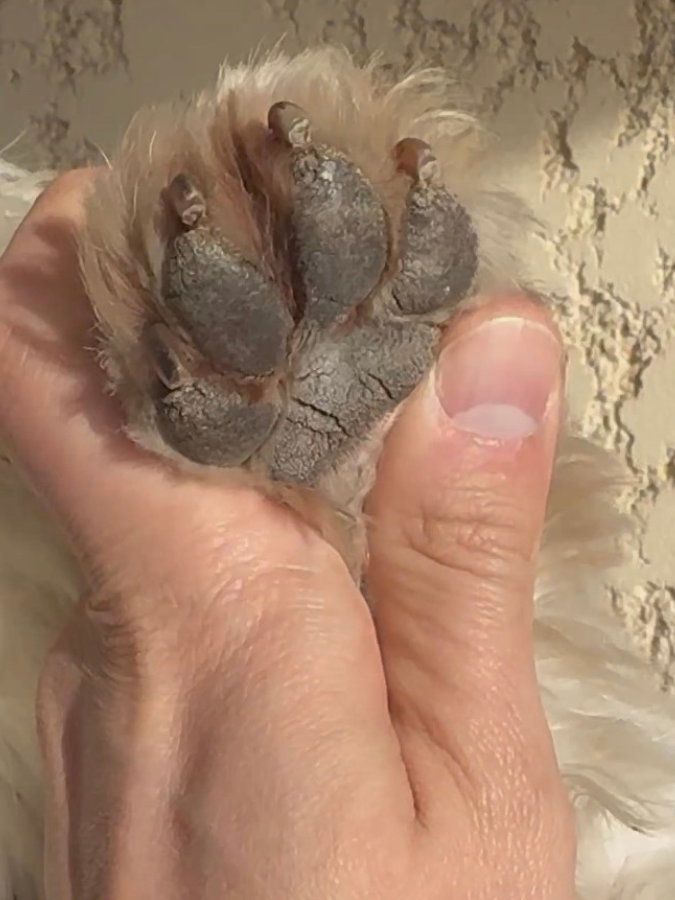
Itchy paws
“I half-believed it. Three weeks later, I’m a convert.”
Brian had tried almost everything for Hector’s itchy, stained paws. He found the VitaDog blog, read it end to end, and only half-believed it, but gave it a shot. Within three weeks the licking had calmed and the rust-colored staining was clearing. Now he won’t switch his 2-year-old Westie to anything else.
Brian · Hector’s owner
Try VitaDogIndividual results. VitaDog supports normal skin and coat health and is not a substitute for veterinary care.
FortiFlora for Dogs: Honest Review, Ingredients & Better Alternatives
If your vet has ever handed you a small white packet for a dog with diarrhea, there's a very good chance it was Purina Pro Plan Veterinary Supplements FortiFlora. It's the default probiotics in most clinics. It's well-tolerated. It works, short-term.
But "the default" and "the right long-term choice" aren't always the same thing. FortiFlora is a single-strain probiotic with a known problem ingredient (brewers yeast) baked into the formula. Modern canine gut research increasingly points toward multi-strain synbiotic formulations for sustained gut health, ideally without yeast-feeding ingredients. That's the conversation most owners don't have when they're handed the packet at checkout.
This is an honest review: what FortiFlora contains, what it's legitimately good at, what its formulation limits are (including the brewers yeast issue), and when a different approach makes more sense.
What Is FortiFlora?
FortiFlora is a probiotic powder supplement for dogs (and cats, in a feline version) made by Nestlé Purina as part of its Pro Plan Veterinary Supplements line. It comes as small single-serving sachets that you sprinkle over food once daily.
It's one of the most-prescribed canine probiotics in the United States, routinely stocked by veterinary hospitals and widely available online. The typical prescription use cases are:
Acute diarrhea (stress, diet change, antibiotic recovery)
Post-deworming gut repopulation
Short-term digestive upset in otherwise healthy dogs
What's Actually in FortiFlora
Here's what one FortiFlora canine sachet contains:
| Ingredient | Role |
| Enterococcus faecium SF68 (at least 1 × 10⁸ CFU) | Probiotic bacteria, the only active |
| Animal digest | Palatability (flavor) |
| Brewers dried yeast | Listed as prebiotic substrate |
| Vitamins (E, C, antioxidants) | Shelf stability, minor immune support |
| Sodium silico aluminate | Anti-caking agent |
The active ingredient is a single probiotic strain: Enterococcus faecium SF68, delivered at a guaranteed minimum of 100 million colony-forming units (CFU) per sachet.
That's the formulation. One strain, one dose, once a day, with a problematic prebiotic substrate.
The Brewers Yeast Problem
This is the part of FortiFlora most owners don't know about. Brewers dried yeast (Saccharomyces cerevisiae) is the second-largest ingredient in many FortiFlora formulations, listed as a prebiotic substrate. Here's why that's an issue for a meaningful subset of dogs:
1. Brewers yeast can drive Malassezia overgrowth. Brewers yeast is a different yeast species (Saccharomyces) than the Malassezia that overgrows on dog skin and in ears, but yeast-prone dogs frequently react to dietary yeast through cross-reactive immune pathways and gut-skin axis effects. Owners managing recurrent yeast infections, itchy skin, or chronic ear problems often see flare-ups when their dog's diet or supplement regimen includes brewers yeast.
2. Itching and redness are common downstream effects. Dogs with environmental allergies, atopic dermatitis, or compromised skin barriers can show worsening itch and inflammation when introduced to brewers-yeast-containing supplements. The reaction isn't universal, but it's well-documented enough that breed forums (especially for itch-prone breeds like Westies, Frenchies, Bulldogs, Goldens) routinely flag it.
3. The prebiotic value is modest. Brewers yeast does provide some beta-glucan and mannan-oligosaccharides, but the dose in FortiFlora isn't at therapeutic prebiotic levels. Modern formulations use dedicated prebiotic ingredients like inulin, FOS, or MOS which deliver real synbiotic benefit without the yeast cross-reactivity risk.
If your dog has any history of itching, ear infections, or yeast overgrowth and you're using FortiFlora long-term, the brewers yeast component is worth a hard look.

What FortiFlora Does Well
Credit where it's due. FortiFlora has earned its place on the shelf for several real reasons:
It's palatable. The animal-digest flavoring makes the powder genuinely appealing to dogs. Most will eat it voluntarily sprinkled on food, which is not trivial. Probiotic compliance is often where at-home protocols break down.
The strain is evidence-backed. E. faecium SF68 is one of the more-studied canine probiotic strains. It has clinical literature showing reduced diarrhea duration and improved stool quality in stressed dogs, in antibiotic-treated dogs, and in shelter populations.
Shelf stability is excellent. The sachet format, anti-caking agent, and antioxidant blend keep the bacteria viable without refrigeration.
It's safe. Minimal side effects, no meaningful drug interactions, well-tolerated across breeds and life stages (with the brewers yeast caveat noted above).
For a short course of acute diarrhea or post-antibiotic gut support in a non-yeast-prone dog, FortiFlora does what it's supposed to do.

Where the Formulation Falls Short
The core limitation is structural: one strain is not a microbiome.
A healthy canine gut contains hundreds of bacterial species. Different strains handle different jobs: some produce short-chain fatty acids, some compete with pathogenic bacteria, some modulate immune signaling in the gut wall, some help digest specific fibers. A single strain, even a well-chosen one, can't replicate that ecological diversity.
This matters in three practical ways:
1. Narrow functional coverage. E. faecium SF68 is good at acute diarrhea management. It's less optimal for sustained gut-microbiome support, IBD management, allergy-linked dysbiosis, or senior-dog digestive decline, conditions where the published evidence points toward multi-strain formulations.
2. Short residence time. Probiotic strains generally don't permanently colonize the gut. They transit through and exert their effect during passage. A single strain exerts a narrower functional footprint than a community of strains.
3. No real prebiotic substrate. As covered above, the brewers yeast in FortiFlora provides limited prebiotic value and creates a yeast-cross-reactivity risk for sensitive dogs. Modern probiotic formulations pair live bacteria with a clean prebiotic dose like inulin (the combination is called a "synbiotic").
None of this makes FortiFlora wrong for its intended use case. It does make it limited for long-term daily gut health, especially in dogs prone to yeast or skin issues.
FortiFlora Dosage for Dogs
FortiFlora dosing is intentionally simple:
The one-size-fits-all dose is convenient but coarse. A 10-lb Yorkie receives the same CFU as a 100-lb Great Dane.
FortiFlora Side Effects
FortiFlora is one of the safer supplements you can give a dog. The reported issues are mild in most dogs, but worth knowing:
There are no clinically significant interactions with antibiotics, NSAIDs, or other common canine medications. FortiFlora is frequently given alongside antibiotics to offset gut disruption. The timing recommendation is usually to give FortiFlora 2 hours apart from the antibiotic dose.
FortiFlora vs Multi-Strain Probiotics (and Yeast-Free Synbiotics)
Here's how the single-strain model compares to modern multi-strain formulations:
| Feature | FortiFlora | Multi-strain probiotic |
| Number of strains | 1 (E. faecium SF68) | 5 to 10+ (Lactobacillus, Bifidobacterium, Enterococcus, Bacillus) |
| CFU count | ≥100 million | 1 to 10+ billion |
| Prebiotic substrate | Brewers yeast (problematic for sensitive dogs) | Dedicated (inulin, FOS, MOS) |
| Functional scope | Acute diarrhea focus | Broad gut-microbiome support |
| Shelf stability | Excellent (sachet format) | Varies; spore-forming strains like B. subtilis handle room temp well |
| Cost per day | $1 to $2 | $0.30 to $1.50 depending on formulation |
| Ideal use case | Short-term acute issues | Long-term daily maintenance |
The comparison isn't "FortiFlora bad, multi-strain good." It's "different tools for different jobs," and for daily long-term use the multi-strain synbiotic without brewers yeast is the cleaner choice.
Other FortiFlora Products (and Close Cousins)
Worth knowing about:
Proviable-DC and Proviable-Forte: competitor multi-strain probiotics made by Nutramax, widely used as the step-up when FortiFlora isn't enough. See our Proviable review for the full breakdown.
If your vet has tried FortiFlora and moved your dog to Proviable, that's the classic "upgrade from single-strain to multi-strain" path within vet-channel options.
When FortiFlora Is the Right Choice
Use FortiFlora when:
Your dog has acute-onset diarrhea from a known trigger and no history of yeast or skin issues
Your dog is finishing a course of antibiotics and needs gut repopulation support for 2 to 3 weeks
Your vet has specifically recommended it for a short-term issue
You need a highly palatable probiotic for a fussy eater and brewers yeast isn't a concern for that dog
When to Look Beyond FortiFlora
Consider a different probiotic when:
You're giving FortiFlora daily for months as a "general gut health" supplement
Your dog has any history of yeast infections, recurrent ear problems, atopic dermatitis, or chronic itching (the brewers yeast is a real risk)
Your dog has chronic or recurrent digestive issues (IBD, chronic soft stool, food sensitivities)
You want a probiotic that also supports skin, coat, and immune function
You're already adding a separate prebiotic or fiber supplement - at that point a proper synbiotic without brewers yeast is simpler
You want higher CFU counts and more strain diversity for the same or lower cost

The Multi-Strain, Yeast-Free Alternative
VitaDog's approach is the opposite of the single-strain, yeast-fed model. The formula includes 8 probiotic strains at 1 billion CFU: Lactobacillus acidophilus, L. plantarum, L. brevis, L. delbrueckii, L. fermentum, Bifidobacterium bifidum, Enterococcus faecium, and Bacillus subtilis, alongside inulin as a clean prebiotic substrate.
Critically, the formula contains no brewers yeast. For dogs prone to itching, yeast overgrowth, or recurrent ear issues, this is a meaningful difference, not a marketing one.
It's also built for daily, long-term gut health rather than acute rescue, and because it's part of a whole-dog formula (not a single-purpose probiotic), it doesn't need to be stacked separately alongside joint support, omega-3, and vitamins.
See the daily dog multivitamin, or dive deeper into the individual probiotic strains in our lactobacillus strains for dogs guide.
How long does FortiFlora take to work in dogs?
For acute diarrhea, most owners see stool improvement within 24 to 72 hours of starting FortiFlora. For chronic or low-grade digestive issues, FortiFlora's effect may be modest and slow, that's typically a signal that a broader probiotic approach is more appropriate.
Can I give my dog FortiFlora every day long-term?
You can, but there are two reasons to think twice. First, for long-term daily gut support, a multi-strain synbiotic generally provides broader functional coverage than FortiFlora's single strain. Second, the brewers yeast in FortiFlora can drive itching, ear flare-ups, and yeast overgrowth in sensitive dogs over months of daily use.
Why does FortiFlora contain brewers yeast?
Purina lists brewers yeast as a prebiotic substrate. It does provide some beta-glucan and mannan-oligosaccharides, but at modest doses, and it carries a cross-reactivity risk for yeast-prone or atopic dogs. Modern probiotic formulations increasingly use cleaner prebiotics like inulin or FOS instead.
Can FortiFlora cause itching?
Indirectly, yes, in sensitive dogs. The brewers yeast component is the typical culprit. Owners managing recurrent yeast infections, atopic dermatitis, or chronic ear problems frequently report flare-ups on yeast-containing supplements. The probiotic strain itself (E. faecium SF68) is not the issue.
Can I give FortiFlora with antibiotics?
Yes. It's commonly recommended alongside antibiotic courses to offset gut disruption. Best practice is to give FortiFlora and the antibiotic 2 hours apart, so the antibiotic doesn't kill the probiotic bacteria on contact.
Is FortiFlora better than Proviable?
FortiFlora is a single-strain product focused on acute use. Proviable is a multi-strain product (7 strains) designed for broader gut support. Proviable is generally the better pick for chronic or ongoing digestive support; FortiFlora is faster and more palatable for acute issues. Many vets use them sequentially: FortiFlora to stop acute diarrhea, then Proviable for maintenance.
Why is FortiFlora only one strain?
Historical reasons, mostly. E. faecium SF68 was one of the first canine probiotic strains with robust clinical data, and Purina built FortiFlora around it in the early 2000s. The canine probiotic category has evolved toward multi-strain formulations since, but FortiFlora has kept its original formulation and its vet-channel dominance.
Does FortiFlora need to be refrigerated?
No. FortiFlora is shelf-stable in its sachet packaging at room temperature.
Educational content only. This article is not veterinary advice. Always consult your veterinarian before starting, changing, or stopping any supplement, especially if your dog has a medical condition, is pregnant, or is on medication.


