
Dog Itchy Skin Home Remedies: What Works, What's a Waste
Dog itchy skin: 6 home remedies that actually work, the gut-skin axis to fix the root cause, and when prescription is unavoidable. VitaDog daily, 30-day refund.

Part of our complete Dog Skin, Coat & Allergy Guide, see the full picture across yeast infections, allergies, hot spots, alopecia and supplement strategies.
 A VitaDog customer story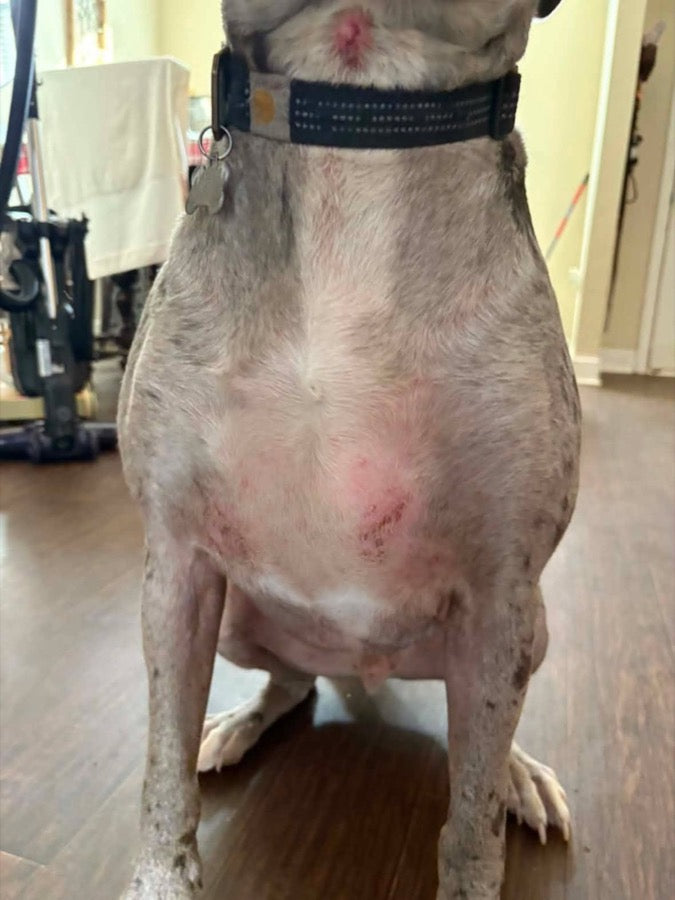
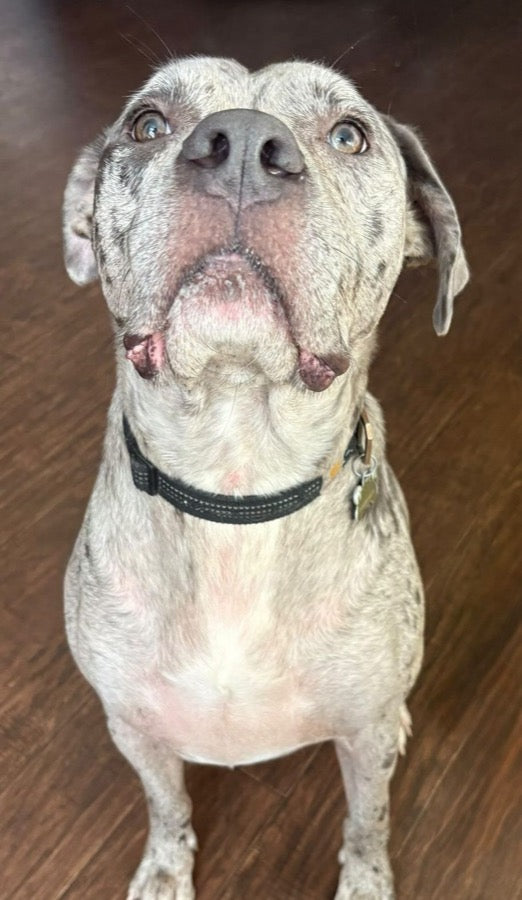
Itchy skin
“I was doubtful it would work.”
After more than a year of trying to calm Ranger’s itchy skin, MacKenzie almost didn’t try one more thing. Two bags of VitaDog Daily later, his coat was growing back and he was finally comfortable.
MacKenzie · Ranger’s owner
Try VitaDogIndividual results. VitaDog supports normal skin and coat health and is not a substitute for veterinary care.
Dog Itchy Skin Home Remedies (Ranked by Safety)
Itchy dogs are miserable, and so are the owners who live with them. The constant scratching, the chewing on paws at 3am, the patches of raw skin that appear overnight. It's one of the most common reasons dogs see a vet, and it's also one of the most common reasons owners try home remedies first.
Some of those remedies work. A few are genuinely dangerous. And the most important thing to understand: surface treatment alone rarely solves chronic itch. The itch is almost always a symptom of something else: food sensitivity, environmental allergen, yeast or bacterial overgrowth, fleas, or compromised skin barrier. Address the surface and the root, or the itch comes back.
This guide ranks the home remedies honestly by safety and evidence, and tells you when a home approach is appropriate versus when you need to escalate.
Is Home Treatment Appropriate?
Try home remedies if:
Mild to moderate scratching
No open wounds or raw patches
Dog is otherwise normal (eating, energy, behavior)
You can identify a likely trigger (recent diet change, seasonal onset, new environment)
Recent-onset, not chronic
No signs of infection (foul smell, pus, spreading redness)
Don't rely on home care if:
Severe itching that interrupts sleep or normal activity
Raw, bleeding, or crusted skin
Hot spots (moist, painful red patches)
Widespread hair loss
Foul odor coming from skin
Recurrent episodes despite previous treatment
Dog scratching one specific area obsessively (may indicate pain, foreign body, or tumor)
Young puppy or senior dog with other health issues
Chronic, severe, or spreading itch needs a vet. Home remedies won't cut it.
Identify the Likely Trigger First
Before picking a remedy, think about what's causing it:
Fleas: check for flea dirt (small black specks that turn red when wet) in the coat, especially around the tail base and belly. Even one flea bite can cause weeks of itching in allergic dogs. Treat with a veterinary flea preventive regardless of what else you do.
Food sensitivity: if itching started within 4 to 8 weeks of a diet change, or concentrates around paws, ears, belly, and rear end, consider food trial with a novel protein. Audit for brewers yeast in the food: it's a common allergen-style trigger that gets missed.
Environmental allergies (atopy): seasonal itch, paws especially, often with ear problems. Most common in spring-summer.
Yeast or bacterial infection: musty or sharp smell, greasy skin, more than just itching. Needs specific treatment (see Dog Yeast Infection guide).
Brewers yeast in supplements or treats: an under-recognized contributor. Many chew-format probiotics, joint chews, and multivitamins use brewers yeast as a binder. Yeast-prone or atopic dogs frequently react with itching, redness, and ear flare-ups when consuming brewers yeast daily.
Contact irritation: new laundry detergent, new shampoo, new yard chemicals, new bedding.
Dry skin: often winter-related or bath-too-frequently related. Different treatment than allergic itch.
Different causes need different remedies. Throwing every home remedy at unidentified itch wastes time and can make things worse.
Tier 1: Safe, genuinely effective
Oatmeal bath
Colloidal oatmeal is one of the most consistently useful home remedies for canine itch. It coats the skin, reduces inflammation, and soothes scratching urges.
Method:
Use plain unflavored oatmeal (old-fashioned rolled oats work; quick oats ground finer work better)
Grind 1 to 2 cups to fine powder in a blender or food processor
Stir into warm bath water until it's milky
Soak your dog for 10 to 15 minutes
Rinse well
Towel dry gently (don't rub)
Frequency: 2 to 3 times per week during active itching, then as needed. Safe for daily use if severe.
Alternative: pre-made colloidal oatmeal dog shampoos are widely available and equally effective.
Apple cider vinegar spray (diluted)
For yeast-driven itch specifically, a diluted ACV spray can shift skin pH and reduce yeast overgrowth.
Method: 1 part organic ACV with the mother, 2 parts water. Spray onto itchy areas, avoid eyes and open wounds. Let air dry, don't rinse off. Apply 1 to 2 times daily.
Do NOT use on raw, bleeding, or ulcerated skin. It will sting and delay healing.
Coconut oil topical
Virgin coconut oil applied thinly to itchy skin has mild antibacterial and antifungal activity from lauric acid, plus barrier support.
Apply a thin layer to affected areas 1 to 2 times daily. Some will be licked off; that's generally fine at small amounts. Monitor for GI upset if your dog is a licker.
Oral omega-3 (EPA + DHA)
One of the most evidence-backed interventions for itchy skin. Omega-3 modulates skin inflammation over 4 to 8 weeks of consistent supplementation.
Dose for therapeutic anti-inflammatory effect: 75 to 100 mg combined EPA + DHA per pound body weight daily. For a 50-lb dog, that's 3,750 to 5,000 mg/day, higher than most generic fish oils deliver. Anchovy-source oil is cleaner than salmon.
GLA (gamma-linolenic acid) from evening primrose oil is also specifically evidence-backed for canine atopic dermatitis. best fish oil alone doesn't provide GLA. A formulation that includes both fish oil and evening primrose oil covers a broader fatty acid profile than fish oil alone.
See our fish oil for dogs guide for the full dosage breakdown.
Cool compress
For acute flare-ups and hot spots: a cool wet washcloth pressed to the area for 5 to 10 minutes, 2 to 3 times daily. Reduces acute inflammation and urge to scratch. Simple but underused.
Multi-strain probiotics supplementation (yeast-free)
Gut-skin axis is real. Dysbiosis in the gut often manifests as itchy skin. A multi-strain canine probiotic supports skin microbiome from the inside.
Pick one without brewers yeast. FortiFlora and many chew-format probiotics include brewers yeast as a "prebiotic" or binder, which can backfire in yeast-sensitive or atopic dogs by adding cross-reactive yeast load.
Effect is slow (4 to 8 weeks) but addresses root cause in dogs with chronic itch. For options, see our FortiFlora review and Proviable comparison.
quercetin for dogs supplementation
Quercetin is a flavonoid sometimes called "nature's Benadryl" because of its histamine-modulating effect. Useful for dogs whose itch has a histamine component (most allergic itch does). Effect appears over 2 to 4 weeks.
Tier 2: Situational
Baking soda paste
For localized hot spots only. Mix baking soda with water to form a thick paste, apply to the area for 10 to 20 minutes, rinse. Helps with acute inflammation and odor.
Don't use on widespread or broken skin.
Chamomile or green tea rinse
Cooled, steeped tea used as a rinse after bath. Mild anti-inflammatory effect. Safe but modest impact compared to oatmeal or ACV.
Aloe vera gel (plant source, not product)
Fresh aloe from the plant is soothing on mild irritation. Many commercial aloe products contain additives inappropriate for dogs. Stick to raw plant gel if you have the plant, or skip.
Tier 3: Not recommended
Undiluted essential oils. Tea tree, eucalyptus, lavender - all potentially toxic at undiluted concentrations. Narrow safety margin. Not worth the risk.
Hydrogen peroxide. Damages healthy skin, delays healing, outdated advice.
Human antihistamines without vet guidance. Benadryl (diphenhydramine) is sometimes used in dogs but dosing must be specific, some dogs don't tolerate it, and it's often ineffective for allergic itch compared to what vets actually prescribe for it.
Human hydrocortisone cream. Low-strength human products are sometimes tolerated, but dogs often lick them off and ingest the steroid. Prescription veterinary topical steroids are more appropriate for persistent itch.
The Root Cause Strategy
Home remedies manage symptoms. Real solutions address:
Diet. If you suspect food sensitivity, try a novel-protein diet for 8 to 12 weeks. Common starting points: duck, venison, rabbit, fish. Rotate only after stability. Audit for brewers yeast as a hidden trigger.
Flea control. Even if you don't see fleas, a vet-grade monthly preventive is cheap insurance. Flea allergy dermatitis is extremely common and easily missed.
Environmental management. Wipe paws after walks during allergy season. Wash bedding weekly. Vacuum more often. Consider HEPA filters if you live in a high-pollen area.
Skin barrier support. Omega-3, GLA from evening primrose oil, zinc, biotin, vitamin E. Most commercial kibbles don't contain enough of these for dogs prone to skin issues.
Gut microbiome. Long-term multi-strain probiotic with prebiotic fiber. Without brewers yeast.
Stress reduction. Some dogs scratch more when anxious. Routine, exercise, and enrichment matter.
VitaDog's daily formula is built around exactly these levers: anchovy oil + flaxseed + evening primrose oil + MCT (the GLA from evening primrose is specifically evidence-backed for atopic dermatitis), quercetin dihydrate for histamine and inflammatory response, 8-strain probiotic at 1 billion CFU + inulin prebiotic with no brewers yeast, plus zinc, biotin, vitamin E for skin barrier. For chronic itchy dogs, the absence of brewers yeast alone is a meaningful upgrade over chew-format competitors. See the daily dog multivitamin.
When to Escalate to Vet
Even with good home care, see your vet if:
No improvement after 2 weeks of consistent home care
Skin worsens, develops hot spots, raw patches, or foul smell
Dog is losing sleep or unable to function
Hair loss accelerates
Seasonal pattern suggests environmental allergies; vet can prescribe better targeted options (Apoquel, Cytopoint, Atopica)
Prescription options have changed the game for canine allergic itch in the last decade. Home remedies are a reasonable first line; prescription interventions are far more effective for moderate-to-severe allergy-driven itch.
What is the fastest home remedy for dog itching?
A cool colloidal oatmeal bath provides the fastest relief for widespread mild itch. A cool compress on specific hot spots works in minutes. For yeast-driven itch, a diluted apple cider vinegar spray on affected areas works within hours.
Can brewers yeast in food cause my dog to itch?
In many sensitive dogs, yes. Brewers yeast (Saccharomyces cerevisiae) is a different species than the Malassezia that overgrows on dog skin, but yeast-prone or atopic dogs frequently react to dietary yeast through cross-reactive immune pathways. Brewers yeast appears as a binder in many chew-format treats and supplements, and as a "prebiotic" in some probiotics. Worth auditing if your dog has chronic or recurrent itching.
Can I give my dog Benadryl for itching?
Diphenhydramine (Benadryl) is sometimes used in dogs under vet guidance at 1 mg per pound body weight, every 8 to 12 hours. Not all dogs tolerate it well, and it's often not effective enough for allergy-driven itch. Ask your vet before starting, especially for ongoing use.
How do I stop my dog's itching instantly?
"Instantly" isn't realistic, but within 30 to 60 minutes: a cool oatmeal bath plus a cool compress on the worst areas usually calms acute scratching enough to let the dog settle. For underlying causes, meaningful relief takes days to weeks.
Can I use hydrogen peroxide on my dog's itchy skin?
No. Hydrogen peroxide damages healthy skin tissue and delays healing. It's outdated advice. Use diluted apple cider vinegar (for yeast-driven itch on intact skin) or plain cool water rinses instead.
Why does my dog scratch so much at night?
Night scratching often intensifies because: fewer distractions at night, cooler bedding friction, flea activity (fleas are more active at night), and reduced cortisol (which normally suppresses itch sensation during the day). If night scratching is the main problem, focus on treating fleas regardless of whether you see them, plus a nighttime dose of any anti-itch intervention.
Does coconut oil help dog itching?
Coconut oil applied topically has mild antibacterial and antifungal activity plus skin barrier support. It helps for mild itch, especially yeast-driven cases. Oral coconut oil has less direct impact on itch but can support coat quality over time.
Educational content only. This article is not veterinary advice. Always consult your veterinarian before starting, changing, or stopping any supplement, especially if your dog has a medical condition, is pregnant, or is on medication.


