VitaDog vs PetLab Co: Honest Comparison 2026

2-minute fit check
Is this right for your dog?


PetLab Co is one of the highest-spend marketing brands in the dog supplement category. Their soft chews appear constantly on social media ads, direct mail, and Amazon. The brand has built scale through aggressive customer acquisition, a wide product line, and a “PetLab Co” lab-coat positioning that signals scientific credibility.
VitaDog takes a different approach: one daily powder + fresh liquid oil dropper covering joint, omega-3, probiotic, antioxidant, and full vitamin pathways in a single serving, with transparent per-ingredient dosing and the formulation focus on what actually reaches the dog’s bloodstream.
This guide is the honest breakdown. PetLab Co is a well-marketed mass-market brand with single-purpose products covering different pathways. VitaDog is a multi-pathway formula that delivers what PetLab Co requires four separate products to provide. For most dogs needing comprehensive daily wellness, the comparison comes down to one daily serving from VitaDog versus building a stack from PetLab Co’s range.
Here’s the full comparison.
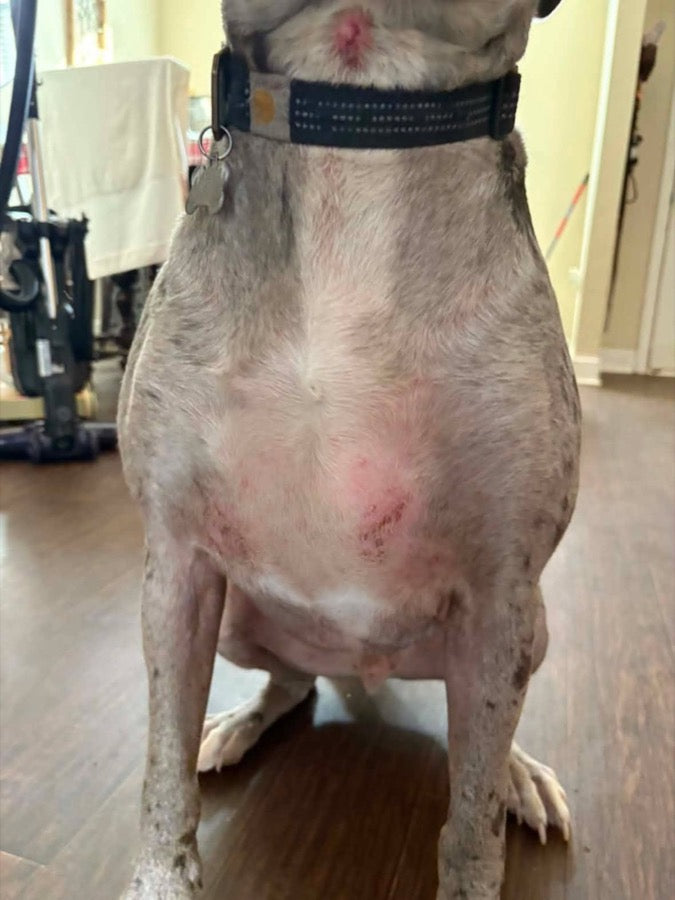
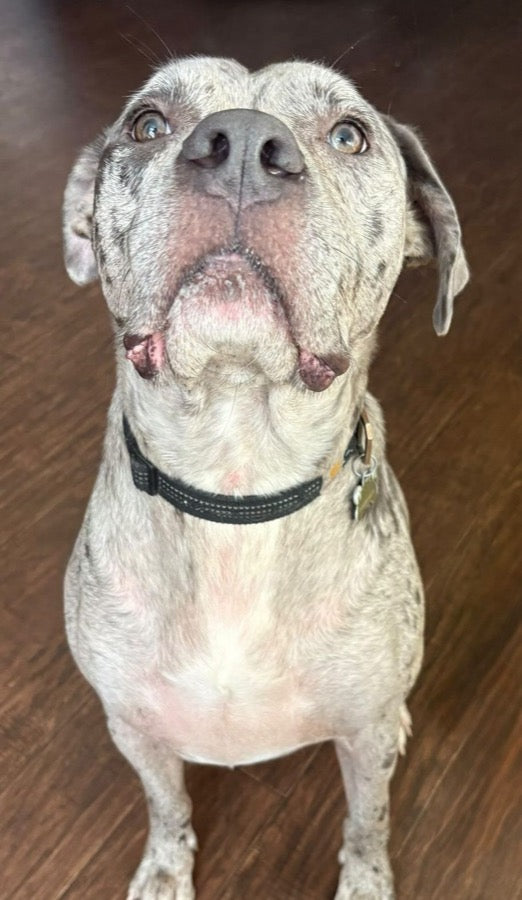
Itchy skin
“I was doubtful it would work.”
After more than a year of trying to calm Ranger’s itchy skin, MacKenzie almost didn’t try one more thing. Two bags of VitaDog Daily later, his coat was growing back and he was finally comfortable.
MacKenzie · Ranger’s owner
Try VitaDogIndividual results. VitaDog supports normal skin and coat health and is not a substitute for veterinary care.
Quick Comparison
| Category | VitaDog | PetLab Co Multivitamin |
|---|---|---|
| Format | Daily powder + fresh oil dropper | Pork-flavored soft chew |
| Active ingredients | 40+ | 17 (basic vitamin and mineral panel) |
| Joint support | Glucosamine HCl + MSM | None in multivitamin (separate Joint Care Chew required) |
| Omega-3 | Anchovy + flaxseed + EPO + MCT (4-oil fresh liquid blend) | Fish oil in inactive ingredients only (trace amount) |
| Probiotic | 8 strains at 1 billion CFU (named) | None in multivitamin (separate Probiotic Chew required) |
| B12 form | Methylcobalamin (bioactive) | Cyanocobalamin (cheap form) |
| Trace minerals | Chelated (zinc proteinate, copper bisglycinate, manganese proteinate) | Inorganic forms (zinc oxide, manganese sulfate, copper acetate) |
| Antioxidant layer | Turmeric + piperine, quercetin, astragalus, liquorice, rosemary | Vitamin C, vitamin E only |
| Sugar in formula | None | Sucrose listed in inactive ingredients |
| Brewer’s yeast | None | Not in multivitamin (but in their Joint, Probiotic, Dental, Allergy products) |
| Primary palatant | Peanut butter or beef flavor | Pork liver powder |
| Stack required for full coverage | None | Multi + Joint + Probiotic + Skin/Coat |
What Each One Actually Is
VitaDog
VitaDog is a multi-pathway daily supplement with two delivery components: a powder containing 40+ active ingredients and a fresh liquid oil dropper for the omega fatty acid layer.
The powder includes the joint blend (glucosamine HCl + MSM at 600mg combined per scoop), the antioxidant and anti-inflammatory layer (turmeric with black pepper extract for piperine-enabled curcumin absorption, quercetin, astragalus root, liquorice root, rosemary, vitamins C and E), the 8-strain probiotic blend at 1 billion CFU with inulin and pumpkin prebiotic, the full B-complex with methylcobalamin B12, chelated trace minerals (zinc proteinate, copper bisglycinate, manganese proteinate), and the vitamin profile (A, D3, E).
The fresh liquid oil dropper provides the four-oil blend: EPA + DHA from anchovy (small-fish source for lower heavy-metal load), ALA from flaxseed, GLA from evening primrose oil, and MCT from coconut. Delivered separately from the powder to avoid oxidation.
All doses are transparently disclosed per ingredient on the label. One daily serving sized to dog weight.
PetLab Co Multivitamin
PetLab Co’s daily multivitamin is a pork-flavored soft chew positioned as foundational nutritional support. The actual label discloses specific doses for each active ingredient: Folic Acid 50mg, Choline (Choline Chloride) 40mg, Vitamin B12 (Cyanocobalamin) 7mg, Niacin (Niacinamide) 3.4mg, Iron (Amino Acid Chelate) 3mg, Ascorbic Acid (Vitamin C) 3mg, Zinc (Zinc Oxide) 1.4mg, Pantothenic Acid (Calcium Pantothenate) 0.68mg, Riboflavin (B2) 0.65mg, Manganese (Manganese Sulfate) 0.25mg, Thiamin Mononitrate (B1) 0.24mg, Pyridoxine (B6) 0.24mg, Copper (Copper Acetate) 0.1mg, Vitamin A 1500 IU, Biotin 15mcg, Vitamin D3 150 IU, Vitamin E 15 IU.
Inactive ingredients: Dicalcium Phosphate, Fish Oil, Glycerin, Macrogol, Magnesium Stearate, Manganese Sulfate, Molasses, Mixed Tocopherols, Pork Liver Powder, Rosemary Extract, Sucrose, Vegetable Fiber, Vegetable Flavoring, Vegetable Shortening, Vegetable Starch, and Vitamin C.
The multivitamin does NOT include joint support, probiotic content, or therapeutic-dose omega-3. PetLab Co sells these as separate products: Joint Care Chew, Probiotic Chew, Allergy & Immune Probiotic Chew, and Skin & Coat. For full daily wellness coverage, owners typically stack three to four PetLab Co products.

Where the Formulations Differ
PetLab Co has a wide product line, but the comparison gets interesting when you look at what the multivitamin actually delivers and what it requires you to buy separately.
What’s missing from the PetLab Co multi
This is the most important section. PetLab Co’s multivitamin is marketed as a daily wellness foundation, but the formula is missing three major categories that VitaDog includes in its base.
No joint support. No glucosamine, no MSM, no chondroitin, no green-lipped mussel in the multivitamin. Joint support is sold as a separate PetLab Co Joint Care Chew. For senior dogs, large breeds, or any dog with mobility concerns, the multi alone doesn’t address joint health.
No probiotic. No live probiotic bacteria, no prebiotic fiber in the multivitamin. PetLab Co’s Probiotic Chew is a separate product. For dogs needing gut-immune support, the multi alone doesn’t deliver.
No therapeutic-dose omega-3. Fish oil appears in the inactive ingredient list of the multivitamin, indicating a trace amount rather than a therapeutic dose. For meaningful omega-3 (skin issues, anti-inflammatory effect, joint comfort), PetLab Co’s Skin & Coat or a separate fish oil is required.
VitaDog includes all three of these categories at therapeutic doses in the base formula. One daily VitaDog serving covers what PetLab Co requires four separate products to deliver.
Sucrose in the multivitamin
PetLab Co’s multivitamin lists Sucrose in its inactive ingredient panel. Sucrose is table sugar. Including sugar in a daily wellness supplement is a meaningful concern for several reasons.
Sucrose feeds yeast overgrowth on the skin and in the gut, which can worsen rather than improve the exact yeast and itch issues some dogs are taking the supplement to address. Sucrose also contributes empty calories with no nutritional value, which matters for the substantial portion of dog owners managing weight in their pets. For dogs with diabetes or insulin sensitivity, daily sugar intake from a supplement is actively counterproductive.
VitaDog’s powder uses peanut butter flavor or beef flavor with oat flour and whey as palatants and binders. No sugar in any form.
B12 form
VitaDog: Methylcobalamin B12, the bioactive form. Methylcobalamin matters more than cyanocobalamin for dogs with absorption issues, senior dogs, or any dog with elevated B-vitamin demand. The bioactive form doesn’t require liver conversion.
PetLab Co: Cyanocobalamin B12 (the cheap form), confirmed on the label. Cyanocobalamin requires liver conversion to the active form, which is incomplete in dogs with liver issues, absorption problems, or older dogs whose conversion capacity is declining. Cyanocobalamin also contains a trace of cyanide that gets cleaved during conversion, which is metabolized but adds load to dogs with compromised detoxification.
For a “premium” daily supplement, cyanocobalamin is the form choice for cost optimization, not for the dog. Methylcobalamin costs more per gram but absorbs better.
Trace mineral forms
VitaDog: Zinc proteinate, copper bisglycinate, manganese proteinate. Chelated mineral forms are absorbed substantially better than inorganic oxide or sulfate forms.
PetLab Co: Zinc Oxide, Manganese Sulfate, Copper Acetate. These are inorganic mineral forms with significantly lower bioavailability than chelated forms. Zinc oxide in particular has well-documented absorption issues in mammals; the body absorbs roughly 10-15% of zinc oxide compared to 35-50% of zinc proteinate or zinc bisglycinate.
This isn’t a marginal difference. For dogs with coat fading (copper-zinc imbalance), skin barrier issues, or pigment-related concerns, the chelated forms make a measurable difference in clinical outcomes. PetLab Co’s choice of inorganic forms reflects cost optimization in their multivitamin.
Note that PetLab Co does use “Iron (Amino Acid Chelate)” for iron specifically, showing they understand the chelated-mineral distinction. They chose chelated for iron but not for the other minerals.
Omega-3 in the multivitamin
VitaDog: Therapeutic-dose four-oil blend providing EPA + DHA + ALA + GLA delivered as a fresh liquid oil dropper.
PetLab Co Multivitamin: Fish oil appears only in the inactive ingredient list, indicating a trace amount rather than a labeled active dose. For meaningful omega-3 benefit, owners need to buy PetLab Co’s separate Skin & Coat or Joint Care product (which includes anchovy oil baked into the chew).
For any owner who wants therapeutic-dose omega-3 from the daily multivitamin, PetLab Co’s multi doesn’t deliver it. The stack required for full coverage includes a separate omega product. And once you’re in the chew-format omega-3 game, the format science matters: marine omega-3 incorporated into semi-solid carrier matrices oxidizes measurably over shelf life (Hughes et al. 2012, Journal of Food Science), and EPA/DHA bioavailability varies meaningfully by physical form of delivery (Couëdelo et al. 2024, Nutrients). A fresh liquid dropper minimizes both effects.
Antioxidant layer
VitaDog: Polyphenol-based antioxidant layer with turmeric paired with black pepper extract for piperine-enabled curcumin absorption, plus quercetin, astragalus root, liquorice root, rosemary extract, vitamin C, and vitamin E. The adaptogens (astragalus, liquorice, rosemary) contribute additional immune and stress-response support.
PetLab Co Multivitamin: Vitamin C (3mg) and Vitamin E (15 IU) as the antioxidant contribution, plus rosemary extract as a chew preservative. No turmeric. No quercetin. No adaptogens. The polyphenol anti-inflammatory layer is not present.
For dogs needing meaningful anti-inflammatory and oxidative stress support, the polyphenol approach in VitaDog delivers measurably more than vitamin-only antioxidant coverage.
Brewer’s yeast across the product line
VitaDog: No brewer’s yeast in any component. Peanut butter or beef flavor palatants only.
PetLab Co: The basic multivitamin doesn’t include brewer’s yeast (which is genuinely positive). However, the other products needed to build full PetLab Co coverage do include brewer’s yeast in their inactive ingredients. The Probiotic Chew, Joint Care Chew, Allergy & Immune Probiotic Chew, and ProBright Dental Powder all use dried brewer’s yeast as a palatant or binder.
For yeast-prone, atopic, or itchy dogs, this matters. The owner buying PetLab Co’s multi alone gets a yeast-free product. The owner building the typical multi + joint + probiotic stack ends up giving their dog brewer’s yeast through the other products.
Where PetLab Co Holds Its Own
PetLab Co isn’t a weak product line. Several things they get genuinely right:
Transparent per-ingredient dose disclosure. The multivitamin lists specific doses for each vitamin and mineral. This is more transparent than proprietary-blend brands and worth crediting.
No brewer’s yeast in the basic multivitamin. Unlike Wuffes and Dog Is Human, PetLab Co’s multi specifically avoids brewer’s yeast.
Wide retail availability. Sold through their own site, Amazon, Chewy, and Walmart. For owners who don’t want to commit to direct-to-consumer subscription only, PetLab Co is widely accessible.
Joint Care Chew uses Curcugen and anchovy oil. Their separate Joint Care product includes Curcugen (a bioavailable turmeric extract), Boswellia, and anchovy oil. These are credible joint-support ingredients. The chew format limits absorption, but the ingredient selection is solid.
Iron in chelated form. They use amino acid chelate for iron specifically, showing they understand the chelated-mineral approach.
Probiotic Chew uses spore-forming probiotics. Spore-forming probiotics (Bacillus subtilis) survive stomach acid better than typical lactobacillus strains, which is a credible scientific approach.
Vet consultant involvement. Dr. Roxana Bordbar, DVM, serves as vet consultant to PetLab Co, providing some clinical oversight.
Manufacturing in the USA. Made under quality control standards with third-party testing.
These are real positives. The structural issues (sucrose in the multi, cyanocobalamin B12, inorganic minerals, missing pathways in the multi) are what surface in honest comparison.

Where VitaDog Wins (And Why It Matters)
Eight places where VitaDog’s formulation does what PetLab Co’s multivitamin can’t:
Joint support built into the daily. Glucosamine HCl + MSM in VitaDog’s base formula. PetLab Co requires a separate Joint Care Chew.
Live probiotic built into the daily. 8 strains at 1 billion CFU. PetLab Co requires a separate Probiotic Chew.
Therapeutic-dose omega-3 in fresh liquid format. Four-oil blend with EPA + DHA + ALA + GLA. PetLab Co’s multivitamin has fish oil only in trace inactive amounts.
Methylcobalamin B12 vs cyanocobalamin. Bioactive form vs cheap form.
Chelated trace minerals vs inorganic forms. Proteinate and bisglycinate forms vs oxide, sulfate, and acetate. Substantially better absorption.
Polyphenol antioxidant layer. Turmeric with piperine, quercetin, adaptogens vs vitamin C and E only.
No sucrose anywhere in the formula. PetLab Co’s multi includes sucrose (table sugar).
No brewer’s yeast across the entire product. PetLab Co’s multi is yeast-free, but the joint, probiotic, allergy, and dental products in the range all contain brewer’s yeast.
Cost Comparison
PetLab Co uses aggressive direct-response marketing, which keeps customer acquisition costs high. That cost passes through to retail price. Subscription pricing varies:
PetLab Co single product: typically $35-50 per month per product, depending on dog size and subscription tier.
For full daily wellness coverage matching VitaDog’s base formula, PetLab Co users typically stack:
- PetLab Co Multivitamin: $35-45/month
- PetLab Co Joint Care Chew: $40-55/month
- PetLab Co Probiotic Chew: $35-45/month
- PetLab Co Skin & Coat or omega supplement: $35-45/month
Total PetLab Co stack for full coverage: $145-190 per month per dog.
VitaDog at one daily serving covers all four pathways (multi, joint, probiotic, omega-3) plus the polyphenol antioxidant layer and chelated minerals for typically $50-65/month for a medium dog. The cost gap when comparing full coverage is substantial.
For owners on PetLab Co’s full stack, switching to VitaDog typically saves $80-130 per month while delivering more transparent per-ingredient dosing, better B12 form, chelated minerals, no sucrose, and consolidated brewer’s-yeast-free coverage.

Who Each Product Is For
PetLab Co Multivitamin makes sense if:
- You want a basic vitamin and mineral chew with no joint, probiotic, or omega-3 coverage needed
- You’re already buying joint, probiotic, and omega-3 from other sources you don’t want to change
- You strongly prefer the chew format
- You’re not concerned about sucrose, cyanocobalamin B12, or inorganic mineral forms
- Your dog tolerates pork liver flavoring well
- You shop primarily on Amazon, Chewy, or Walmart and prefer mainstream retail
VitaDog makes sense if:
- You want one daily product that covers joint, gut, omega-3, antioxidant, and full vitamin pathways
- Your dog has skin issues, dull coat, gut sensitivity, mobility concerns, or any multi-system pattern
- You need methylcobalamin B12 and chelated minerals for absorption support
- You want therapeutic-dose omega-3 in fresh liquid format
- You want the polyphenol antioxidant layer (turmeric with piperine, quercetin, adaptogens)
- You’re a yeast-sensitive, atopic, or itchy dog owner avoiding brewer’s yeast across the entire daily routine
- You want to avoid sucrose in your dog’s daily supplement
Switching from PetLab Co to VitaDog
For owners currently on PetLab Co (either the multi alone or the full stack) and considering the switch:
- The 17 ingredients in PetLab Co’s multi are covered (and exceeded) by VitaDog’s 40+. The methylcobalamin B12 and chelated minerals represent meaningful upgrades over PetLab Co’s cyanocobalamin and inorganic forms.
- The joint support that PetLab Co users buy as a separate Joint Care Chew is built into VitaDog’s daily.
- The probiotic that PetLab Co users buy separately is built into VitaDog at 8 strains and 1 billion CFU.
- The therapeutic omega-3 in PetLab Co’s Skin & Coat or Joint Care products is built into VitaDog’s fresh liquid oil dropper at higher absorption and broader fatty acid profile.
- Switching consolidates 3-4 PetLab Co subscriptions into one VitaDog subscription at significantly lower total cost.
- Transition is straightforward: discontinue PetLab Co products, start VitaDog at the appropriate weight-based dose. No taper needed.
Frequently Asked Questions
Is PetLab Co a good multivitamin for dogs?
For basic vitamin and mineral supplementation in a young, healthy dog with no specific health concerns, PetLab Co’s multi delivers the basics. The structural concerns (sucrose inclusion, cyanocobalamin B12, inorganic mineral forms, missing joint/probiotic/therapeutic-omega-3 coverage) limit its value as a comprehensive daily wellness product. For dogs needing multi-pathway support, the full PetLab Co stack runs $145-190/month and still uses brewer’s yeast in three of the four required products.
Why is sucrose in PetLab Co’s multivitamin?
Sucrose is included in the inactive ingredient list, likely contributing to chew palatability and texture. The amount per chew is presumably modest. For most dogs, the small daily sugar intake won’t cause immediate problems. The concerns are accumulated: sucrose feeds yeast overgrowth (counterproductive for the dogs the supplement is often marketed to), contributes empty calories, and is inappropriate for diabetic or insulin-sensitive dogs. A wellness supplement that includes sugar in its inactive ingredients is making a cost-and-palatability trade-off that the marketing doesn’t disclose prominently.
Why does PetLab Co use cyanocobalamin instead of methylcobalamin?
Cyanocobalamin is the cheaper and more shelf-stable form of B12. It’s commonly used in mass-market supplements where cost optimization is a priority. Methylcobalamin is the bioactive form, ready for cellular use without liver conversion. For dogs with absorption issues, senior dogs, or any dog with elevated B-vitamin demand, methylcobalamin matters more. PetLab Co’s choice of cyanocobalamin reflects cost optimization, not formulation optimization.
Does PetLab Co’s multivitamin include omega-3?
Fish oil appears in the inactive ingredient list of the PetLab Co multivitamin, indicating a trace amount rather than a labeled active dose. This is not a therapeutic-dose omega-3 supplement. For meaningful omega-3 benefit, owners need to buy a separate omega-3 product. Even within PetLab Co’s range, their Joint Care Chew (which contains anchovy oil) or Skin & Coat is required for actual omega-3 dosing.
Are PetLab Co’s joint chews effective?
The Joint Care Chew uses credible ingredients: Curcugen (bioavailable turmeric), Boswellia, glucosamine HCl, anchovy oil, calcium fructoborate. The ingredient selection is solid. The chew format limits absorption and the inclusion of brewer’s yeast is a concern for yeast-sensitive dogs. Per-ingredient doses aren’t always transparent. For dogs that tolerate brewer’s yeast and benefit from the soft-chew format, it’s a credible joint-only product. For owners wanting joint plus broader pathways, a multi-pathway formula is more efficient.
Does PetLab Co contain brewer’s yeast?
The basic multivitamin does not include brewer’s yeast. However, the Probiotic Chew, Joint Care Chew, Allergy & Immune Probiotic Chew, and ProBright Dental Powder all include dried brewer’s yeast in their inactive ingredients. For yeast-sensitive dogs, the multi alone is fine, but building the typical multi + joint + probiotic stack reintroduces brewer’s yeast into the daily routine.
How does PetLab Co’s probiotic compare to VitaDog’s?
PetLab Co’s Probiotic Chew uses spore-forming probiotics (Bacillus subtilis among others) in a proprietary blend without disclosed total CFU on the public label. Spore-forming strains have real merit for stomach-acid survival. VitaDog includes 8 named strains at 1 billion CFU per daily serving (Bacillus subtilis, Bifidobacterium bifidum, Enterococcus faecium, plus 5 Lactobacillus species) with inulin and pumpkin prebiotic. VitaDog discloses CFU, includes prebiotics, and has more strain diversity. PetLab Co’s spore approach is credible but narrower.
Why is the PetLab Co stack so expensive?
PetLab Co uses heavy direct-response marketing including social media ads, direct mail, and influencer partnerships. This creates high customer-acquisition costs that pass through to retail pricing. The single-purpose product strategy also requires owners to buy multiple products to achieve full coverage. The combination means the full PetLab Co stack runs $145-190 per month per dog for what VitaDog covers in one $50-65 daily serving.
Is the chelated-iron in PetLab Co’s multi meaningful?
Yes, iron amino acid chelate is the bioavailable form. It’s worth crediting that PetLab Co uses chelated iron specifically. The inconsistency is that they don’t use chelated forms for zinc, copper, or manganese in the same product. The single chelated mineral suggests they understand the distinction and chose to apply it only to iron, possibly for taste or cost reasons.
Broader Context
- VitaDog vs Iron Paws: Honest Comparison · greens-based powder rival
- VitaDog vs Native Pet: Honest Comparison · clean-label powder rival
- VitaDog vs Arterra: Honest Comparison · longevity-positioning rival
- VitaDog vs Wuffes: Honest Comparison · mass-market chew rival
- VitaDog vs Dog Is Human: Honest Comparison · premium chew rival
- Best Multivitamin for Dogs 2026 · full category overview
- Best Probiotics for Dogs 2026 · probiotic deep dive
- Best Joint Supplement for Dogs 2026 · joint category comparison
- Best Fish Oil for Dogs 2026 · omega-3 category comparison
One Daily Serving, No Stack Required
PetLab Co builds the daily wellness business around single-purpose products at $35-50/month each, requiring 3-4 separate subscriptions for full coverage. The multivitamin alone delivers basic vitamins and minerals with cyanocobalamin B12, inorganic mineral forms, and sucrose in the inactive ingredients. VitaDog was built around delivering the full multi-pathway daily in one serving: joint (glucosamine HCl + MSM), omega-3 (anchovy + flaxseed + EPO + MCT four-oil blend in fresh oil dropper), gut (8-strain probiotic at 1 billion CFU with inulin and pumpkin prebiotics), antioxidant (turmeric with piperine, quercetin, astragalus, liquorice, rosemary, plus vitamins C and E), and full B-complex with methylcobalamin B12 and chelated trace minerals (zinc proteinate, copper bisglycinate, manganese proteinate). No sucrose. No brewer’s yeast across the entire formula. No need to stack four separate products.
→ See the VitaDog formulation.
Educational content only. This article is not veterinary advice. Always consult your veterinarian before starting, changing, or stopping any supplement, especially if your dog has a medical condition, is pregnant, or is on medication.