
VitaDog vs Native Pet: Honest Comparison 2026

2-minute fit check
Is this right for your dog?


Native Pet is one of the most credible mainstream daily dog supplements on the market today. Their flagship “The Daily” powder is sold at Petco, PetSmart, Chewy, and direct, with strong reviews and a clean-label positioning. VitaDog occupies similar territory: a daily powder marketed for whole-dog wellness with a multi-pathway approach.
On the surface, they look like cousins. Both are powder-format, both skip soft-chew fillers, both lean into the “snout-to-tail” daily-multivitamin pitch. Under the hood, the two formulations take meaningfully different approaches and the comparison reveals where each one fits.
This guide is the honest breakdown. The short version: Native Pet is a clean, well-formulated mainstream daily multivitamin. VitaDog is a deeper multi-pathway formulation built around 40+ ingredients and a separate fresh oil dropper for the omega-3 layer. For most dogs needing serious daily wellness support, VitaDog covers more ground.
Here’s the full comparison.
 A VitaDog customer story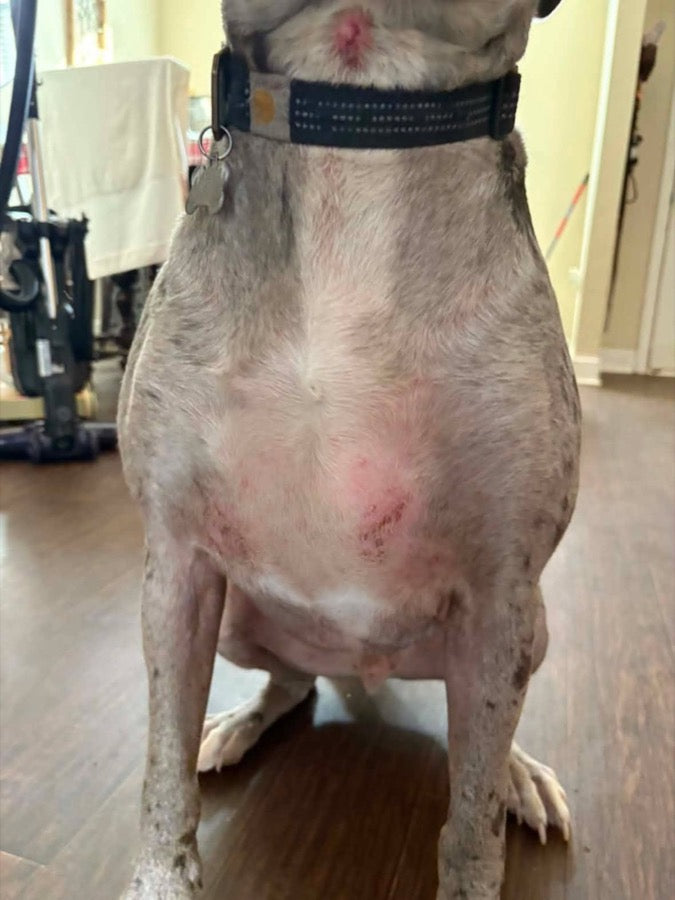
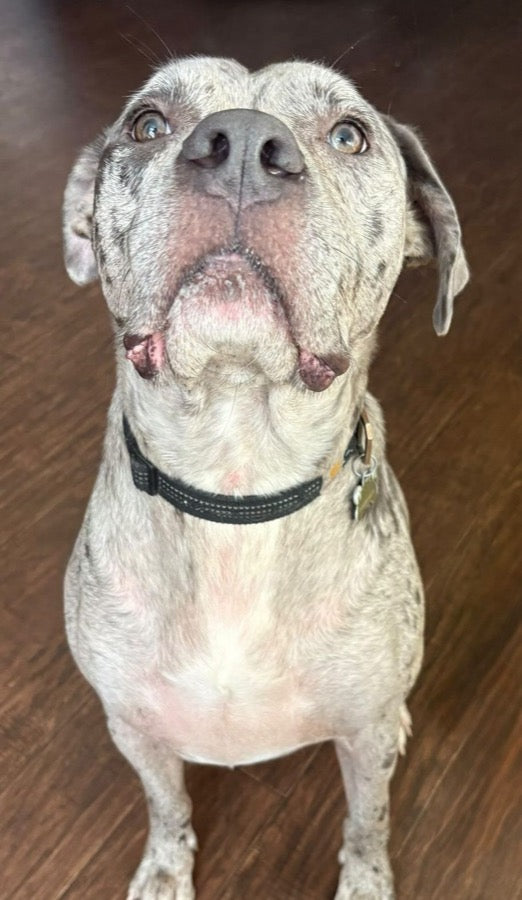
Itchy skin
“I was doubtful it would work.”
After more than a year of trying to calm Ranger’s itchy skin, MacKenzie almost didn’t try one more thing. Two bags of VitaDog Daily later, his coat was growing back and he was finally comfortable.
MacKenzie · Ranger’s owner
Try VitaDogIndividual results. VitaDog supports normal skin and coat health and is not a substitute for veterinary care.
Quick Comparison
| Category | VitaDog | Native Pet The Daily |
|---|---|---|
| Format | Daily powder + fresh oil dropper | Daily powder |
| Active ingredients | 40+ | 12 |
| Joint support | Glucosamine HCl + MSM | Glucosamine + Chondroitin |
| Omega-3 | Anchovy + flaxseed + EPO + MCT (EPA + DHA + ALA + GLA) | DHA only (source not specified) |
| Probiotic strains | 8 (Bacillus subtilis, Bifidobacterium bifidum, Enterococcus faecium, 5 Lactobacillus species) | 2 (Bacillus subtilis, Enterococcus faecium) |
| Probiotic CFU | 1 billion per serving (transparent) | Not transparently disclosed |
| Prebiotic | Inulin + pumpkin | Pumpkin |
| Antioxidant layer | Turmeric + piperine, quercetin, astragalus, liquorice, rosemary, vitamins C and E | Vitamin C, beta carotene, cranberry |
| B-complex | Full complex with methylcobalamin B12 | Not disclosed |
| Trace minerals | Chelated (zinc proteinate, copper bisglycinate, manganese proteinate) | Zinc (form not specified) |
| Brewer’s yeast | None | None |
| Servings | One per day | One scoop per 25 lbs body weight |
What Each One Actually Is
VitaDog
VitaDog is a multi-pathway daily supplement built around five health pathways working together. The powder contains the joint blend (glucosamine HCl + MSM), the antioxidant and anti-inflammatory layer (turmeric with black pepper extract, quercetin, astragalus, liquorice root, rosemary, vitamins C and E), the gut-immune support (8-strain probiotic at 1 billion CFU plus inulin and pumpkin prebiotic), the full nutritional foundation (B-complex with methylcobalamin B12, chelated zinc/copper/manganese, vitamins A, D3, E), and the structural elements like calcium propionate and sodium hexametaphosphate.
The fresh oil dropper delivers the four-oil omega blend: EPA + DHA from anchovy (small-fish source for lower heavy-metal load), ALA from flaxseed, GLA from evening primrose oil, and MCT from coconut for absorption.
40+ active ingredients in total, delivered as one daily serving sized to dog weight.
Native Pet The Daily
Native Pet The Daily is a clean-label powder multivitamin with 12 active ingredients in a goat’s milk powder base. The ingredient list: Collagen (from beef broth), Glucosamine (from shellfish), Chondroitin (from porcine), Prebiotic Fiber (from pumpkin), Taurine, DHA, Cranberry Extract, L-Carnitine, Vitamin C, Zinc, Beta Carotene, and a Probiotic Blend (Bacillus subtilis, Enterococcus faecium).
The formula is positioned as covering 11 health areas including mobility, gut health, immune, skin and sensitivity, bladder, heart health, and cognition. Dosing is one scoop per 25 lbs of body weight. The product is formulated by Dr. Dan Su, a board-certified veterinary nutritionist.
Native Pet markets the powder as 5x the active ingredient concentration of leading soft-chew competitors, which is accurate when comparing against typical chew brands like Wuffes, Dog Is Human, or PetLab. The powder format is a real advantage in the supplement category.

Where the Formulations Differ
Both products are powder-format and both skip soft-chew fillers. From there, the formulations diverge meaningfully.
Active ingredient breadth
VitaDog: 40+ active ingredients spanning joint, omega-3 (four sources), probiotic (8 strains), B-complex, chelated minerals, antioxidant polyphenols, and adaptogens.
Native Pet: 12 active ingredients covering joint (2 ingredients), omega-3 (DHA only), probiotic (2 strains), and a basic vitamin and mineral panel.
Native Pet’s clean-label approach with fewer ingredients has appeal for owners who want simplicity. The trade-off is that 12 ingredients can’t cover the same number of pathways as 40+. Native Pet is a foundational multivitamin. VitaDog is a multi-pathway daily.
Joint support depth
VitaDog: Glucosamine HCl + MSM as the dedicated joint blend, supported by the antioxidant and anti-inflammatory layer (turmeric with piperine, quercetin, rosemary) which contributes to joint comfort through inflammation reduction.
Native Pet: Glucosamine + Chondroitin as the joint blend, supported by Collagen from beef broth and Taurine.
Both products deliver real joint support. The differences are in the supporting cast: VitaDog includes the polyphenol anti-inflammatory layer (turmeric with piperine, quercetin, rosemary), while Native Pet relies more on collagen and taurine for connective tissue support. Both are credible approaches. For dogs with significant arthritis or inflammatory joint disease, the polyphenol layer in VitaDog provides additional anti-inflammatory support that Native Pet doesn’t include.
Omega-3 profile
This is one of the most significant differences.
VitaDog: Four-oil blend providing EPA + DHA from anchovy (small-fish source for lower heavy-metal load), ALA from flaxseed, GLA from evening primrose oil, and MCT from coconut. Delivered as a separate fresh liquid oil dropper. The combination delivers the full fatty acid profile for skin, coat, anti-inflammatory effect, and cognitive support.
Native Pet: DHA only, source not specified on the public label. No EPA. No GLA. No ALA. The DHA is mixed into the dry powder with the goat’s milk base.
Three issues with Native Pet’s omega-3 approach:
First: DHA without EPA is incomplete. For dogs needing meaningful omega-3 support (skin issues, dull coat, arthritis, cognitive support, anti-inflammatory benefit), EPA matters at least as much as DHA. The omega-3 research base on dogs consistently supports both together at therapeutic doses for skin, coat, and inflammatory outcomes. Native Pet’s DHA-only approach delivers the cognitive component but skips the broader anti-inflammatory and skin barrier benefits that EPA contributes.
Second: oil mixed into dry powder still oxidizes. Powder format is better than soft chew for omega-3 stability (no heat-processing damage), but mixing an oil into a dry powder is not the same as keeping it in a sealed liquid format. The DHA in Native Pet has air exposure across the powder surface area, leading to progressive oxidation over the product’s shelf life. Heavily oxidized marine oils lose up to 20-30% of their bioactive content, and oxidation byproducts can be actively harmful.
Third: format influences both bioavailability and oxidation. EPA and DHA bioavailability varies meaningfully by physical form of delivery (Couëdelo et al. 2024, Nutrients), and fish oils incorporated into semi-solid or porous matrices oxidize measurably over shelf life (Hughes et al. 2012, Journal of Food Science). VitaDog’s fresh liquid oil dropper in a sealed amber bottle minimizes both effects. Native Pet’s oil-in-powder approach trades the chew problem for a different format limitation: the oil isn’t sealed away from air the way a liquid dropper protects it.
For dogs needing therapeutic omega-3, Native Pet users typically end up buying a separate fish oil alongside The Daily to fill the EPA gap and the format gap. VitaDog includes the full EPA + DHA + ALA + GLA profile in a fresh liquid format that doesn’t require a parallel product.
Probiotic strain count and transparency
VitaDog: 8 named strains at 1 billion CFU per daily serving. The strain panel: Bacillus subtilis, Bifidobacterium bifidum, Enterococcus faecium, Lactobacillus acidophilus, L. brevis, L. delbrueckii, L. fermentum, L. plantarum. Both inulin and pumpkin as prebiotics.
Native Pet: 2 strains (Bacillus subtilis and Enterococcus faecium). CFU count not transparently disclosed on the public label. Pumpkin as prebiotic fiber.
Strain diversity matters for gut microbiome support. A 2-strain probiotic addresses specific pathways but doesn’t target the full dysbiosis pattern most dogs face. The 8-strain blend covers more of the bacterial families that contribute to healthy canine gut function. For dogs with chronic gut issues, recurring digestive upsets, or post-antibiotic recovery, the broader strain count makes a measurable difference.
CFU transparency is also relevant. VitaDog labels 1 billion CFU per serving. Native Pet doesn’t disclose CFU publicly, which makes direct comparison harder.
B-complex and form specification
VitaDog: Full B-complex including B1 (thiamine HCl), B2 (riboflavin), B5 (pantothenic acid), B6 (pyridoxine HCl), B9 (folic acid), and B12 in methylcobalamin form. The bioactive forms of B-vitamins matter more for senior dogs, dogs with absorption issues, and dogs with gut dysbiosis.
Native Pet: B-vitamins not transparently disclosed in the active ingredient list. The probiotic strains and beef broth contribute some B-content but the formula doesn’t standardize specific B-complex inclusion.
For dogs needing meaningful B-vitamin support (seniors, raw-fed, homemade-fed, post-antibiotic, anxious dogs), this is a structural gap in Native Pet that VitaDog fills.
Chelated trace minerals
VitaDog: Zinc proteinate, copper bisglycinate, manganese proteinate. Chelated forms are absorbed substantially better than cheap oxide forms, which matters for senior dogs, dogs with reduced absorption, and dogs with marginal mineral status driving coat fading or skin issues.
Native Pet: Zinc included, form not specified. No copper, no manganese listed in the active ingredient panel.
For dogs with coat color changes, skin barrier issues, or pigment-related concerns, the chelated mineral panel in VitaDog addresses the tyrosinase cofactor system (copper + zinc + manganese for pigment production) that Native Pet doesn’t cover.
Antioxidant approach
VitaDog: Polyphenol-based antioxidant layer with turmeric paired with black pepper extract for piperine-enabled curcumin absorption, plus quercetin, astragalus root, liquorice root, rosemary extract, vitamin C, and vitamin E. The adaptogens (astragalus, liquorice, rosemary) contribute additional immune and stress-response support.
Native Pet: Vitamin C, beta carotene, and cranberry extract. Cranberry is well-evidenced for urinary tract support specifically. The broader polyphenol antioxidant layer that VitaDog includes is not present in Native Pet.
Where Native Pet Holds Its Own
Native Pet isn’t a weak product. A few things they get right:
Clean Label Project certification. Native Pet has third-party verification for 150+ contaminants. This is a meaningful quality marker that not every supplement carries.
Retail availability. Sold at Petco, PetSmart, Chewy, and direct-to-consumer. For owners who prefer to buy at retail rather than via subscription, Native Pet is one of the more accessible premium daily supplements.
Goat’s milk and beef broth base. Highly palatable for most dogs, no chicken in the formula (good for chicken-allergic dogs), no gluten, no soy.
Vet-nutritionist formulation. Dr. Dan Su is a board-certified veterinary nutritionist, which is a stronger credential than general DVM involvement.
Clean ingredient panel. 12 ingredients, no fillers, no synthetic flavors, no artificial preservatives. The “no fluff” positioning is genuine.
Glucosamine + Chondroitin as the joint blend (most direct competitors include only glucosamine).
These are real positives. They don’t change the underlying breadth difference, but they explain why Native Pet has built strong loyalty in the market.

Where VitaDog Wins (And Why It Matters)
Six places where VitaDog’s formulation does what Native Pet can’t:
EPA in addition to DHA. The four-oil blend delivers EPA + DHA + ALA + GLA. Native Pet delivers DHA only. For skin, coat, anti-inflammatory, and joint outcomes, EPA matters at least as much as DHA. Dogs needing therapeutic omega-3 typically end up buying a separate fish oil alongside Native Pet.
8-strain probiotic vs 2-strain. For chronic gut issues, post-antibiotic recovery, or any dog with digestive sensitivity, the broader strain count covers more of the dysbiosis pattern. Plus VitaDog discloses CFU at 1 billion per serving; Native Pet doesn’t.
Full B-complex with methylcobalamin. Native Pet doesn’t transparently include a B-complex. For seniors, raw-fed dogs, homemade-fed dogs, and any dog with absorption issues, this matters.
Chelated trace minerals. Zinc proteinate, copper bisglycinate, manganese proteinate. Native Pet has zinc only, form unspecified. For coat color, skin barrier, and pigment-related issues, the chelated forms make a measurable difference.
Polyphenol antioxidant layer. Turmeric with piperine, quercetin, adaptogens (astragalus, liquorice, rosemary). Native Pet has vitamin C, beta carotene, and cranberry. For dogs needing meaningful anti-inflammatory and oxidative stress support, the polyphenol approach delivers more.
Fresh oil dropper format for omega-3. Avoids the oxidation that affects oils mixed into dry powders. Native Pet mixes DHA into the powder, which carries some shelf-stability concern over the product’s life.
Cost Comparison
Both products are direct-to-consumer with subscription options. Native Pet is also widely available at retail.
Native Pet The Daily pricing varies by retailer:
- Direct subscription: roughly $45-55 per month for a medium dog
- Petco/PetSmart retail: typically $50-65 for a 14 oz tin
- Chewy: pricing similar to direct
For full daily wellness coverage, most Native Pet users add a separate fish oil ($20-30/month) since the DHA-only approach doesn’t deliver therapeutic EPA. Total stack runs $65-85/month per dog.
VitaDog is one daily serving that includes the four-oil blend with full EPA + DHA + ALA + GLA, the 8-strain probiotic, the full B-complex, and the broader antioxidant layer. No parallel fish oil needed.
For most dogs, the all-in cost comparison favors VitaDog when factoring in the parallel fish oil that Native Pet users typically need to add.

Who Each Product Is For
Native Pet The Daily makes sense if:
- You want a clean-label foundational multivitamin with proven retail availability
- Your dog is young, healthy, and primarily needs maintenance-level support
- You’re already buying a quality fish oil separately and don’t want to switch
- You specifically value the goat’s milk/beef broth base (no chicken, no grain)
- You want Clean Label Project third-party verification
- You shop at Petco, PetSmart, or Chewy and prefer retail to subscription
VitaDog makes sense if:
- You want a deeper multi-pathway formula in one daily serving
- Your dog has skin issues, dull coat, arthritis, gut sensitivity, or any multi-system pattern that benefits from broader supplementation
- You need therapeutic-dose omega-3 with the full EPA + DHA + ALA + GLA profile
- You want an 8-strain probiotic with transparent 1 billion CFU disclosure
- You want a full B-complex with methylcobalamin B12 and chelated trace minerals
- You want the polyphenol antioxidant layer (turmeric with piperine, quercetin, adaptogens)
- You prefer one daily product that replaces a separate fish oil rather than stacking two products
Switching from Native Pet to VitaDog
For owners currently on Native Pet and considering a switch:
- The 12 ingredients in Native Pet are covered by VitaDog’s 40+, with the addition of EPA in the omega blend, six additional probiotic strains, full B-complex, chelated copper and manganese, and the polyphenol antioxidant layer.
- The collagen and L-carnitine in Native Pet aren’t directly replicated in VitaDog. For owners who specifically value those, they can be added as targeted supplements.
- Transition is straightforward: discontinue Native Pet, start VitaDog at the appropriate weight-based dose. No taper needed.
- Most owners see noticeable changes in coat shine, skin quality, and shedding within 4-8 weeks, consistent with the omega-3 and B-complex upgrades.
Frequently Asked Questions
Is Native Pet or VitaDog better for senior dogs?
VitaDog. Senior dogs benefit from the full EPA + DHA omega profile (not just DHA), the 8-strain probiotic for absorption support, the methylcobalamin B12 for declining absorption, chelated minerals for the same reason, and glucosamine + MSM for joint support. Native Pet covers some of this (glucosamine + chondroitin, DHA, basic probiotic) but lacks the depth that senior dogs typically need. See our best supplements for senior dogs guide.
Why does Native Pet only include DHA and not EPA?
Native Pet’s public materials emphasize DHA for cognitive and skin support. EPA isn’t included in the formula. For dogs needing meaningful anti-inflammatory effect, joint comfort, or therapeutic omega-3, EPA is at least as important as DHA. The omega-3 research base on dogs consistently supports both EPA and DHA together at therapeutic doses for skin, coat, and inflammatory outcomes (Magalhães et al. 2021, In Vivo, systematic review). There’s also a format consideration: bioavailability of EPA and DHA varies meaningfully by physical delivery form (Couëdelo et al. 2024, Nutrients). VitaDog’s four-oil fresh liquid dropper delivers EPA, DHA, ALA, and GLA together in a format that minimizes both oxidation exposure and carrier-matrix absorption losses.
Does VitaDog include collagen like Native Pet?
VitaDog doesn’t include added collagen in the formula. The joint support in VitaDog comes from glucosamine HCl + MSM with the polyphenol anti-inflammatory layer (turmeric with piperine, quercetin, rosemary, vitamins C and E). For owners who specifically value collagen as a connective tissue supplement, it can be added separately. For most dogs, the joint and anti-inflammatory coverage in VitaDog without added collagen produces visible mobility and comfort improvements.
Can I give my dog both?
Technically yes, but there’s significant overlap and it adds cost. The glucosamine in Native Pet duplicates the glucosamine in VitaDog. The vitamin C and zinc overlap. The probiotic strains in Native Pet (Bacillus subtilis, Enterococcus faecium) are both included in VitaDog’s 8-strain blend. Stacking the two doesn’t add meaningfully to coverage. Switching from Native Pet to VitaDog is the cleaner path for owners wanting broader coverage.
Is the Clean Label Project certification meaningful?
Yes. Clean Label Project tests products against 150+ contaminants including heavy metals, pesticides, plasticizers, and other toxins. Native Pet’s certification is a real quality marker. VitaDog uses third-party testing for purity and potency through its manufacturer’s accreditation but doesn’t currently carry the specific Clean Label Project mark. Both approaches deliver verified clean products through different verification paths.
Why is VitaDog’s omega-3 source anchovy and not salmon?
Anchovy is a small-fish source with significantly lower accumulated heavy metal load than salmon (which sits higher up the food chain). Anchovy also delivers high concentration of EPA and DHA at meaningful purity. The four-oil blend in VitaDog combines anchovy with flaxseed (ALA), evening primrose oil (GLA), and MCT for a broader fatty acid profile than any single-source fish oil.
What about Native Pet’s other products like the probiotic and joint chews?
Native Pet sells specialized products alongside The Daily: a separate probiotic, a hip and joint chew, a calming chew, etc. Each is a credible single-purpose product. For owners building a full supplement stack from Native Pet, total monthly cost runs $80-120 per medium dog. For owners wanting comprehensive coverage in one product, VitaDog covers what most of those stacks deliver in a single daily serving.
Which one has better third-party testing?
Both products use third-party testing. Native Pet has Clean Label Project certification for contaminant screening, which is a specific verified mark. VitaDog’s manufacturer has third-party testing for purity and potency through standard supplement industry verification. Both deliver verified clean products through different verification frameworks.
Broader Context
- VitaDog vs Iron Paws: Honest Comparison · another direct rival comparison
- VitaDog vs Arterra: Honest Comparison · the longevity-positioning rival
- Best Multivitamin for Dogs 2026 · full category overview
- Best Probiotics for Dogs 2026 · probiotic deep dive
- Best Fish Oil for Dogs 2026 · omega-3 category comparison
- Best Supplements for Senior Dogs · senior-specific guidance
The Right Multi-Pathway Foundation in One Daily Serving
Native Pet is a credible, clean-label multivitamin for the maintenance-support market. For dogs needing deeper multi-pathway coverage in one daily serving, VitaDog was built around 40+ ingredients including the four-oil omega blend (anchovy + flaxseed + evening primrose oil + MCT for the full EPA + DHA + ALA + GLA profile), the 8-strain probiotic at 1 billion CFU with inulin and pumpkin prebiotics, full B-complex with methylcobalamin B12, chelated trace minerals, the polyphenol antioxidant layer (turmeric with piperine, quercetin, astragalus, liquorice, rosemary), and the glucosamine + MSM joint blend. One daily serving, no need to stack a separate fish oil alongside.
→ See the VitaDog formulation.
Educational content only. This article is not veterinary advice. Always consult your veterinarian before starting, changing, or stopping any supplement, especially if your dog has a medical condition, is pregnant, or is on medication.


