
Can Dogs Have Turmeric? Safety, Dosage & Risks (2026 Guide)
Can dogs have turmeric? Yes, with rules: dose by weight, absorption tricks, side effects. Plus turmeric in VitaDog's daily powder, no measuring spoons needed.

Yes, dogs can have turmeric. It's one of the few natural anti-inflammatory ingredients with real clinical evidence for canine use. But the answer "yes" comes with a lot of asterisks most owners miss.
Turmeric can help arthritic dogs, support gut health, and reduce systemic inflammation. It can also be almost entirely wasted if you give it the wrong way, or cause digestive issues and drug interactions if you don't know the contraindications.
This guide covers what you actually need to know: is turmeric safe for your specific dog, what dose works for their weight, how to make it actually absorb (this is the part almost everyone gets wrong), and when to skip it entirely.
 A VitaDog customer story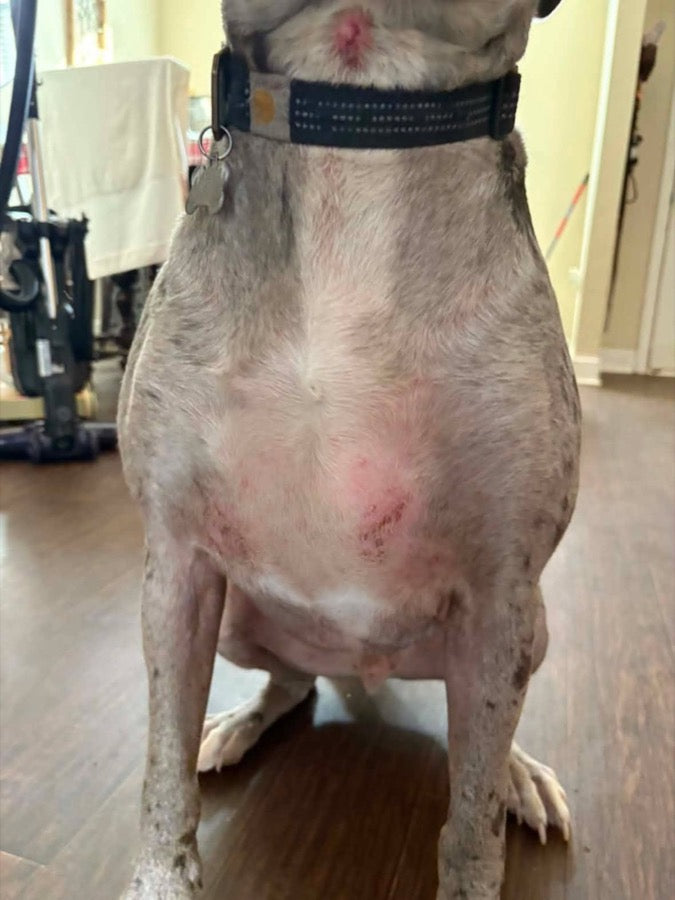
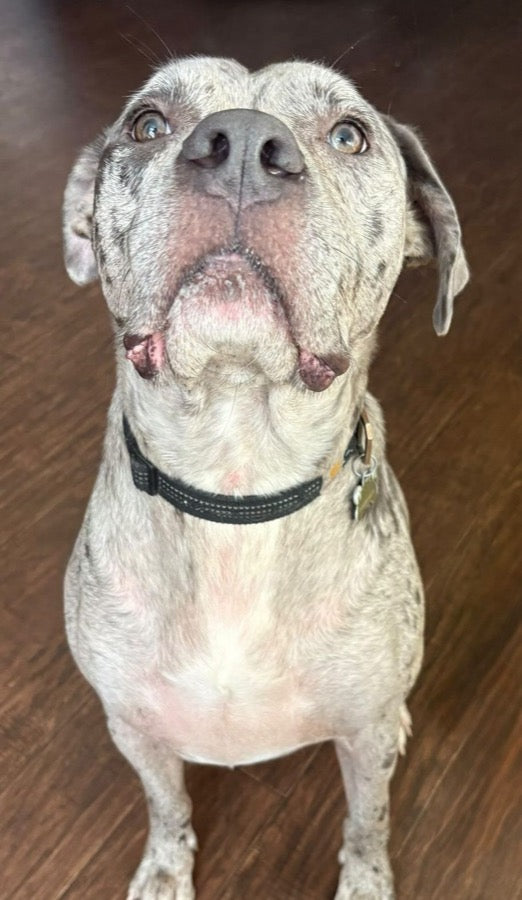
Itchy skin
“I was doubtful it would work.”
After more than a year of trying to calm Ranger’s itchy skin, MacKenzie almost didn’t try one more thing. Two bags of VitaDog Daily later, his coat was growing back and he was finally comfortable.
MacKenzie · Ranger’s owner
Try VitaDogIndividual results. VitaDog supports normal skin and coat health and is not a substitute for veterinary care.
What Is Turmeric, and What Does It Actually Do?
Turmeric is a root spice from the ginger family, used for thousands of years in Ayurvedic and traditional medicine. The bright yellow color comes from a family of compounds called curcuminoids.
Curcumin is the most-studied curcuminoid, making up 3 to 5% of turmeric powder by weight. When the research talks about "turmeric benefits," they almost always mean curcumin specifically.
This distinction matters more than most owners realize: a teaspoon of raw turmeric powder delivers a tiny amount of actual curcumin. Supplementation requires either a concentrated extract or a specific preparation method to deliver a therapeutic dose.
Is Turmeric Good for Dogs? What the Evidence Says
The research picture breaks into three tiers.
Strong evidence
Anti-inflammatory action. Curcumin inhibits COX-2, the same enzyme blocked by NSAID medications like Rimadyl and Metacam, but through a different pathway. It also blocks NF-kB, a master regulator of inflammation. Clinical effect: measurable reduction in joint inflammation and systemic inflammatory markers.
Antioxidant protection. Curcumin neutralizes free radicals and stimulates the body's own antioxidant enzymes (superoxide dismutase, catalase, glutathione peroxidase). The dual action makes it one of the better-documented natural antioxidants.
Joint support. Multiple studies show curcumin reduces pain and improves mobility in arthritic dogs. Works best in combination with glucosamine, MSM, and omega-3.
Moderate evidence
Digestive support. Stimulates bile production, has mild antimicrobial properties in the gut, may reduce intestinal inflammation.
Liver support. Curcumin supports detoxification pathways and has hepatoprotective effects in animal studies.
Cognitive support. Crosses the blood-brain barrier. Animal studies suggest it may reduce amyloid plaque formation and protect aging neurons.
Preliminary or overhyped
Cancer prevention. Lab studies show curcumin can inhibit cancer cell growth in petri dishes. Translating that to living dogs is a huge leap no clinical trial has made. Don't use turmeric as cancer treatment.
Diabetes management. Interesting early research on insulin sensitivity, but nothing clinically validated in dogs.
The Absorption Problem (This Is Where Most Turmeric Fails)
Here's the issue almost no shelf product tells you about:
Curcumin has extremely poor bioavailability. Orally ingested, the majority is broken down in the gut and liver before reaching the bloodstream. Studies estimate only 1 to 2% of consumed curcumin is actually absorbed.
That means a 500mg curcumin capsule might deliver only 5 to 10mg of usable curcumin to your dog's system. At that level, you won't see meaningful anti-inflammatory effects no matter how long you supplement.
How to solve the absorption problem
Piperine (black pepper extract). The most-studied solution. Piperine inhibits the liver enzyme that breaks down curcumin, increasing bioavailability by up to 2,000%. Even a small amount of piperine makes a dramatic difference.
This is why any turmeric product without piperine is largely wasted money. This includes the turmeric in Dasuquin Advanced, the turmeric in many "all-in-one" multivitamins, and most pet shelf turmeric products. Without the absorption enhancer, the curcumin is breaking down before it can do anything.
Fat-based delivery. Curcumin is fat-soluble. Giving it with a meal that contains dietary fat (coconut oil, best fish oil, meat fat) meaningfully improves absorption.
Phytosome or liposomal formulations. Specialized delivery systems that wrap curcumin in phospholipids. Expensive, but they genuinely improve absorption without piperine.
If you're buying a dog turmeric product, the label should show one of these three things. If it doesn't, you're buying raw curcumin at low bioavailability.
How Much Turmeric Can I Give My Dog? Exact Dosage by Weight
Dosage guidelines below assume a turmeric supplement with a bioavailability enhancer (piperine or phytosome). Raw turmeric powder doses are higher but far less effective per dose.
| Dog weight | Turmeric with piperine | Raw turmeric powder (with fat, less effective) |
| Under 10 lbs | 50 to 100 mg | 1/16 to 1/8 teaspoon |
| 10 to 25 lbs | 100 to 200 mg | 1/8 to 1/4 teaspoon |
| 25 to 50 lbs | 200 to 300 mg | 1/4 to 1/2 teaspoon |
| 50 to 100 lbs | 300 to 500 mg | 1/2 to 3/4 teaspoon |
| Over 100 lbs | 500 to 750 mg | 3/4 to 1 teaspoon |
Start at half the target dose for the first week. If your dog tolerates it without soft stool or digestive upset, work up to the full dose over 7 to 10 days.
Give once or twice daily, ideally with a fatty meal.
When NOT to Give Your Dog Turmeric
Turmeric is safe for most dogs, but there are real contraindications.
Dogs on blood thinners. Curcumin has mild antiplatelet activity. Combining it with warfarin, aspirin, or prescription anticoagulants can increase bleeding risk. Avoid unless specifically cleared by your vet.
Dogs scheduled for surgery. Stop turmeric at least 2 weeks before any planned surgical procedure to minimize bleeding risk.
Dogs with gallbladder disease or bile duct obstruction. Turmeric stimulates bile production, which can worsen existing gallbladder issues.
Dogs with iron deficiency. Curcumin can bind iron in the gut and reduce absorption. Not a concern for most dogs, but relevant if your dog has been diagnosed as anemic.
Dogs with kidney stones (oxalate-type). Turmeric contains soluble oxalates that can contribute to oxalate stone formation in predisposed dogs.
Dogs on diabetes medication. Curcumin can enhance the effect of glucose-lowering drugs. Not dangerous necessarily, but needs monitoring.
Pregnant or nursing dogs. Safety during pregnancy hasn't been established. Pause until after weaning.
Dogs with active GI upset. Curcumin is well-tolerated in healthy guts but can irritate an already-inflamed digestive tract. Wait until the acute episode resolves.
If your dog is healthy and not in any of the above categories, turmeric is generally a safe supplement to try.
Turmeric Side Effects in Dogs
At appropriate doses, turmeric is well-tolerated. Reported side effects:
Serious side effects (bleeding, severe GI symptoms) usually indicate either too-high dose or an unrecognized contraindication. Stop supplementation and check with your vet.
How to Give Turmeric to Your Dog
Four practical formats, ranked by effectiveness:
1. Daily multi-active that includes turmeric paired with black pepper extract. The simplest and most effective. The piperine handles absorption automatically; the turmeric is dosed against weight; you don't have to manage a separate product.
2. Standalone turmeric supplement with piperine. Works well if you're already running a separate joint regimen. Dose by weight per the table above, give with a meal containing some fat.
3. Golden paste. DIY preparation: raw turmeric powder cooked with water, coconut oil, and black pepper. Recipes online vary. More effective than raw powder because of the piperine + fat + heat activation, but less standardized than a supplement.
4. Raw turmeric powder sprinkled on food. The least effective route unless paired with coconut oil or fish oil AND a pinch of black pepper on top. The dose needs to be higher to compensate for poor absorption.
Most dog owners who want meaningful anti-inflammatory effects end up on option 1 or 2 once they understand the absorption problem.
Turmeric vs NSAIDs for Dog Arthritis
A common question: can turmeric replace my dog's prescription arthritis medication?
Usually no. Here's the honest comparison:
| Curcumin (turmeric) | Canine NSAIDs (Rimadyl, Metacam, Galliprant) | |
| Mechanism | Multi-pathway anti-inflammatory | Targeted COX-2 inhibition |
| Pain relief (acute, severe) | Modest | Strong |
| Pain relief (chronic, mild-moderate) | Meaningful (with piperine) | Stronger |
| Long-term safety | Very good | Variable, liver/kidney monitoring required |
| Drug interactions | Some | Many |
| Speed of onset | Weeks | Hours to days |
The practical reality: turmeric (with piperine) is excellent as part of a multi-modal arthritis plan alongside glucosamine, MSM, omega-3, and quercetin for dogs. For severe arthritis, it complements but doesn't replace prescription NSAIDs. For mild-to-moderate stiffness, a well-dosed turmeric supplement with piperine can sometimes allow NSAID tapering (under vet supervision).
For a comprehensive joint protocol, see our Best Joint Supplement for Dogs guide.
Turmeric in a Daily Multi-Active
If you're considering turmeric, you're probably also thinking about joint support, omega-3, and probiotics. These ingredients work better together than separately, and bundling them eliminates the dosing schedule complexity.
VitaDog includes turmeric paired with black pepper extract at therapeutic dose, alongside glucosamine HCl + MSM (for the cartilage and sulfur layer), quercetin (for histamine and inflammatory response), astragalus and liquorice root (adaptogenic and anti-inflammatory support), an anchovy oil + flaxseed + evening primrose oil + MCT four-oil blend (omega-3 plus GLA), and an 8-strain probiotics at 1 billion CFU with inulin prebiotic. The black pepper extract is what makes the curcumin actually absorb; without it, you're throwing the turmeric dose away.
See the all-in-one formulation or read the deeper Turmeric for Dogs ingredient guide for the biochemistry behind the dose recommendations.
Can dogs eat turmeric every day?
Yes, at appropriate doses. Daily turmeric supplementation is the standard approach in canine anti-inflammatory protocols. Most clinical effects take 4 to 6 weeks of consistent daily use to manifest, assuming the turmeric is paired with piperine for absorption.
Is turmeric toxic to dogs?
No. Turmeric has one of the better safety profiles among natural anti-inflammatories. Side effects at appropriate doses are mild and transient. Toxicity would require extreme overdose well beyond therapeutic range.
Can puppies have turmeric?
Generally wait until puppies are fully grown (8 to 18 months depending on breed) before adding turmeric. Puppies rarely need anti-inflammatory supplementation, and their developing liver handles supplements less predictably than an adult's.
Can I give my dog turmeric latte (golden milk)?
Not the human version, no. Golden milk typically contains dairy, honey, and sometimes cinnamon or cardamom at doses not formulated for dogs. Some recipes also contain nutmeg, which is toxic to dogs. Make a dog-specific version with water, turmeric, coconut oil, and a pinch of black pepper instead.
What's the difference between turmeric and curcumin?
Turmeric is the whole root (or powdered root). Curcumin is the specific compound within turmeric responsible for most of the medicinal effects. Turmeric powder is 3 to 5% curcumin by weight. Most clinical studies and supplements standardize on curcumin extract, not raw turmeric.
Why does turmeric need black pepper to work?
Curcumin (the active in turmeric) has 1 to 2% oral bioavailability on its own because liver enzymes break it down before it reaches the bloodstream. Piperine, the active compound in black pepper extract, inhibits those enzymes and increases curcumin absorption by up to 2,000%. A turmeric supplement without piperine delivers a fraction of its labeled dose. This is the single most important factor in whether turmeric supplementation actually works.
Can turmeric cure my dog's arthritis?
No. Arthritis is a progressive degenerative condition; no supplement cures it. Turmeric (with piperine) can meaningfully reduce inflammation, pain, and mobility issues in mild-to-moderate arthritis, and can slow progression in some cases. For severe arthritis, it's a complement to prescription NSAIDs, not a replacement.
Educational content only. This article is not veterinary advice. Always consult your veterinarian before starting, changing, or stopping any supplement, especially if your dog has a medical condition, is pregnant, or is on medication.
Related reading


