
Benefits of Crate Training Your Dog

2-minute fit check
What does your dog actually need?

A crate is not a cage. Done right, it’s a portable, predictable safe space your dog actively chooses to use. Done wrong, it’s confinement. The difference is in how you introduce it and how long you leave the dog in there.
This guide covers what crate training does (and doesn’t do), why most dogs settle into a crate within two weeks, and a concrete day-by-day introduction protocol that doesn’t rely on forcing your dog inside.

 A VitaDog customer story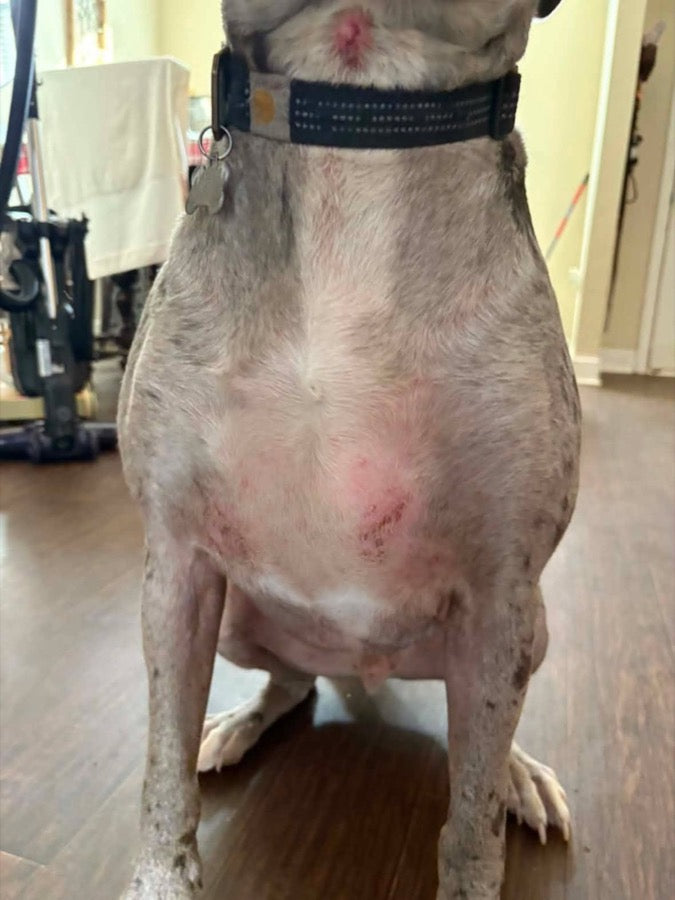

Itchy skin
“I was doubtful it would work.”
After more than a year of trying to calm Ranger’s itchy skin, MacKenzie almost didn’t try one more thing. Two bags of VitaDog Daily later, his coat was growing back and he was finally comfortable.
MacKenzie · Ranger’s owner
Try VitaDogIndividual results. VitaDog supports normal skin and coat health and is not a substitute for veterinary care.
Why Crate Training Actually Works
Dogs descend from animals that used dens. They tend to seek out small enclosed spaces for resting and don’t soil where they sleep. A crate gives modern domestic dogs that same enclosed sleeping space, which makes it useful for three specific things:
- Housebreaking. A puppy learns to hold their bladder in the crate because soiling their bed is uncomfortable. That bladder control transfers to the rest of the house.
- Containing destructive behavior during the period when a dog can’t be supervised but can’t yet be trusted alone.
- Reducing anxiety in transit and in unfamiliar places, vet visits, hotels, car rides, fireworks. A crate-trained dog brings their own safe space everywhere.
It does not fix separation anxiety. A dog with severe separation anxiety often panics worse in a crate. If your dog is destructive only when alone but fine otherwise, talk to a vet behaviorist before crate training. Crate confinement of an anxious dog can cause injuries from escape attempts.
How Long a Dog Can Stay in a Crate
These are upper limits, not targets:
- 8-10 weeks: 1 hour max
- 11-14 weeks: 1-3 hours
- 15-16 weeks: 3-4 hours
- 17+ weeks: up to 4-5 hours during the day
- Adult dog: 6-8 hours overnight is fine; daytime should not exceed 4-5 hours without a break
A puppy crated for 8 hours straight will eventually soil the crate, lose bladder control reliability, and develop a negative association. If you’re gone all day, you need a midday walker or a safer setup (puppy-proofed room with gates).
Choosing the Crate
Three rules:
- Size: Large enough to stand up, turn around, and lie stretched out. Not larger. Excess space lets a puppy soil one corner and sleep in another, which defeats housebreaking.
- For a growing puppy: Buy the adult size with a divider panel. Move the divider as the puppy grows.
-
Type:
- Wire crate, best ventilation, easiest to clean, collapses for travel. Cover with a light blanket if your dog wants more enclosure.
- Plastic airline crate, more den-like, required for air travel, harder to clean.
- Soft-sided, only for already crate-trained calm adult dogs. A chewer or anxious dog will tear through it.
The 7-Day Introduction Protocol
The fastest way to ruin crate training is to lock the dog in on day one. Here’s how to do it instead.
Day 1-2: Crate exists, door stays open
Place the crate in a room where the family already spends time. Put soft bedding inside. Drop a few high-value treats inside throughout the day. Don’t ask the dog to do anything. Let them go in, get the treats, leave. The crate becomes “the place where good things appear.”
Day 3: Feed meals near the crate, then inside
Move the food bowl progressively: first in front of the crate, then just inside the door, then at the back. By the end of day 3, the dog should be walking fully inside to eat with the door still open.
Day 4: Door closed during meals only
While they’re eating, close the door. Open it the moment they finish. Repeat at every meal. Add a verbal cue (“crate” or “kennel”) as they walk in.
Day 5: Short stays after meals
After they eat, leave the door closed for 5 minutes while you stay in the room. Increase to 10, then 15, over a couple of sessions. Drop a few treats through the door at random intervals so being in the crate keeps paying off.
Day 6: You leave the room
Close the door. Walk out. Come back in 1 minute. Repeat, increasing duration: 5 minutes, 15 minutes, 30 minutes. If the dog whines, wait for a 10-second pause before opening, opening the door during whining teaches whining works.
Day 7: Crate while you leave the house
Start with brief departures (10-20 minutes). Build up to an hour, then two. Always exercise the dog and let them potty before crating. Leave a long-lasting chew (frozen Kong with peanut butter or wet food) so they have something to do.
The Three Things That Break Crate Training
Using it as punishment. Don’t send a dog to the crate after they chewed the rug. The crate must remain a positive place. Use a separate time-out spot if you need one (a hallway, a gated room).
Crating too long. A puppy who has soiled the crate or panicked from over-confinement will resist re-entering. If this happens, restart at Day 3 and shorten future sessions.
Letting the dog out when they whine. Whining gets rewarded by release, so it escalates. Wait for silence. The exception: if a puppy has been in the crate for more than the age-appropriate window, they’re telling you they need to potty, not testing you. Take them out on leash, no play, straight to the bathroom spot, then back in the crate.
Quick note · Daily nutritional support matters for almost every aspect of canine health. VitaDog bundles multi-strain probiotic, therapeutic-dose omega-3, full joint stack, and a complete vitamin/mineral profile into one daily powder. Inside the all-in-one dog supplement →
Nighttime Crate Training
Two non-negotiables for a puppy’s first two weeks at home:

- Crate in your bedroom. Not in the kitchen, not in another room. Puppies cry alone. Within arm’s reach of your bed is ideal, so you can drop a hand down and reassure them silently.
- One overnight potty trip. Most 8-12 week puppies need to go out once during the night. Set an alarm for ~6 hours after bedtime initially, take them out on leash with no play or chatter, and back into the crate immediately. Phase this out as bladder capacity grows.
If a puppy whines without needing to potty, ignore it as long as you can be sure of that. The first 2-3 nights are typically the worst. By night 5-7, most puppies sleep through.
What Crate Training Does Not Solve
- Boredom-driven destruction in a crated dog, they need exercise and mental stimulation before being crated, not just confinement.
- House soiling caused by a UTI or GI issue, if a previously housebroken dog starts soiling the crate, see a vet before adjusting training.
- True separation anxiety, different problem, needs a desensitization protocol and often vet involvement.
Travel and Vet Visits
A crate-trained dog is dramatically easier to travel with. The crate is their familiar space wherever you go. For car travel, secure the crate (cargo area for SUVs, seatbelt strap through the wire frame for sedans). For air travel, you’ll need an IATA-compliant airline crate and acclimation time before the flight.
Vet visits become less stressful when the carrier itself isn’t a stress trigger. Practice loading the dog into the carrier outside of vet days. Drive to a parking lot, let them out, treat, drive home. The carrier stops predicting “vet.”
Conclusion
Crate training is not optional for most US dog owners. It’s the simplest tool for housebreaking, the safest containment when you can’t supervise, and the fastest way to make travel low-stress. The tool only works if the crate stays a positive place, the dog isn’t over-confined, and the introduction is paced.
Two weeks of careful introduction beats two months of fixing a dog who hates the crate.
Related Reading
More on training:
- Effective Dog Training: Avoid Hitting with Newspaper
- Essential Tips For Puppy Socialization Success
- Integrating a Dog into the Family: Tips & Advice
- Stop Poor Puppy Behaviour: Effective Training Tips
Healthy Body, Better Behavior · Supported by VitaDog, our daily all-in-one dog supplement
Training works best when a dog feels good. Gut imbalance, joint discomfort, and skin irritation all show up as behavioral issues. VitaDog supports the foundation: gut, joint, skin, and overall wellbeing in one daily serving, so training sessions build on a dog who’s physically comfortable.
→ Support your dog’s training foundation · see VitaDog.
Educational content only. This article is not veterinary advice. Always consult your veterinarian before starting, changing, or stopping any supplement or treatment, especially if your dog has a medical condition, is pregnant, or is on medication.


